
Espresso
Categories
Categories
- Afghan Cuisine(1)
- American Cuisine(141)
- Australian Cuisine(6)
- Austrian Cuisine(2)
- Belgian Cuisine(1)
- Brazilian Cuisine(3)
- British Cuisine(35)
- Cakes in Sri Lanka(47)
- Canadian Cuisine(1)
- Chinese Cuisine(85)
- Cocktails in Sri Lanka(18)
- Cuban Cuisine(17)
- Dutch Cuisine(1)
- Egyptian Cuisine(3)
- Filipino Cuisine(3)
- French Cuisine(23)
- German Cuisine(9)
- Greek Cuisine(16)
- Hong Kong Cuisine(1)
- Indian Cuisine(79)
- Indonesian Cuisine(15)
- Innovative Sri Lankan Flavours(5)
- Iranian Cuisine(5)
- Irish Cuisine(2)
- Italian Cuisine(112)
- Japanese Cuisine(13)
- Kazakastani Cuisine(1)
- Korean Cuisine(0)
- Malaysian Cuisine(12)
- Mexican Cuisine(13)
- Modern Culinary Trends(40)
- Moroccan Cuisine(2)
- Omani Cuisine(1)
- Russian Cuisine(2)
- Saudi Arabian Cuisine(1)
- Senegalese Cuisine(1)
- Singapore Cuisine(1)
- Spanish Cuisine(7)
- Sri Lankan Authentic Beverages(37)
- Sri Lankan Authentic Curries(66)
- Sri Lankan Authentic Desserts(6)
- Sri Lankan Authentic Food(78)
- Sri Lankan Authentic Seafood(18)
- Sri Lankan Authentic Snacks(20)
- Sri Lankan Authentic Sweets(20)
- Swiss Cuisine(3)
- Taiwanese Cuisine(9)
- Thai Cuisine(21)
- Turkish Cuisine(11)
- Yemeni Cuisine(2)




Espresso – The Little Cup Behind So Many Coffee Favourites
A tiny cup, a rich aroma, and a flavour that can linger long after the last sip. Espresso may be small, but it has an enormous place in the world of coffee.
Walk into almost any modern café and you’ll find espresso at the centre of the menu. It can be enjoyed on its own, combined with milk, diluted with water, poured over ice cream, or used as the foundation for countless other coffee creations.
But what exactly makes espresso different from ordinary coffee? And why has this concentrated drink become such an important part of café culture around the world?
Let’s take a closer look at the little cup behind so many coffee favourites.
What Is Espresso?
It is a concentrated coffee beverage made by forcing hot water through finely ground coffee under pressure. The brewing process produces a relatively small serving with an intense aroma, concentrated flavour, and a characteristic layer of foam-like crema on top.
Unlike coffee brewed using a drip machine or French press, it is prepared quickly and under pressure. The combination of finely ground beans, water temperature, pressure, and extraction time all influence the final drink.
The result isn’t simply a smaller cup of regular coffee. It has its own brewing method and its own flavour profile.
Why Does Espresso Taste So Intense?
One of the most noticeable characteristics of espresso is its concentrated taste.
Because espresso uses a relatively small amount of water compared with many other brewing methods, the finished drink contains a strong combination of coffee flavours and aromas. Depending on the beans and how they are roasted, espresso can have notes that remind you of chocolate, caramel, nuts, fruit, spices, or even toasted grains.
It can also have noticeable bitterness or acidity.
That doesn’t necessarily mean that every espresso should taste extremely bitter. A carefully prepared shot can have a balance between sweetness, acidity, bitterness, body, and aroma.
This balance is part of what makes this one interesting to explore.
What Is Crema?
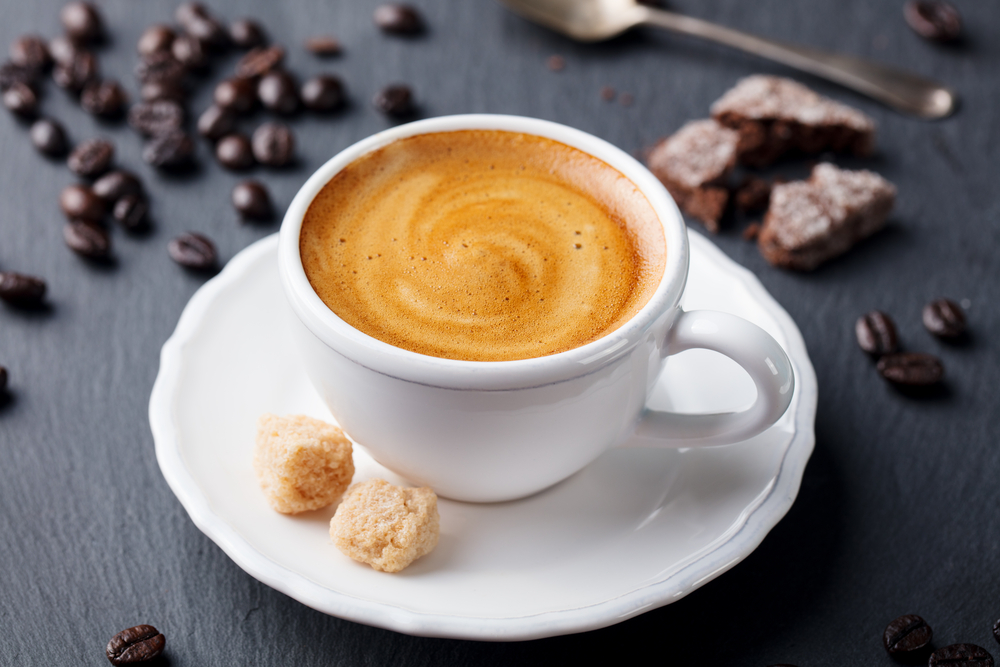
If you’ve ever looked closely at a freshly prepared espresso, you may have noticed a golden-brown layer sitting on top.
That’s crema.
Crema is formed during the espresso extraction process when compounds from the coffee interact with water and dissolved gases. It contributes to the appearance, aroma, and texture of the drink.
While crema can be a useful visual sign of a freshly extracted espresso, it isn’t the only thing that determines whether a shot is good. The coffee beans, freshness, grind size, extraction, and overall balance also matter.
So don’t judge the entire cup by the crema alone.
The Coffee Beans Matter
The flavour of espresso begins long before the coffee reaches the machine.
The type and origin of the coffee beans can influence the character of the final drink. Different beans can bring different combinations of sweetness, acidity, body, and aroma.
Roasting also makes a major difference.
A darker roast may produce deeper roasted, chocolatey, or nutty flavours, while lighter roasts can highlight brighter acidity and more distinctive fruit-like characteristics. There isn’t one roast level that defines all espresso.
The same brewing method can therefore produce very different experiences depending on the coffee being used.
Single Espresso or Double Espresso?
When ordering espresso, you may come across terms such as a single shot or a double shot.
A single espresso uses one portion of coffee to produce one shot, while a double espresso uses a larger portion and produces a more substantial serving.
The double version is commonly known as a doppio.
The choice can depend on how strong you want your coffee, how much caffeine you’re looking for, and how you plan to enjoy it.
A single shot may be enough for someone who wants a short coffee experience, while a double can provide a fuller and more intense drink.
Espresso Is the Foundation of Many Favourite Drinks
Here’s where this becomes particularly interesting.
That little shot is the starting point for a huge variety of popular coffee drinks.
Add hot water and you get an Americano, which gives espresso a longer and lighter drinking experience.
Combine this with steamed milk and you can create a latte.
Add a different balance of espresso, steamed milk, and milk foam and you have a cappuccino.
And if you take it into the world of dessert, you can pour it over ice cream or gelato to create an affogato.
So even if someone doesn’t enjoy drinking espresso on its own, they may already be enjoying it in another form.
How to Enjoy Espresso
It is usually served in a small cup because it is designed to be concentrated.
If you’re tasting one, try not to rush it.
Start by noticing the aroma. Then take a small sip and pay attention to how the flavour develops. You might notice an initial bitterness, followed by sweetness or acidity, and then a lingering finish.
There is no need to overcomplicate the experience. Coffee tasting can be as simple as asking yourself a few questions
Is it bitter or sweet? Is it smooth or sharp? Does the flavour disappear quickly or stay on the palate? What aroma do you notice first?
These little observations can make a simple coffee break much more interesting.
Espresso and Coffee Culture
It has become closely connected with café culture, particularly because of its versatility and the speed at which it can be prepared.
It works equally well as a quick morning drink, an afternoon pick-me-up, or the base of a longer coffee order.
For many coffee lovers, however, this coffee represents more than caffeine. It is a way of appreciating the characteristics of the coffee itself.
There is something satisfying about receiving a small cup and discovering how much flavour can be packed into it.
A Small Cup Worth Exploring
It doesn’t need a large mug or a long list of ingredients to make an impression.
Its appeal comes from concentration, aroma, texture, and the character of the coffee beans. It can be bold, balanced, sweet, bitter, bright, or surprisingly complex. Sometimes all within the same small cup.
And perhaps that’s why this coffee continues to sit at the heart of so many coffee menus.
The next time you spot a little cup of espresso on a café table, take a closer look. Behind that small serving is an entire world of coffee. From the beans and roasting process to the pressure of extraction and the many drinks created from it.