

Vegetable Pasta
Categories
Categories
- Afghan Cuisine(1)
- American Cuisine(141)
- Australian Cuisine(6)
- Austrian Cuisine(2)
- Belgian Cuisine(1)
- Brazilian Cuisine(3)
- British Cuisine(35)
- Cakes in Sri Lanka(47)
- Canadian Cuisine(1)
- Chinese Cuisine(85)
- Cocktails in Sri Lanka(18)
- Cuban Cuisine(17)
- Dutch Cuisine(1)
- Egyptian Cuisine(3)
- Filipino Cuisine(3)
- French Cuisine(23)
- German Cuisine(9)
- Greek Cuisine(16)
- Hong Kong Cuisine(1)
- Indian Cuisine(79)
- Indonesian Cuisine(15)
- Innovative Sri Lankan Flavours(5)
- Iranian Cuisine(5)
- Irish Cuisine(2)
- Italian Cuisine(112)
- Japanese Cuisine(13)
- Kazakastani Cuisine(1)
- Korean Cuisine(0)
- Malaysian Cuisine(12)
- Mexican Cuisine(13)
- Modern Culinary Trends(40)
- Moroccan Cuisine(2)
- Omani Cuisine(1)
- Russian Cuisine(2)
- Saudi Arabian Cuisine(1)
- Senegalese Cuisine(1)
- Singapore Cuisine(1)
- Spanish Cuisine(7)
- Sri Lankan Authentic Beverages(37)
- Sri Lankan Authentic Curries(66)
- Sri Lankan Authentic Desserts(6)
- Sri Lankan Authentic Food(78)
- Sri Lankan Authentic Seafood(18)
- Sri Lankan Authentic Snacks(20)
- Sri Lankan Authentic Sweets(20)
- Swiss Cuisine(3)
- Taiwanese Cuisine(9)
- Thai Cuisine(21)
- Turkish Cuisine(11)
- Yemeni Cuisine(2)
Vegetable Pasta – A Colourful Plate Full of Fresh Possibilities
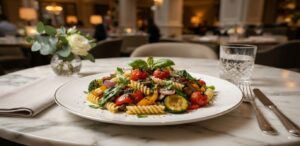
A good pasta dish does not always need meat or seafood to make an impression.
Vegetable pasta proves that beautifully. With colourful vegetables, well-seasoned pasta, herbs, and a sauce that brings everything together, it can be satisfying without feeling overly heavy. And because almost any seasonal vegetable can find a place in the dish, no two plates have to look exactly alike.
That freedom is what makes vegetable pasta so enjoyable. It can be simple and rustic, vibrant and fresh, creamy and comforting, or boldly seasoned depending on how it is prepared.
What Makes Vegetable Pasta Special?
Vegetable pasta is essentially a pasta dish where vegetables play a central role rather than simply appearing as a small side ingredient.
The vegetables can influence almost everything about the final dish. Its colour, aroma, texture, sweetness, and overall character.
A few roasted vegetables can create a deep, slightly caramelised flavour, while fresh vegetables can keep the dish bright and crisp. Leafy greens can soften into a sauce, and mushrooms can introduce an earthy quality.
The beauty is in the combination.
Instead of relying on one dominant ingredient, vegetable pasta can build its personality from several smaller elements working together.
The result can feel light and fresh or rich and comforting, depending on how the vegetables are prepared. It is a dish where simple ingredients can come together to create something surprisingly satisfying.
Choosing Vegetables with Different Textures
One of the easiest ways to make vegetable pasta more interesting is to combine different textures.
Bell peppers can remain slightly crisp when cooked carefully. Mushrooms become tender and savoury, while broccoli can provide a firmer bite. Zucchini softens quickly and can blend naturally into a sauce.
Carrots can contribute a subtle sweetness, while leafy vegetables add softness and freshness.
Using vegetables with different cooking times is important. Adding everything to the pan at once can leave some ingredients overcooked while others remain too firm.
A little attention to timing can make the finished plate feel much more balanced.
Roasting Can Change Everything
Roasting vegetables brings out a completely different side of their flavour.
The heat allows natural sugars to develop and creates lightly browned edges. Vegetables that taste mild when raw can become richer and more intensely savoury after roasting.
Roasted peppers, cherry tomatoes, pumpkin, onions, mushrooms, and aubergine can all work beautifully with pasta.
This approach is particularly useful when the dish does not rely on a heavy sauce. The roasted vegetables themselves can provide much of the flavour.
A drizzle of olive oil and a handful of fresh herbs at the end can be enough to finish the dish without making it complicated.
The slightly crisp edges also introduce a pleasant contrast to the softer pasta. Each vegetable develops its own character while still complementing the others on the plate. This makes roasted vegetable pasta feel both simple and thoughtfully prepared.
Sauce or No Heavy Sauce?
Vegetable pasta does not have to be covered in a rich sauce.
An olive-oil-based preparation can allow the vegetables to remain the focus. Garlic, herbs, chilli, lemon, or a little cheese can then add extra depth.
A tomato-based sauce takes a brighter route, especially when paired with roasted vegetables or fresh herbs.
Creamy versions offer something completely different. The smooth sauce can soften stronger vegetables and create a comforting, substantial meal.
There is also the option of blending selected vegetables into the sauce itself. This can produce a smooth base while still allowing other vegetables to remain whole for texture.
The best approach depends on what kind of plate you want.
Freshness Makes a Difference
Vegetable pasta is at its most appealing when the vegetables still have some life to them.
Overcooked vegetables can lose their colour, texture, and freshness. When cooked with care, however, they can retain enough structure to create contrast with the pasta.
Fresh herbs can help too.
Basil, parsley, oregano, thyme, or other herbs can bring a fragrant finishing touch. Their freshness can be particularly useful in richer pasta dishes where a little brightness is needed.
Even a simple squeeze of lemon can change the overall impression by adding acidity and lifting the other flavours.
Picking the Right Pasta Shape
The pasta shape can influence how the vegetables and sauce come together.
Short shapes can hold small pieces of vegetables in their ridges and curves, making every forkful feel varied. Long pasta creates a different experience, with vegetables wrapping naturally around the strands.
Larger vegetables may work better with broader pasta or dishes where they remain clearly visible.
There is no strict rule here. The important thing is that the pasta and vegetables should feel connected rather than like two separate components sitting on the same plate.
Vegetable Pasta Can Be Surprisingly Filling
There is sometimes a misconception that a vegetable-based pasta dish must be light or unsatisfying.
That really depends on what goes into it.
Pasta itself provides a substantial base, while ingredients such as mushrooms, legumes, cheese, nuts, or hearty vegetables can add additional richness and texture.
A generous mix of vegetables can also make the plate feel abundant.
This is one of the reasons vegetable pasta works well for different kinds of diners. It can be prepared as a lighter meal or developed into something much more substantial.
A Dish That Changes with the Seasons
Vegetable pasta has an advantage that many fixed recipes do not: it can change with the ingredients available.
When fresh produce is plentiful, a kitchen can build a dish around what looks and tastes best at that time.
That could mean bright peppers and tomatoes in one preparation, earthy mushrooms and greens in another, or roasted root vegetables in a heartier version.
Seasonal cooking also keeps the dish from becoming predictable.
For restaurants, this flexibility can create opportunities to introduce new combinations without completely reinventing the idea of vegetable pasta.
Vegetable Pasta in Sri Lanka
Sri Lanka has an abundance of vegetables, herbs, spices, and fresh produce that can inspire creative pasta dishes.
A restaurant preparing vegetable pasta does not necessarily have to reproduce one fixed international recipe. Local ingredients can be incorporated into the dish while keeping the pasta at its centre.
The result might feature familiar vegetables with a gentle herb-and-garlic profile, or a more strongly seasoned interpretation influenced by local tastes.
This is where vegetable pasta becomes particularly interesting for diners. A familiar international dish can reflect the ingredients and preferences of the place where it is served.
What to Look for on the Plate
When trying vegetable pasta, it is worth noticing more than simply how many vegetables are included.
Look at the variety of colours. Notice whether the vegetables have different textures. See how the sauce interacts with them and whether the pasta still has a satisfying bite.
A well-prepared dish should feel cohesive.
No single vegetable needs to dominate. Instead, the ingredients should complement one another while allowing the pasta to remain an important part of the meal.
Presentation can make that variety even more appealing. Bright vegetables against a simple plate create natural visual contrast without needing excessive decoration.
Why Vegetable Pasta Keeps Finding New Fans
Vegetable pasta is proof that versatility can be just as exciting as complexity.
It can be built around whatever vegetables are available, adjusted to different tastes, and prepared in styles ranging from fresh and light to rich and comforting.
For diners, it also offers a chance to explore vegetables in a different setting. Familiar ingredients can taste completely new when roasted, sautéed, seasoned, or combined with pasta and herbs.
So whether you are looking for a colourful lunch, a comforting dinner, or simply a new pasta combination to try, vegetable pasta has plenty to offer.
Sometimes, all a good plate needs is pasta, a thoughtful selection of vegetables, and a kitchen that knows how to let each ingredient shine.
Looking for delicious vegetable dishes and unique food experiences across Sri Lanka? Explore Lankaura and discover your next place to eat….! 🥦🍝


