
Cheese Hoppers
Categories
Categories
- Afghan Cuisine(1)
- American Cuisine(141)
- Australian Cuisine(6)
- Austrian Cuisine(2)
- Belgian Cuisine(1)
- Brazilian Cuisine(3)
- British Cuisine(35)
- Cakes in Sri Lanka(47)
- Canadian Cuisine(1)
- Chinese Cuisine(85)
- Cocktails in Sri Lanka(18)
- Cuban Cuisine(17)
- Dutch Cuisine(1)
- Egyptian Cuisine(3)
- Filipino Cuisine(3)
- French Cuisine(23)
- German Cuisine(9)
- Greek Cuisine(16)
- Hong Kong Cuisine(1)
- Indian Cuisine(79)
- Indonesian Cuisine(15)
- Innovative Sri Lankan Flavours(5)
- Iranian Cuisine(5)
- Irish Cuisine(2)
- Italian Cuisine(112)
- Japanese Cuisine(13)
- Kazakastani Cuisine(1)
- Korean Cuisine(0)
- Malaysian Cuisine(12)
- Mexican Cuisine(13)
- Modern Culinary Trends(40)
- Moroccan Cuisine(2)
- Omani Cuisine(1)
- Russian Cuisine(2)
- Saudi Arabian Cuisine(1)
- Senegalese Cuisine(1)
- Singapore Cuisine(1)
- Spanish Cuisine(7)
- Sri Lankan Authentic Beverages(37)
- Sri Lankan Authentic Curries(66)
- Sri Lankan Authentic Desserts(6)
- Sri Lankan Authentic Food(78)
- Sri Lankan Authentic Seafood(18)
- Sri Lankan Authentic Snacks(20)
- Sri Lankan Authentic Sweets(20)
- Swiss Cuisine(3)
- Taiwanese Cuisine(9)
- Thai Cuisine(21)
- Turkish Cuisine(11)
- Yemeni Cuisine(2)
Cheese Hoppers: A Savoury Twist on a Sri Lankan Favourite

Sri Lankan hoppers are loved for their distinctive bowl shape, delicate crispy edges and soft centres. Traditionally enjoyed with accompaniments such as pol sambol, curry or a simple egg, hoppers can also be adapted with ingredients that create new flavours. Cheese hoppers offer a delicious variation, bringing the creamy, savoury taste of cheese into this familiar Sri Lankan dish.
The combination of a lightly crisp hopper and melted cheese creates an appealing contrast of textures. Whether enjoyed for breakfast, as a snack or as part of a relaxed meal, cheese hoppers are an interesting choice for anyone who enjoys exploring different versions of traditional favourites.
What Are Cheese Hoppers?
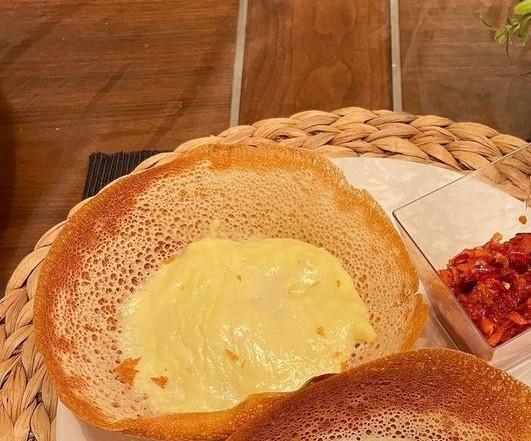
Cheese hoppers are a variation of traditional Sri Lankan hoppers, also known as appa, prepared with cheese as an additional ingredient. Traditional hoppers are bowl-shaped pancakes made using a rice-flour-based batter, commonly combined with coconut milk and fermented before cooking.
In a cheese hopper, cheese may be added to the centre of the batter while the hopper cooks, mixed into the preparation, or placed on top so that it melts with the heat. The exact method depends on the recipe and the style of hopper being prepared.
The familiar shape remains one of the dish’s defining features. The batter spreads thinly around the sides of a hopper pan, creating crisp edges while the centre remains thicker and softer.
Cheese introduces a richer, savoury flavour that complements the mild taste of the hopper. Depending on the type of cheese used, the result may be creamy, stretchy, mildly salty or more strongly flavoured.
What Ingredients Are Used to Make Cheese Hoppers?
The ingredients used for cheese hoppers depend on the recipe, but the traditional hopper batter provides the starting point for many versions.
Rice flour: Rice flour is a common base ingredient in Sri Lankan hopper batter. It contributes to the characteristic texture and helps create the familiar bowl-shaped form.
Coconut milk: Coconut milk adds richness and a gentle coconut flavour that works well with the savoury taste of cheese.
Yeast or a fermentation agent: Some traditional-style recipes use yeast or another suitable fermentation method to develop the batter’s flavour and texture.
Cheese: Cheese is the key ingredient that distinguishes this variation. Mozzarella can provide a soft, stretchy texture when melted, while cheddar offers a more pronounced savoury flavour. Other cheeses may also be used according to personal preference.
Salt: A small amount of salt may be included in the batter, depending on the recipe. Since cheese can already be salty, the quantity needs to be adjusted carefully.
Optional seasonings: Some variations may include black pepper, herbs, chilli or other seasonings to create a more distinctive flavour.
The final result depends on the balance between the batter and the cheese. Using enough cheese to provide flavour without overwhelming the hopper helps maintain the contrast between its crispy edges and soft centre.
How Are Cheese Hoppers Prepared?
Cheese hoppers begin with a batter prepared using the ingredients required for the chosen recipe. In a traditional-style preparation, the rice-flour-based mixture is combined with coconut milk and other ingredients until it reaches a suitable consistency.
If fermentation is part of the recipe, the batter is left to rest as directed. This process helps develop the texture associated with traditional hoppers.
A hopper pan is then heated and lightly greased. A portion of batter is poured into the centre and spread around the sides by carefully rotating the pan. This creates the familiar thin edges and thicker middle.
Cheese can be added in different ways. It may be placed in the centre while the batter is still cooking, sprinkled over the surface, or added towards the end so that it melts without becoming overly browned.
The hopper is cooked until the edges become lightly crisp and the centre is set. The cheese should be melted and incorporated into the dish according to the intended style.
Once ready, the cheese hopper can be removed carefully and served warm. Eating it soon after cooking helps preserve the contrast between the crisp edges and the softer, cheesy centre.
What Makes Cheese Hoppers Different from Traditional Hoppers?
Traditional Sri Lankan hoppers have a mild flavour that makes them suitable for a wide range of accompaniments. They can be served with spicy sambol, savoury curries or other ingredients that complement their gentle taste.
Cheese hoppers offer a different experience because the cheese contributes flavour and richness directly to the dish. Rather than relying entirely on an accompaniment, the hopper itself becomes more savoury.
Texture is another important difference. When melted, certain cheeses create a creamy or stretchy centre that contrasts with the thin, crisp edges of the hopper.
The flavour also depends on the cheese selected. Mozzarella generally provides a mild taste and a stretchy texture, whereas cheddar tends to contribute a stronger, more pronounced flavour. Combining different cheeses can produce another variation.
Despite these differences, cheese hoppers retain the recognisable shape and basic character of the traditional dish.
Which Cheese Works Best for Cheese Hoppers?
The best cheese depends on the flavour and texture preferred.
Mozzarella: Mozzarella is a popular choice when a soft, stretchy melted texture is desired. Its relatively mild flavour allows the hopper’s other ingredients to remain noticeable.
Cheddar: Cheddar provides a more pronounced savoury taste. It can be suitable for people who prefer a stronger cheese flavour.
Processed cheese: Processed cheese slices or portions may be convenient for home preparation. Their melting behaviour depends on the particular product.
A cheese blend: Combining cheeses can provide a balance of flavour and texture. For example, a mild melting cheese can be paired with a stronger cheese for additional depth.
The amount of cheese matters as well. Too little may leave the flavour barely noticeable, while too much can make the centre overly rich or affect the way the hopper cooks.
Choosing a cheese that melts well and complements the batter helps create a balanced result.
How Can Cheese Hoppers Be Served?
Cheese hoppers can be enjoyed on their own or paired with other foods, depending on the occasion.
On their own: A freshly cooked cheese hopper can be served warm, allowing the savoury cheese flavour to stand out.
With pol sambol: The spicy, tangy and coconut-rich flavours of pol sambol can complement the creamy taste of melted cheese.
With chilli sauce: A little chilli sauce can introduce heat and create a contrast with the richness of the cheese.
With curry: Cheese hoppers can be served alongside a suitable curry for a more substantial meal, depending on individual preferences.
With tea or coffee: A cheese hopper can also make a satisfying savoury snack during a break.
For a simple presentation, freshly cooked cheese hoppers can be arranged on a plate with a small portion of sambol or another preferred accompaniment. Serving them while warm helps retain their appealing texture.
Cheese Hoppers in Sri Lanka
Hoppers remain a recognisable part of Sri Lankan food culture, and their simple preparation makes them adaptable to different ingredients. While traditional versions are widely associated with savoury accompaniments, variations featuring additional ingredients can provide new ways to enjoy the dish.
Cheese hoppers combine the familiar hopper structure with a flavour that many people already enjoy in other foods. They may appeal to diners looking for a richer alternative to plain hoppers or an interesting addition to a breakfast or snack menu.
Their preparation can vary between households and food establishments. Some cooks may prefer a simple melted-cheese centre, while others may experiment with different cheeses or seasonings.
Availability also varies between restaurants, so cheese hoppers should not be assumed to be available at every establishment serving traditional hoppers.
For people exploring Sri Lankan cuisine, this variation demonstrates how a familiar local dish can be adapted to suit changing tastes while retaining its distinctive form.
Final Thoughts
Cheese hoppers bring a savoury, cheesy twist to traditional Sri Lankan hoppers. Their crisp edges, soft centres and melted cheese create a combination that can be enjoyed at breakfast, during a snack break or as part of a meal.
Whether prepared with mozzarella, cheddar or a combination of cheeses, they offer plenty of room for personal preference. Served on their own or paired with a favourite Sri Lankan accompaniment, cheese hoppers provide another way to enjoy the versatility of this familiar dish.
Looking for delicious Sri Lankan dishes and more culinary discoveries? Explore Lankaura, Sri Lanka’s food discovery platform…!