

Tomato Spaghetti
Categories
Categories
- Afghan Cuisine(1)
- American Cuisine(141)
- Australian Cuisine(6)
- Austrian Cuisine(2)
- Belgian Cuisine(1)
- Brazilian Cuisine(3)
- British Cuisine(35)
- Cakes in Sri Lanka(47)
- Canadian Cuisine(1)
- Chinese Cuisine(85)
- Cocktails in Sri Lanka(18)
- Cuban Cuisine(17)
- Dutch Cuisine(1)
- Egyptian Cuisine(3)
- Filipino Cuisine(3)
- French Cuisine(23)
- German Cuisine(9)
- Greek Cuisine(16)
- Hong Kong Cuisine(1)
- Indian Cuisine(79)
- Indonesian Cuisine(15)
- Innovative Sri Lankan Flavours(5)
- Iranian Cuisine(5)
- Irish Cuisine(2)
- Italian Cuisine(112)
- Japanese Cuisine(13)
- Kazakastani Cuisine(1)
- Korean Cuisine(0)
- Malaysian Cuisine(12)
- Mexican Cuisine(13)
- Modern Culinary Trends(40)
- Moroccan Cuisine(2)
- Omani Cuisine(1)
- Russian Cuisine(2)
- Saudi Arabian Cuisine(1)
- Senegalese Cuisine(1)
- Singapore Cuisine(1)
- Spanish Cuisine(7)
- Sri Lankan Authentic Beverages(37)
- Sri Lankan Authentic Curries(66)
- Sri Lankan Authentic Desserts(6)
- Sri Lankan Authentic Food(78)
- Sri Lankan Authentic Seafood(18)
- Sri Lankan Authentic Snacks(20)
- Sri Lankan Authentic Sweets(20)
- Swiss Cuisine(3)
- Taiwanese Cuisine(9)
- Thai Cuisine(21)
- Turkish Cuisine(11)
- Yemeni Cuisine(2)
Tomato Spaghetti- A Simple Pasta Dish With Classic Appeal
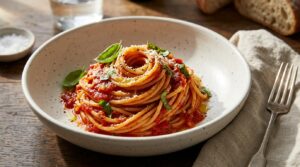
Few pasta dishes are as straightforward and versatile as tomato spaghetti. Long strands of spaghetti coated in a well-seasoned tomato sauce create a comforting meal without requiring an elaborate list of ingredients.
The beauty of tomato spaghetti is in its simplicity. Ripe tomatoes or quality canned tomatoes can form the foundation of the sauce, while ingredients such as garlic, onion, olive oil, herbs and black pepper build its flavour. The result can be fresh and light or deeper and more concentrated, depending on how the sauce is prepared.
What Makes Tomato Spaghetti Different?
Tomato spaghetti is essentially a tomato-based pasta dish specifically paired with spaghetti. Unlike some richer pasta preparations, the tomato sauce brings acidity and freshness to the plate.
Spaghetti works particularly well because its long, smooth strands can become evenly coated when tossed with a properly prepared sauce. The sauce should cling to the pasta rather than pool heavily at the bottom of the plate.
This makes the quality and consistency of the sauce particularly important.
Creating the Tomato Sauce
A good tomato sauce starts with the tomatoes, but the supporting ingredients matter too.
Garlic or onion can be gently cooked in olive oil before the tomatoes are added. This develops the aromatic base without needing excessive seasoning. Once the tomatoes are incorporated, the sauce can be simmered until its flavours become more cohesive.
Fresh tomatoes can provide a bright, fresh character, while canned tomatoes are commonly used for convenience and consistency. Tomato paste can also be used in some preparations when a more concentrated tomato flavour is desired.
The sauce should be seasoned carefully so that the tomato remains noticeable rather than being overwhelmed by herbs or spices.
Herbs and Other Flavours
Tomato and herbs are a natural combination. Basil can bring a fresh, fragrant note, while oregano can provide a more pronounced savoury character.
Garlic, chilli flakes and black pepper can add additional depth. A small amount of Parmesan or another hard cheese can also be used as a finishing ingredient, although the dish can be enjoyed without cheese as well.
The choice depends on the style of tomato spaghetti being prepared.
Getting the Spaghetti Right
The pasta itself is just as important as the sauce. Spaghetti is generally best cooked al dente, meaning it is tender while still retaining some resistance when bitten.
After cooking, the spaghetti can be tossed directly with the warm tomato sauce. A small amount of pasta cooking water can help loosen the sauce and help it coat the strands more effectively.
This final combination is important. Rather than simply placing sauce on top, tossing allows the tomato sauce to distribute across the spaghetti.
Simple Doesn’t Mean Boring
Tomato spaghetti can be kept completely simple, but it also provides an excellent foundation for variations.
Mushrooms, vegetables, olives, seafood, chicken or minced meat can be added to create more substantial versions. Chilli can introduce heat, while fresh herbs can keep the dish bright.
Still, there is something particularly satisfying about a simple plate of spaghetti with a well-made tomato sauce. When the ingredients are balanced and the pasta is cooked properly, very little else is needed.
A Reliable Pasta Favourite
Tomato spaghetti is the kind of dish that can fit almost any occasion. It can be prepared as a quick everyday meal or presented as a carefully plated restaurant dish.
Its enduring appeal comes from a combination of simple ingredients, contrasting flavours and satisfying texture. The acidity of tomato, the savoury aromatics and the bite of al dente spaghetti come together naturally.
For anyone who enjoys pasta, tomato spaghetti is a timeless choice that proves simplicity can still deliver plenty of flavour.
Looking for delicious spaghetti dishes and unique food experiences across Sri Lanka? Explore Lankaura and discover your next place to eat…!🍛🍝
