

Pasta Kottu
Categories
Categories
- Afghan Cuisine(1)
- American Cuisine(141)
- Australian Cuisine(6)
- Austrian Cuisine(2)
- Belgian Cuisine(1)
- Brazilian Cuisine(3)
- British Cuisine(35)
- Cakes in Sri Lanka(47)
- Canadian Cuisine(1)
- Chinese Cuisine(85)
- Cocktails in Sri Lanka(18)
- Cuban Cuisine(17)
- Dutch Cuisine(1)
- Egyptian Cuisine(3)
- Filipino Cuisine(3)
- French Cuisine(23)
- German Cuisine(9)
- Greek Cuisine(16)
- Hong Kong Cuisine(1)
- Indian Cuisine(79)
- Indonesian Cuisine(15)
- Innovative Sri Lankan Flavours(5)
- Iranian Cuisine(5)
- Irish Cuisine(2)
- Italian Cuisine(112)
- Japanese Cuisine(13)
- Kazakastani Cuisine(1)
- Korean Cuisine(0)
- Malaysian Cuisine(12)
- Mexican Cuisine(13)
- Modern Culinary Trends(40)
- Moroccan Cuisine(2)
- Omani Cuisine(1)
- Russian Cuisine(2)
- Saudi Arabian Cuisine(1)
- Senegalese Cuisine(1)
- Singapore Cuisine(1)
- Spanish Cuisine(7)
- Sri Lankan Authentic Beverages(37)
- Sri Lankan Authentic Curries(66)
- Sri Lankan Authentic Desserts(6)
- Sri Lankan Authentic Food(78)
- Sri Lankan Authentic Seafood(18)
- Sri Lankan Authentic Snacks(20)
- Sri Lankan Authentic Sweets(20)
- Swiss Cuisine(3)
- Taiwanese Cuisine(9)
- Thai Cuisine(21)
- Turkish Cuisine(11)
- Yemeni Cuisine(2)
Pasta Kottu – A Modern Twist on Sri Lankan Kottu
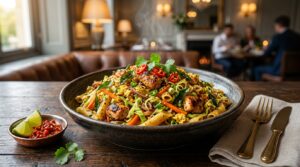
Pasta kottu is a creative variation of Sri Lanka’s much-loved kottu dishes, combining pasta with vegetables, spices, and a choice of meat or other ingredients. It brings together the familiar flavours of Sri Lankan kottu and the texture of pasta, creating a filling meal for those who enjoy trying different food combinations.
Traditional kottu is usually prepared with chopped godamba roti, but pasta kottu replaces the flatbread with cooked pasta. The result is a different take on a popular Sri Lankan street-food favourite, with plenty of room for variation depending on the cook and the ingredients used.
What Is Pasta Kottu?
Pasta kottu is a dish made by stir-frying cooked pasta with vegetables, seasonings, and optional additions such as chicken, sausages, or eggs. The ingredients are mixed together on a hot cooking surface so that the flavours combine throughout the dish.
Like other kottu varieties, pasta kottu can be adjusted to suit different tastes. Some versions are spicy and savoury, while others include cheese or sauces for a richer flavour.
What Goes Into Pasta Kottu?
The ingredients can vary according to personal preference and the restaurant’s recipe. Common ingredients include:
-
Pasta – The main ingredient, providing the base of the dish.
-
Vegetables – Carrots, leeks, cabbage, and onions add colour, texture, and flavour.
-
Eggs – Contribute richness and help bring the ingredients together.
-
Chicken or sausages – Optional additions for a heartier meal.
-
Chillies and spices – Give the dish its distinctive spicy flavour.
-
Sauces and seasonings – Add depth and help balance the different ingredients.
Some recipes may also include cheese or other toppings, creating a richer variation.
How Is Pasta Kottu Prepared?
The pasta is first boiled until cooked but still firm enough to hold its shape. Vegetables and any selected meat or other additions are then cooked with onions, chillies, spices, and seasonings.
The cooked pasta is added and stir-fried with the remaining ingredients until everything is evenly combined. The cooking time and seasoning are adjusted to suit the desired flavour and texture.
Care is needed not to overcook the pasta, as excessive cooking can make it soft and cause it to break apart during stir-frying.
What Makes Pasta Kottu Different from Traditional Kottu?
The main difference is the base ingredient. Traditional kottu uses chopped godamba roti, giving it a distinctive chewy texture. Pasta kottu uses pasta, which has a different shape and consistency.
Both dishes can include vegetables, eggs, spices, and meat, but the pasta absorbs sauces and seasonings differently from roti. This creates a variation that combines elements of pasta-based meals with the bold flavours associated with Sri Lankan kottu.
Popular Variations of Pasta Kottu
Pasta kottu can be prepared in several ways, depending on the ingredients available and the flavours preferred.
-
Pasta chicken kottu – Combines pasta with seasoned chicken and vegetables.
-
Pasta sausage kottu – Adds sliced sausages for a savoury flavour.
-
Pasta cheese kottu – Includes cheese for a richer, creamier finish.
-
Pasta spicy kottu – Uses additional chillies and spices for extra heat.
-
Pasta vegetable kottu – Focuses on vegetables for a meat-free option.
These variations make it easy to adapt the dish to different preferences.
Final Thoughts
Pasta kottu offers a fresh twist on a familiar Sri Lankan favourite. By replacing chopped roti with pasta while keeping the lively combination of vegetables, spices, and optional additions, it creates a different but satisfying meal for anyone who enjoys exploring modern food variations.
Looking for pasta kottu and more culinary discoveries? Explore more Lankaura.
Follow Lankaura on Facebook, Instagram and TikTok.
