

Sri Lankan Breakfast
Categories
Categories
- Afghan Cuisine(1)
- American Cuisine(141)
- Australian Cuisine(6)
- Austrian Cuisine(2)
- Belgian Cuisine(1)
- Brazilian Cuisine(3)
- British Cuisine(35)
- Cakes in Sri Lanka(47)
- Canadian Cuisine(1)
- Chinese Cuisine(85)
- Cocktails in Sri Lanka(18)
- Cuban Cuisine(17)
- Dutch Cuisine(1)
- Egyptian Cuisine(3)
- Filipino Cuisine(3)
- French Cuisine(23)
- German Cuisine(9)
- Greek Cuisine(16)
- Hong Kong Cuisine(1)
- Indian Cuisine(79)
- Indonesian Cuisine(15)
- Innovative Sri Lankan Flavours(5)
- Iranian Cuisine(5)
- Irish Cuisine(2)
- Italian Cuisine(112)
- Japanese Cuisine(13)
- Kazakastani Cuisine(1)
- Korean Cuisine(0)
- Malaysian Cuisine(12)
- Mexican Cuisine(13)
- Modern Culinary Trends(40)
- Moroccan Cuisine(2)
- Omani Cuisine(1)
- Russian Cuisine(2)
- Saudi Arabian Cuisine(1)
- Senegalese Cuisine(1)
- Singapore Cuisine(1)
- Spanish Cuisine(7)
- Sri Lankan Authentic Beverages(37)
- Sri Lankan Authentic Curries(66)
- Sri Lankan Authentic Desserts(6)
- Sri Lankan Authentic Food(78)
- Sri Lankan Authentic Seafood(18)
- Sri Lankan Authentic Snacks(20)
- Sri Lankan Authentic Sweets(20)
- Swiss Cuisine(3)
- Taiwanese Cuisine(9)
- Thai Cuisine(21)
- Turkish Cuisine(11)
- Yemeni Cuisine(2)
Sri Lankan Breakfast – Traditional Foods, Flavours and Morning Favourites
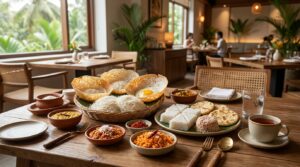
Imagine starting your morning with the aroma of freshly made hoppers, warm coconut roti, steaming string hoppers and a bowl of spicy sambol. Across Sri Lanka, breakfast can be a colourful combination of rice-based dishes, coconut, curries and freshly prepared accompaniments.
Unlike a breakfast built around just one or two foods, a traditional Sri Lankan morning meal can bring several dishes together. Some people enjoy a simple plate of string hoppers with dhal curry, while others prefer crispy hoppers, soft kiribath or warm pol roti with a spicy sambol. The choices vary between households, regions and communities, making Sri Lankan breakfast an exciting part of the island’s food culture.
Whether you grew up enjoying these dishes or are discovering them for the first time, exploring Sri Lankan breakfast is a delicious way to experience the country’s culinary traditions.
What Makes a Sri Lankan Breakfast Special?
Sri Lankan breakfast is known for its variety of rice-based foods, coconut-rich preparations, spices and flavourful accompaniments. Many traditional options are savoury, although sweet foods and sweet accompaniments are also enjoyed.
Rice and coconut appear in several familiar breakfast dishes. Rice flour is used to prepare hoppers, string hoppers and pittu, while grated coconut features in pol roti and sambols. Coconut milk is also used in dishes such as kiribath and kiri hodi.
Another defining feature is the combination of textures. A single breakfast might include crisp hopper edges, soft rice noodles, creamy dhal, fresh coconut sambol and a mildly spiced curry.
Breakfast is not exactly the same throughout the island. Family traditions, local ingredients, religious and cultural practices, and personal preferences all influence what people eat. Some households prepare a large breakfast for weekends or special occasions, while others prefer something simple on busy mornings.
-
Hoppers (Appa)
Hoppers, commonly called appa in Sinhala, are among Sri Lanka’s best-known traditional foods. They are bowl-shaped pancakes made from a batter that commonly uses rice flour and coconut milk, with fermentation methods varying by recipe.
Hoppers are cooked in a small, rounded pan. The batter spreads thinly around the sides, creating delicate, crispy edges while the centre remains thicker and softer.
There are several popular varieties:
- Plain hoppers: The classic version, often enjoyed with sambol or curry.
- Egg hoppers: An egg is cooked in the centre of the hopper, creating a more substantial meal.
- Sweet hoppers: Some preparations use sweet ingredients or are served with a sweet accompaniment.
- Milk hoppers: Certain local versions incorporate milk or coconut milk in their preparation.
Hoppers can be eaten for breakfast or in the evening, depending on household habits and where they are served.
Popular accompaniments include lunu miris, pol sambol, seeni sambol and various curries. The combination of crisp edges, a soft centre and spicy accompaniments makes hoppers a memorable part of Sri Lankan food culture.
- String Hoppers (Idiyappam)
String hoppers, known as idiyappam in Tamil, are delicate nests made from rice-flour dough that is pressed through a special mould and steamed.
Their fine strands create a soft, light texture that differs from ordinary hoppers. String hoppers are often arranged in small stacks and served with several accompaniments.
Common pairings include:
- Dhal curry
- Pol sambol
- Kiri hodi, a mild coconut-milk gravy
- Potato curry
- Fish or chicken curry
The mild taste of string hoppers makes them especially versatile. They absorb the flavours of accompanying curries without overpowering them.
String hoppers are enjoyed for both breakfast and dinner in many Sri Lankan households. They can be served as a simple meal with one or two accompaniments or as part of a more generous spread.
- Kiribath (Milk Rice)
Kiribath is a traditional Sri Lankan dish made by cooking rice with coconut milk and salt. Once cooked, it is usually spread or pressed into a flat shape and cut into squares or diamond-shaped pieces.
Its texture is soft and cohesive, while the coconut milk gives it a gentle richness. Kiribath is particularly associated with auspicious occasions, celebrations and the Sinhala and Tamil New Year.
It is commonly served with lunu miris, a spicy onion-and-chilli relish. Seeni sambol, jaggery or banana may also accompany it, depending on personal preference and the occasion.
The contrast between the mild milk rice and a spicy relish is one of the reasons this combination is so popular.
Kiribath is more than a breakfast food. It holds cultural significance in Sri Lanka and is often prepared to mark new beginnings and special family moments. It may be enjoyed as breakfast on ordinary days too, but its ceremonial associations make it especially meaningful.
- Pol Roti (Coconut Roti)
Pol roti is a rustic Sri Lankan flatbread made with flour and grated coconut. Depending on the recipe, onions, green chillies and curry leaves may be added to the dough.
The roti is cooked on a flat pan or griddle, developing a lightly browned exterior and a firm yet tender texture. The grated coconut gives it a distinctive flavour and makes it different from plain wheat roti.
Pol roti is especially appealing to people who enjoy a breakfast with a little texture. It can be served warm with lunu miris, katta sambol, pol sambol or curry.
Some people also enjoy roti with butter, treacle, jaggery or other sweet accompaniments. These combinations demonstrate how one familiar dish can be adapted to different tastes.
Because pol roti is relatively easy to prepare and can be paired with a wide range of foods, it remains a familiar choice in homes and local eateries.
- Pittu
Pittu is a traditional Sri Lankan food made from rice flour and grated coconut. The ingredients are combined to create a crumbly mixture, which is steamed in a cylindrical mould or steamer.
Once cooked, pittu has a soft, crumbly texture and a mild flavour. It is often served with coconut milk gravy, dhal curry, fish curry or other savoury accompaniments.
Different versions may use white rice flour, red rice flour or kurakkan flour, which can affect the colour and flavour.
Pittu is versatile because its mild taste works well with both savoury and sweet combinations. Some people enjoy it with banana or jaggery, while others prefer a spicy curry.
For anyone exploring Sri Lankan breakfast foods, pittu offers a different texture from string hoppers and hoppers while sharing familiar ingredients such as rice and coconut.
- Kola Kenda
Kola kenda is a traditional Sri Lankan herbal green porridge commonly made with rice, coconut milk and leafy greens or herbs.
Its green colour comes from the leafy ingredients used in the preparation. The exact recipe varies, with different greens selected according to availability and household tradition.
Kola kenda is often enjoyed warm, sometimes with jaggery or another small accompaniment. It has a thinner, porridge-like consistency compared with solid breakfast foods such as roti and pittu.
For many people, it is a familiar traditional morning drink or light meal. It also reflects the use of local greens in Sri Lankan home cooking.
The nutritional qualities depend on the leaves and other ingredients used. Although it can be part of a varied diet, it should not be treated as a cure for illness or as a substitute for medical care.
- Kadala (Chickpeas)
Kadala, or chickpeas, is another breakfast option enjoyed in Sri Lanka. The chickpeas are usually cooked until tender and may be tempered with onions, chillies, curry leaves and spices.
The result is a savoury, satisfying dish with a soft texture and a mixture of aromatic flavours. Some preparations are relatively mild, while others are spicier.
Kadala may be eaten on its own or served with foods such as string hoppers, roti or bread. Its versatility makes it suitable for a simple breakfast or as one component of a larger spread.
Chickpeas provide plant-based protein and dietary fibre, which contribute to the nutritional value of the meal. The overall nutritional content depends on the cooking method and any added oil or other ingredients.
- Dhal Curry (Parippu)
Dhal curry, commonly known as parippu, is a familiar accompaniment in Sri Lankan cooking. Made with lentils, it is usually prepared with ingredients such as onions, turmeric, curry leaves, chillies and coconut milk, depending on the recipe.
The texture can range from thick and creamy to a little thinner, depending on the amount of liquid used.
Dhal curry pairs especially well with string hoppers, hoppers, pittu and roti. Its soft consistency makes it easy to combine with these foods, while its mild spice and savoury flavour complement their relatively simple bases.
Some households prepare dhal curry almost every day, while others make it as one of several curries for a larger meal.
Lentils provide plant-based protein and fibre, making dhal a useful component of many different meals.
- Pol Sambol and Lunu Miris
A Sri Lankan breakfast often becomes more exciting with a well-chosen sambol. Two familiar options are pol sambol and lunu miris.
Pol sambol is generally made with freshly grated coconut, chilli, salt and lime, with onion and Maldive fish included in many recipes.
Its fresh coconut texture and spicy, tangy flavour make it a popular accompaniment for string hoppers, hoppers, roti and kiribath.
Lunu miris is a spicy relish usually prepared with chilli and onion, often with lime and salt. Some recipes include Maldive fish, while others omit it.
Lunu miris tends to have a sharper chilli flavour, creating a strong contrast with mild foods such as kiribath and plain hoppers.
These accompaniments show how a small side dish can significantly change the flavour of a breakfast.
- Roast Paan and Tea
Not every Sri Lankan breakfast requires a complicated spread. Bread, commonly called paan, is also a familiar option.
Roast paan is a popular choice, often served with butter, jam, sambol or curry. It offers a convenient alternative when there is less time to prepare a meal from scratch.
Tea is also an important part of many Sri Lankan mornings. Ceylon tea may be served plain or with milk and sugar, depending on personal preference.
A simple breakfast of bread and tea can be just as familiar to a household as a more elaborate spread of traditional rice-based dishes.
Sri Lankan breakfast culture includes everyday convenience as well as traditional cooking, and both have their place.
How Do Sri Lankan Breakfasts Differ Across the Island?
Sri Lanka has diverse food traditions, and breakfast varies according to region, community, available ingredients and family customs.
In some households, string hoppers with dhal and coconut sambol are a regular choice. Elsewhere, people may favour pol roti, pittu, kiribath or hoppers.
Tamil, Muslim, Sinhala and other communities have their own culinary traditions, with both shared dishes and distinct regional preparations. Local ingredients and cooking practices also influence what appears on the breakfast table.
The way breakfast is served can vary as well. A weekday meal may be simple and quick, while a weekend or festive breakfast might include several dishes and accompaniments.
There is no single menu that represents every Sri Lankan breakfast. The variety is part of what makes exploring the country’s food so rewarding.
Is Sri Lankan Breakfast Healthy?
Sri Lankan breakfast can offer a range of nutrients, depending on the foods chosen and how they are prepared.
Rice-based dishes provide carbohydrates, while lentils and chickpeas contribute plant-based protein and fibre. Coconut, coconut milk and other ingredients provide flavour and energy, while leafy greens and vegetables can add vitamins and minerals.
However, the nutritional balance differs from one meal to another. A breakfast made mostly of refined flour may offer a different nutrient profile from one that includes legumes, vegetables and a variety of accompaniments. Added oil, salt, sugar and portion sizes also matter.
For a more varied breakfast, you might combine a staple such as string hoppers or roti with dhal, vegetables or another protein-rich accompaniment. You can adjust chilli, coconut milk and oil to suit your preferences.
The aim is not to label traditional dishes as automatically healthy or unhealthy, but to enjoy a variety of foods in portions that suit your needs.
Tips for Enjoying a Traditional Sri Lankan Breakfast
If you want to explore Sri Lankan breakfast foods, a few simple tips can help you get started.
- Try one dish at a time. Start with string hoppers, hoppers or pol roti and learn which flavours you enjoy.
- Experiment with accompaniments. Pol sambol, lunu miris, dhal and kiri hodi each offer a different combination of flavour and texture.
- Adjust the spice level. Sambols and curries can be hot, so begin with a small amount if you prefer milder food.
- Explore regional and family variations. The same dish may be prepared differently in different kitchens.
- Ask how unfamiliar dishes are served. Local cooks and restaurant staff can often explain traditional pairings and ingredients.
You do not need to try every dish in one sitting. Discovering Sri Lankan breakfast can be an enjoyable journey, one meal at a time.
Final Thoughts
Sri Lankan breakfast is a celebration of variety, familiar ingredients and cooking traditions passed between generations. From crispy hoppers and delicate string hoppers to fragrant kiribath, coconut-rich pol roti, pittu and kola kenda, there is a wide range of dishes to discover.
The accompaniments are just as important. Dhal curry, pol sambol, lunu miris and other curries bring extra flavour and texture, turning simple staples into satisfying meals.
Whether you enjoy a quick breakfast of roast paan and tea or a generous spread shared with family, Sri Lankan breakfast offers a meaningful glimpse into the island’s food culture.
Next time you sit down for a morning meal, consider trying a traditional dish you have never tasted before. You may discover a new favourite waiting right here in Sri Lanka.
Looking for delicious Sri Lankan breakfast dishes and more culinary discoveries? Explore more Lankaura.


