

Open Lasagna
Categories
Categories
- Afghan Cuisine(1)
- American Cuisine(141)
- Australian Cuisine(6)
- Austrian Cuisine(2)
- Belgian Cuisine(1)
- Brazilian Cuisine(3)
- British Cuisine(35)
- Cakes in Sri Lanka(47)
- Canadian Cuisine(1)
- Chinese Cuisine(85)
- Cocktails in Sri Lanka(18)
- Cuban Cuisine(17)
- Dutch Cuisine(1)
- Egyptian Cuisine(3)
- Filipino Cuisine(3)
- French Cuisine(23)
- German Cuisine(9)
- Greek Cuisine(16)
- Hong Kong Cuisine(1)
- Indian Cuisine(79)
- Indonesian Cuisine(15)
- Innovative Sri Lankan Flavours(5)
- Iranian Cuisine(5)
- Irish Cuisine(2)
- Italian Cuisine(112)
- Japanese Cuisine(13)
- Kazakastani Cuisine(1)
- Korean Cuisine(0)
- Malaysian Cuisine(12)
- Mexican Cuisine(13)
- Modern Culinary Trends(40)
- Moroccan Cuisine(2)
- Omani Cuisine(1)
- Russian Cuisine(2)
- Saudi Arabian Cuisine(1)
- Senegalese Cuisine(1)
- Singapore Cuisine(1)
- Spanish Cuisine(7)
- Sri Lankan Authentic Beverages(37)
- Sri Lankan Authentic Curries(66)
- Sri Lankan Authentic Desserts(6)
- Sri Lankan Authentic Food(78)
- Sri Lankan Authentic Seafood(18)
- Sri Lankan Authentic Snacks(20)
- Sri Lankan Authentic Sweets(20)
- Swiss Cuisine(3)
- Taiwanese Cuisine(9)
- Thai Cuisine(21)
- Turkish Cuisine(11)
- Yemeni Cuisine(2)
Open Lasagna – A Modern Take on an Italian Classic
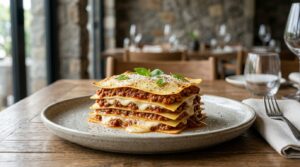
Open lasagna is a style of lasagna in which the pasta sheets and fillings are arranged in visible layers rather than assembled into a fully enclosed, baked casserole. Often presented as an individual restaurant portion, it allows each layer to be seen and appreciated.
Traditional lasagna is commonly prepared by layering pasta sheets with sauce, cheese, and other fillings in a baking dish before cooking. Open lasagna takes a different approach to presentation. The cooked pasta sheets are stacked or arranged with fillings between them, leaving the edges and layers exposed.
The result can look elegant while retaining the familiar flavours associated with lasagna. Depending on the recipe, the layers may include tomato sauce, minced meat, vegetables, béchamel sauce, ricotta, or other cheeses.
There is no single fixed recipe for open lasagna. Its ingredients and arrangement depend on the chef’s approach, making it suitable for different flavour combinations.
How Is Open Lasagna Different from Traditional Lasagna?
The main difference is the way the dish is assembled and presented.
Traditional lasagna is usually built in a baking dish with multiple layers of pasta, sauce, and filling. It is baked until the ingredients combine and the top develops a cooked, often golden finish. Once baked, it is cut into portions for serving.
Open lasagna is generally plated with the layers clearly visible. The pasta sheets may be arranged one on top of another with fillings placed between them. The dish can be served as an individual portion, allowing the chef to control its height, shape, and presentation.
The cooking method also varies. Some open lasagna preparations use freshly cooked pasta and warm fillings assembled just before serving, while others incorporate baked components.
Neither approach is automatically more authentic or flavourful than the other. They simply offer different ways to prepare and present a familiar Italian-inspired dish.
Common Ingredients in Open Lasagna
The ingredients depend on the chosen recipe, but several components are frequently used.
Lasagna pasta sheets – These form the structure of the dish. They are cooked until tender enough to layer while still holding their shape.
Tomato sauce – A tomato-based sauce adds acidity, colour, and savoury flavour. It may be prepared with garlic, onion, herbs, and seasonings.
Minced meat – Beef or another suitable meat can be cooked into a savoury sauce for a meat-based version. Vegetarian versions can leave it out.
Béchamel sauce – This smooth white sauce is made from butter, flour, and milk. It adds a creamy texture and balances the flavour of tomato-based fillings.
Cheese – Ingredients such as Parmesan, mozzarella, or ricotta may be used to provide savoury flavour and a creamy or melting texture.
Vegetables – Mushrooms, spinach, aubergine, and other vegetables can be incorporated into the layers.
Fresh herbs – Basil or parsley can add aroma and freshness to the finished dish.
The ingredients should complement one another without making the layers too heavy or difficult to arrange.
How Is Open Lasagna Prepared?
Open lasagna requires attention to both cooking and assembly because the final presentation is an important part of the dish.
First, the lasagna pasta sheets are cooked according to their type and package instructions. They should be tender but sturdy enough to lift and arrange without tearing. Once cooked, they are handled carefully to prevent them from sticking together.
The filling is prepared separately. For a meat-based version, minced meat may be cooked with onion, garlic, tomato sauce, and herbs. For a vegetarian version, vegetables such as mushrooms or spinach can be cooked and seasoned.
A béchamel sauce or another suitable sauce may be prepared to add creaminess. Cheese can be grated, sliced, or portioned according to the recipe.
To assemble the dish, a little sauce is placed on the serving plate or at the base of the first pasta sheet. A layer of filling is added, followed by another sheet of pasta. This process is repeated to create a small stack, with the fillings visible between the layers.
The dish is then finished with additional sauce, cheese, or fresh herbs as appropriate. The exact arrangement varies, but the pasta and filling should remain distinguishable rather than being completely hidden beneath the sauce.
Popular Open Lasagna Variations
Open lasagna can be adapted to suit different ingredients and tastes. The following are examples of possible preparations rather than a single standard recipe.
- Open Lasagna with Beef and Tomato Sauce
This version uses pasta sheets layered with a savoury beef and tomato sauce. Béchamel or cheese may be included to add richness. The exposed layers allow the contrasting colours of the pasta, sauce, and cheese to stand out.
- Open Vegetable Lasagna
A vegetarian version may include mushrooms, spinach, aubergine, or other vegetables. Tomato sauce, béchamel, and cheese can be used to bring the layers together.
- Open Lasagna with Spinach and Ricotta
Spinach and ricotta provide a creamy, savoury filling that works well with pasta sheets. A light tomato sauce or béchamel may be added, depending on the recipe.
- Open Mushroom Lasagna
Cooked mushrooms provide a deep, savoury flavour. They can be paired with herbs, cheese, and a creamy sauce for a rich vegetarian preparation.
- Open Lasagna with Seafood
Some modern restaurant preparations use seafood as the filling, often combined with a suitable light sauce. The ingredients and seasoning depend on the type of seafood used.
These variations demonstrate the flexibility of open lasagna while keeping the visible pasta layers at the centre of the presentation.
What Makes a Good Open Lasagna?
A well-prepared open lasagna depends on more than appearance. Each layer should contribute to the flavour and texture of the dish.
The pasta sheets need to be cooked properly so they remain tender without becoming overly soft. The filling should be moist enough to complement the pasta but not so watery that the layers slide apart.
Sauces should be balanced. Tomato sauce can provide acidity, while béchamel and cheese add creaminess. Using too much sauce may obscure the layers and make the dish difficult to plate neatly.
The temperature of the ingredients also matters. Warm pasta and fillings help create a cohesive dish, while careful assembly keeps the stack attractive.
Finally, the portion should be stable enough to serve comfortably. A few clearly visible layers are often more effective than an unnecessarily tall stack.
How Is Open Lasagna Served?
Open lasagna is often presented as an individual main course in restaurants, where the arrangement of the pasta and fillings can become part of the dining experience.
A wide, shallow plate provides room to arrange the layers and add sauce around them. A modest amount of grated cheese or fresh herbs can complete the dish without hiding the main ingredients.
Depending on the recipe, it may be served with a simple green salad or another light accompaniment. The side dish should complement the lasagna rather than compete with its flavours.
Because the layers are exposed, open lasagna is best assembled close to serving time. This helps preserve its structure and keeps the pasta from becoming soggy.
Why Is Open Lasagna Appealing?
Open lasagna combines familiar Italian-inspired flavours with a presentation that highlights the individual ingredients.
The visible layers make it easier to appreciate the pasta, sauce, filling, and cheese separately, while each forkful brings them together. Its flexible preparation also allows chefs to use different vegetables, sauces, and fillings according to the menu.
For diners, it offers a variation on a well-known comfort food. For restaurants, it provides an opportunity to present lasagna in a carefully plated, contemporary style.
Discover more food guides and culinary inspiration with Lankaura.
