

Fettuccine Pasta
Categories
Categories
- Afghan Cuisine(1)
- American Cuisine(141)
- Australian Cuisine(6)
- Austrian Cuisine(2)
- Belgian Cuisine(1)
- Brazilian Cuisine(3)
- British Cuisine(35)
- Cakes in Sri Lanka(47)
- Canadian Cuisine(1)
- Chinese Cuisine(85)
- Cocktails in Sri Lanka(18)
- Cuban Cuisine(17)
- Dutch Cuisine(1)
- Egyptian Cuisine(3)
- Filipino Cuisine(3)
- French Cuisine(23)
- German Cuisine(9)
- Greek Cuisine(16)
- Hong Kong Cuisine(1)
- Indian Cuisine(79)
- Indonesian Cuisine(15)
- Innovative Sri Lankan Flavours(5)
- Iranian Cuisine(5)
- Irish Cuisine(2)
- Italian Cuisine(112)
- Japanese Cuisine(13)
- Kazakastani Cuisine(1)
- Korean Cuisine(0)
- Malaysian Cuisine(12)
- Mexican Cuisine(13)
- Modern Culinary Trends(40)
- Moroccan Cuisine(2)
- Omani Cuisine(1)
- Russian Cuisine(2)
- Saudi Arabian Cuisine(1)
- Senegalese Cuisine(1)
- Singapore Cuisine(1)
- Spanish Cuisine(7)
- Sri Lankan Authentic Beverages(37)
- Sri Lankan Authentic Curries(66)
- Sri Lankan Authentic Desserts(6)
- Sri Lankan Authentic Food(78)
- Sri Lankan Authentic Seafood(18)
- Sri Lankan Authentic Snacks(20)
- Sri Lankan Authentic Sweets(20)
- Swiss Cuisine(3)
- Taiwanese Cuisine(9)
- Thai Cuisine(21)
- Turkish Cuisine(11)
- Yemeni Cuisine(2)
Fettuccine Pasta – Discover the Beauty of Italian Ribbon Pasta
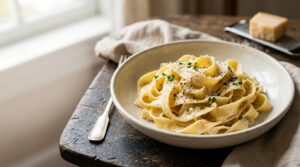
Fettuccine Pasta is a type of Italian pasta recognised by its long, flat, ribbon-like shape. Its name is associated with little ribbons, an apt description of the broad strands that distinguish it from thinner pasta varieties such as spaghetti.
Traditionally associated with Italian cooking, particularly Roman and central Italian cuisine, fettuccine is commonly made using flour and eggs. It is available fresh or dried, and its texture and cooking time depend on the ingredients and preparation method.
One of the reasons fettuccine pasta is popular is its versatility. It can be served with creamy sauces, tomato-based preparations, vegetables, mushrooms, chicken, or seafood. Its flat shape allows sauces to cling to the pasta, helping bring the ingredients together in every bite.
From a simple butter-and-cheese preparation to a rich Alfredo-style dish, fettuccine pasta offers plenty of opportunities to explore Italian-inspired flavours.
The Story Behind Fettuccine Pasta
Fettuccine pasta belongs to the wider tradition of Italian pasta-making, in which different regions developed distinctive shapes and ways of serving pasta.
Fresh egg pasta has a particularly strong place in several central and northern Italian culinary traditions. Flat ribbons are practical for serving with sauces that coat their broad surfaces, while the choice of flour, eggs, thickness, and accompanying ingredients can vary from one recipe to another.
Today, fettuccine pasta appears on restaurant menus around the world. Traditional preparations sit alongside contemporary versions featuring cream sauces, vegetables, meat, seafood, and locally inspired ingredients.
Although fettuccine pasta is often associated with Alfredo sauce, that is only one way to prepare it. The pasta itself is not defined by a particular sauce.
What Is Fettuccine Pasta Made Of?
The ingredients depend on whether the pasta is fresh or dried and on the recipe being followed.
- Flour
Flour forms the structure of the pasta dough. Different recipes use different types of wheat flour, influencing the texture and handling of the finished pasta.
- Eggs
Fresh fettuccine is commonly prepared with flour and eggs. Eggs contribute richness, colour, and structure to the dough.
Not every commercially produced fettuccine uses eggs, so it is important to check the ingredient label when following a specific diet.
- Water and Other Ingredients
Some pasta recipes use water as part of the dough, while others rely primarily on eggs for moisture. Commercial varieties may have different ingredient combinations depending on their production method.
Once the dough is prepared, it is rolled into sheets and cut into long, flat ribbons. These ribbons are then cooked and combined with the chosen sauce or other ingredients.
Popular Fettuccine Pasta Dishes
Fettuccine pasta can be prepared in many ways. The sauce and accompanying ingredients determine whether the finished dish is creamy, fresh, savoury, or rich.
- Fettuccine Alfredo
Fettuccine Alfredo is one of the best-known dishes associated with this pasta. The original Roman-style preparation is based on butter and Parmesan cheese, which are combined with pasta water to create a smooth coating.
Many international restaurant versions use cream, garlic, or additional seasonings. These variations can be delicious, although they differ from the simpler Roman preparation.
The broad ribbons of fettuccine make a suitable base for the buttery, cheese-rich sauce.
- Creamy Chicken Fettuccine
Chicken fettuccine combines pasta with cooked chicken and a sauce that may contain cream, cheese, garlic, or herbs.
The chicken adds substance, while the sauce coats the pasta ribbons. Vegetables such as mushrooms or spinach can also be included, depending on the recipe.
- Mushroom Fettuccine
Mushroom fettuccine features cooked mushrooms combined with pasta and a suitable sauce. Mushrooms provide an earthy, savoury flavour that works well with garlic, herbs, Parmesan, or a creamy preparation.
For a lighter version, mushrooms can be cooked with olive oil and herbs rather than a heavy sauce.
- Tomato Fettuccine
Tomato-based fettuccine offers a different flavour profile from cream-based varieties. Tomatoes provide acidity and a fresh, savoury taste, while garlic, onion, basil, and other herbs can add depth.
This preparation is suitable for people who prefer a pasta dish without a rich cream sauce.
- Seafood Fettuccine
Seafood fettuccine may include prawns, fish, mussels, or other seafood, depending on the recipe. The sauce can be based on olive oil, garlic, tomatoes, or cream.
The seafood should be cooked appropriately, and the seasoning should complement rather than overpower its flavour.
- Vegetable Fettuccine
Vegetable fettuccine combines pasta with ingredients such as bell peppers, zucchini, spinach, mushrooms, or broccoli.
Vegetables can add colour, texture, and variety to the dish. Olive oil, herbs, garlic, or a light tomato sauce can bring the ingredients together.
These variations show that fettuccine is not limited to one classic recipe. The same pasta can be used to create meals with different ingredients and flavour combinations.
How Is Fettuccine Pasta Prepared?
Preparing fettuccine begins with choosing the pasta and sauce.
Fresh fettuccine pasta can be made at home by preparing a dough, rolling it into thin sheets, and cutting the sheets into ribbons. Alternatively, dried or fresh ready-made pasta can be purchased.
Bring a pot of water to a boil and cook the pasta according to the packet instructions or the requirements of the fresh pasta recipe. Fresh pasta generally cooks more quickly than dried pasta, so it needs to be checked carefully.
Before draining, reserve a little of the cooking water. Its starch can help loosen a sauce and allow it to coat the pasta more evenly.
Meanwhile, prepare the selected sauce and any additional ingredients. If the recipe includes chicken or seafood, ensure these ingredients are cooked safely before combining them with the pasta.
Once the fettuccine is cooked to the desired texture, drain it and add it to the sauce. Toss gently until the ribbons are coated. Add a small amount of reserved pasta water if the sauce needs adjusting.
Serve promptly while the pasta is warm and the sauce has the right consistency.
How to Cook Fettuccine Pasta Properly
The texture of fettuccine is an important part of the finished dish. Overcooked pasta can become too soft and lose its characteristic bite, while undercooked pasta may be unpleasantly firm.
Use the cooking time on the package as a starting point, then taste a strand to check its texture. Fresh pasta may require much less time than dried varieties.
Use enough water to allow the pasta to move freely, and stir gently after adding it to the pot. This helps prevent the ribbons from sticking together.
If the pasta will be finished in a hot sauce, it can be removed from the water slightly before reaching its final texture, provided it is then cooked through during the final preparation.
Avoid rinsing cooked pasta when preparing a hot sauce-based dish, as rinsing removes some of the surface starch that can help the sauce adhere.
The final step is to combine the pasta and sauce while both are warm, allowing the flavours to come together before serving.
Choosing the Right Sauce for Fettuccine Pasta
Because fettuccine has a broad, flat shape, it pairs well with sauces that coat the ribbons evenly.
- Butter and Parmesan – A simple combination that allows the pasta’s texture and the cheese’s savoury flavour to remain prominent.
- Cream-based sauce – A rich option that works well with garlic, mushrooms, chicken, or selected vegetables.
- Tomato sauce – A brighter alternative that provides acidity and pairs with herbs, vegetables, meat, or seafood.
- Olive oil and garlic – A lighter preparation that highlights garlic and herbs without relying on a thick sauce.
- Pesto – A basil-based sauce that brings an aromatic, herbaceous flavour to the pasta.
The ideal choice depends on the accompanying ingredients and the richness desired. A balanced sauce should coat the pasta without drowning it.
What Makes a Good Fettuccine Pasta Dish?
A well-prepared fettuccine dish brings together properly cooked pasta, a balanced sauce, and complementary ingredients.
The pasta should remain tender while retaining some structure. The sauce should cling to the ribbons rather than collect in a watery pool at the bottom of the plate.
Seasoning is also important. Salt, pepper, garlic, herbs, and cheese can enhance the dish, but the quantities should suit the chosen sauce.
When adding ingredients such as mushrooms, vegetables, chicken, or seafood, consider their texture and moisture. Excess liquid can make a sauce thin, while overly rich additions can make the finished dish heavy.
Finally, serve the pasta soon after combining it with the sauce. This helps preserve its texture and gives the dish a fresh, appetising appearance.
How Is Fettuccine Pasta Served?
Fettuccine is usually served as a warm main course, although portion size and presentation depend on the recipe and dining style.
It can be arranged in a shallow bowl or on a plate, with the ribbons gently coated in sauce. Parmesan, fresh basil, parsley, or black pepper may be added when appropriate.
Creamy preparations can be paired with a simple green salad to provide a fresh contrast. Tomato-based or vegetable versions can be served with grilled vegetables or other suitable accompaniments.
For a restaurant-style presentation, keep the plating neat and allow the pasta ribbons and main ingredients to remain visible. A small amount of garnish is often enough.
Explore more food guides and culinary inspiration with Lankaura, Sri Lanka’s food discovery platform, and discover dishes to try at home or enjoy when dining out….!
