

Carbonara Pizza
Categories
Categories
- Afghan Cuisine(1)
- American Cuisine(141)
- Australian Cuisine(6)
- Austrian Cuisine(2)
- Belgian Cuisine(1)
- Brazilian Cuisine(3)
- British Cuisine(35)
- Cakes in Sri Lanka(47)
- Canadian Cuisine(1)
- Chinese Cuisine(85)
- Cocktails in Sri Lanka(18)
- Cuban Cuisine(17)
- Dutch Cuisine(1)
- Egyptian Cuisine(3)
- Filipino Cuisine(3)
- French Cuisine(23)
- German Cuisine(9)
- Greek Cuisine(16)
- Hong Kong Cuisine(1)
- Indian Cuisine(79)
- Indonesian Cuisine(15)
- Innovative Sri Lankan Flavours(5)
- Iranian Cuisine(5)
- Irish Cuisine(2)
- Italian Cuisine(112)
- Japanese Cuisine(13)
- Kazakastani Cuisine(1)
- Korean Cuisine(0)
- Malaysian Cuisine(12)
- Mexican Cuisine(13)
- Modern Culinary Trends(40)
- Moroccan Cuisine(2)
- Omani Cuisine(1)
- Russian Cuisine(2)
- Saudi Arabian Cuisine(1)
- Senegalese Cuisine(1)
- Singapore Cuisine(1)
- Spanish Cuisine(7)
- Sri Lankan Authentic Beverages(37)
- Sri Lankan Authentic Curries(66)
- Sri Lankan Authentic Desserts(6)
- Sri Lankan Authentic Food(78)
- Sri Lankan Authentic Seafood(18)
- Sri Lankan Authentic Snacks(20)
- Sri Lankan Authentic Sweets(20)
- Swiss Cuisine(3)
- Taiwanese Cuisine(9)
- Thai Cuisine(21)
- Turkish Cuisine(11)
- Yemeni Cuisine(2)
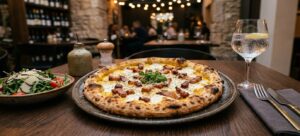
Carbonara Pizza – A Roman Pasta Classic Reimagined on Pizza
Carbonara is one of Rome’s most recognisable pasta dishes, traditionally built around a small group of ingredients: pasta, eggs, Pecorino Romano, guanciale and freshly ground black pepper. Put those flavours on a pizza, and the result is Carbonara Pizza. A combination that brings the savoury richness of the Roman classic into a completely different format.
Rather than relying on a traditional tomato sauce, Carbonara Pizza is usually defined by its creamy-looking cheese and egg element, crisp pieces of cured pork and plenty of black pepper. The finished pizza can be rich and indulgent, but when its ingredients are carefully balanced, each bite can still have a surprisingly savoury and peppery character.
What Gives Carbonara Pizza Its Identity?
The most recognisable feature of Carbonara Pizza is its departure from the tomato-based pizza style. Instead, its flavour profile is built around cheese, cured pork, egg and pepper.
Pecorino Romano is particularly important because of its salty, sharp and distinctly sheep’s-milk flavour. Some versions may also use Parmesan or a combination of cheeses, depending on the pizzeria’s interpretation.
Guanciale, the cured pork jowl traditionally associated with Roman carbonara, brings another important layer. As it cooks, its fat renders into the dish while the meat develops crisp edges. Pancetta is sometimes used as an alternative, although it has a different flavour and texture.
Freshly cracked black pepper completes the profile. Its warmth cuts through the richness of the cheese and pork, giving the pizza a more pronounced savoury finish.
The Egg Element
Egg is one of the most interesting parts of Carbonara Pizza because it requires careful handling.
In traditional carbonara, eggs are combined with cheese and the heat from the pasta to create a smooth, glossy coating without turning the eggs into scrambled eggs. On pizza, the same ingredients have to work within the much hotter environment of a pizza oven.
For this reason, Carbonara Pizza can be prepared in different ways. Some versions incorporate an egg directly onto the pizza during baking, while others use an egg-and-cheese mixture as part of the topping. The exact technique depends on the oven, baking temperature and style of the restaurant.
The aim is to retain the richness associated with carbonara while allowing the pizza to remain structured and enjoyable to eat.
Guanciale, Pancetta or Other Toppings?
For a traditional connection to Roman carbonara, guanciale is the most distinctive choice. Its higher fat content helps create a rich texture and allows its rendered fat to contribute flavour to the pizza.
Pancetta can provide a similar cured-pork character and may be easier for some restaurants to source. Bacon may also appear in modern interpretations, particularly outside Italy, although it changes the flavour profile considerably.
The choice of cured pork can therefore influence whether a Carbonara Pizza feels closely connected to its Roman inspiration or takes a more modern, international approach.
Why Black Pepper Matters
Black pepper might look like a small finishing ingredient, but it has an important role in balancing Carbonara Pizza.
The combination of cheese, egg and cured pork can create a rich mouthfeel. Pepper adds warmth and aromatic depth, helping to prevent those flavours from becoming one-dimensional.
Freshly ground pepper is particularly effective because it contributes both fragrance and a gentle heat. Some preparations use a generous amount, reflecting the role black pepper traditionally plays in Roman carbonara.
Getting the Cheese Right
Cheese needs to contribute flavour without making the pizza excessively heavy.
Pecorino Romano has a strong salty character, so the quantity matters. Too much can overpower the other ingredients, while too little can make the carbonara identity difficult to recognise.
Parmesan may be incorporated for a milder, nuttier flavour, while some modern versions use mozzarella as well. Mozzarella can provide the familiar melted-cheese texture associated with pizza, although it is not part of the traditional Roman carbonara recipe.
This creates an interesting distinction: Carbonara Pizza does not have to reproduce pasta carbonara ingredient-for-ingredient. It can interpret its defining flavours in a form that works specifically as pizza.
The Dough Still Has a Role
Although the toppings receive most of the attention, the dough affects how the richness of Carbonara Pizza is experienced.
A light, well-baked base can provide contrast to the creamy cheese, egg and cured pork. If the crust is too heavy, the combination can become overwhelming.
A crisp exterior with a softer centre can work particularly well because it gives the rich topping a firm foundation while maintaining the texture expected from a freshly baked pizza.
A well-structured crust also helps distribute the rich toppings evenly, making each bite feel balanced rather than overly dense. The right dough therefore supports the toppings without competing with their distinctive flavours.
Is Carbonara Pizza Supposed to Be Creamy?
This depends on the recipe.
Carbonara itself is often described as creamy because of the smooth combination of egg, cheese and pasta starch, but traditional carbonara does not require cream. The same principle can apply to Carbonara Pizza.
Some restaurants create a rich topping using egg and cheese, while others introduce cream or a creamy sauce to make the pizza more accessible to diners who enjoy a softer texture. Cream-based versions can be delicious, but they move further away from the traditional carbonara technique.
This difference is worth noticing when ordering, especially if you want a pizza that stays closer to the flavours and ingredients associated with the Roman dish.
Carbonara Pizza in Modern Pizzerias
Modern pizzerias often treat Carbonara Pizza as an opportunity to reinterpret a familiar dish rather than reproduce it exactly.
One restaurant might emphasise Pecorino Romano, guanciale and black pepper. Another might add mozzarella, use pancetta or introduce a different cheese combination. Some versions may include additional herbs or other ingredients that are not part of classic carbonara.
These variations show how Italian-inspired dishes can evolve as they move between kitchens, regions and food cultures. The essential idea remains the combination of rich cheese, cured pork, egg and pepper, while the execution can vary considerably.
Some chefs may also adjust the balance of richness and seasoning to suit local ingredients or diners’ preferences. This flexibility allows Carbonara Pizza to keep its recognisable character while taking on a distinctly individual style.
What to Expect When You Order One
Carbonara Pizza is a good choice for diners who enjoy savoury, rich flavours rather than bright tomato acidity.
The first impression often comes from the aroma of baked cheese and cured pork, followed by the salty richness of the topping. Black pepper adds a warm, slightly spicy note, while the egg and cheese provide a softer texture.
Because the toppings are rich, Carbonara Pizza can pair well with something fresh or lightly dressed on the side. A simple salad, for example, can provide contrast without competing with the main dish.
A Roman Idea in a Different Form
Carbonara Pizza is interesting because it sits between two food traditions without needing to be exactly the same as either one. It takes the recognisable flavours of Roman carbonara — Pecorino Romano, cured pork, egg and black pepper — and adapts them to the structure and heat of a pizza.
For food lovers exploring different pizza styles, it offers something beyond the usual tomato-and-cheese combination. It is a richer, more savoury option that shows how a familiar culinary idea can take on a completely different character when prepared in another format.
