

Idli (Sri Lankan Style Steamed Rice Cake)
Categories
Categories
- Afghan Cuisine(1)
- American Cuisine(141)
- Australian Cuisine(6)
- Austrian Cuisine(2)
- Belgian Cuisine(1)
- Brazilian Cuisine(3)
- British Cuisine(35)
- Cakes in Sri Lanka(47)
- Canadian Cuisine(1)
- Chinese Cuisine(85)
- Cocktails in Sri Lanka(18)
- Cuban Cuisine(17)
- Dutch Cuisine(1)
- Egyptian Cuisine(3)
- Filipino Cuisine(3)
- French Cuisine(23)
- German Cuisine(9)
- Greek Cuisine(16)
- Hong Kong Cuisine(1)
- Indian Cuisine(79)
- Indonesian Cuisine(15)
- Innovative Sri Lankan Flavours(5)
- Iranian Cuisine(5)
- Irish Cuisine(2)
- Italian Cuisine(112)
- Japanese Cuisine(13)
- Kazakastani Cuisine(1)
- Korean Cuisine(0)
- Malaysian Cuisine(12)
- Mexican Cuisine(13)
- Modern Culinary Trends(40)
- Moroccan Cuisine(2)
- Omani Cuisine(1)
- Russian Cuisine(2)
- Saudi Arabian Cuisine(1)
- Senegalese Cuisine(1)
- Singapore Cuisine(1)
- Spanish Cuisine(7)
- Sri Lankan Authentic Beverages(37)
- Sri Lankan Authentic Curries(66)
- Sri Lankan Authentic Desserts(6)
- Sri Lankan Authentic Food(78)
- Sri Lankan Authentic Seafood(18)
- Sri Lankan Authentic Snacks(20)
- Sri Lankan Authentic Sweets(20)
- Swiss Cuisine(3)
- Taiwanese Cuisine(9)
- Thai Cuisine(21)
- Turkish Cuisine(11)
- Yemeni Cuisine(2)
Idli (Sri Lankan Style Steamed Rice Cake): A Soft and Traditional South Asian Favourite
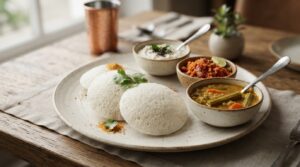
Idli is a soft, round steamed cake traditionally made from a fermented batter of rice and urad dal. Popular in Sri Lankan Tamil households and across South India, idli is enjoyed as a breakfast dish or a light meal, usually served with coconut sambol, sambar, or chutney.
Known for its gentle flavour and soft, spongy texture, idli is a comforting choice for people who enjoy simple meals with flavourful accompaniments. Unlike fried snacks or pan-cooked thosai, idli is prepared by steaming the batter in moulds, giving it a distinctive texture without the need for frying.
In Sri Lanka, idli is part of the wider food traditions shared across Tamil communities and South Asian cuisine. Its simple ingredients and versatility make it suitable for everyday meals, whether served at home or enjoyed at a restaurant.
What Is Idli?
Idli is a steamed savoury cake made mainly from rice and urad dal, also known as black gram. The ingredients are soaked, ground into a batter, and usually left to ferment before being steamed in small round moulds.
The fermentation process contributes to the batter’s flavour and texture. When steamed, the batter sets into soft, airy cakes that are easy to serve and pair well with a variety of savoury dishes.
Idli is generally mild in flavour, which allows the accompaniments to play an important role in the overall meal. Coconut chutney adds a creamy, fresh taste, while sambar provides a warm, savoury combination of lentils, vegetables, and spices.
Although idli is strongly associated with South Indian cuisine, it is also enjoyed in Sri Lanka, particularly within Tamil food traditions. Recipes may differ between households, including variations in the proportions of rice and lentils and the time allowed for fermentation.
What Makes Idli Special?
One of the most distinctive qualities of idli is its soft, spongy texture. The combination of rice, urad dal, and fermentation helps create a batter that can be steamed into light, tender cakes.
Several features make idli a popular meal:
-
Soft texture: Properly prepared idli is tender and easy to bite into.
-
Simple ingredients: Traditional recipes use familiar ingredients such as rice and urad dal.
-
Versatile serving options: Idli pairs well with chutneys, sambol, and sambar.
-
Steamed preparation: The cakes are cooked using steam rather than deep-frying.
-
Suitable for different meals: Idli can be served for breakfast or as part of a light lunch or dinner.
Its mild taste makes it especially adaptable. The same idli can be served with a gentle coconut chutney or a more strongly seasoned accompaniment, depending on individual preference.
How Is Idli Prepared?
Traditional idli preparation involves soaking, grinding, fermenting, and steaming. Although the exact recipe can vary, these are the main steps used to create the familiar soft cakes.
Preparing the Ingredients
Rice and urad dal are soaked, usually in separate containers, to soften them before grinding. Some recipes also include fenugreek seeds or use particular varieties of rice to achieve a preferred texture.
Once soaked, the ingredients are ground with water to create a batter. The consistency needs to be suitable for steaming: thick enough to hold its shape in the moulds but not so stiff that the finished idli becomes dense.
Fermenting the Batter
The batter is transferred to a suitable container and left to ferment. During this stage, natural microbial activity develops its flavour and helps improve its texture.
Fermentation time depends on factors such as room temperature, the ingredients, and the consistency of the batter. In warmer conditions, the batter may ferment more quickly.
A properly fermented batter generally becomes lighter and may increase in volume. Careful observation is more useful than relying only on a fixed number of hours.
Steaming the Idli
The fermented batter is poured into lightly greased idli moulds. These moulds are placed in a steamer, where the cakes cook through the heat of steam.
As the batter cooks, it sets into round cakes with a soft, spongy interior. Once cooked, the idli is allowed to rest briefly before being removed from the moulds.
Freshly steamed idli is often served warm alongside the chosen accompaniments.
Popular Accompaniments for Idli
Idli’s mild flavour makes it an excellent partner for a range of Sri Lankan and South Indian accompaniments. Each adds a different texture and flavour to the meal.
Coconut Sambol
Coconut sambol is a familiar favourite in Sri Lanka, made with grated coconut, chilli, onion, and lime or another souring ingredient.
Its spicy, tangy flavour provides a lively contrast to the softness of idli. This pairing brings together a steamed South Asian staple and a classic Sri Lankan accompaniment.
Coconut Chutney
Coconut chutney is one of the best-known accompaniments served with idli. It is usually prepared by blending coconut with ingredients such as green chilli, ginger, or other seasonings.
The chutney’s creamy consistency and fresh flavour complement the soft texture of the steamed cakes. Depending on the recipe, it can be mild or moderately spicy.
Sambar
Sambar is a savoury lentil-based dish prepared with vegetables, spices, and tamarind in many traditional recipes. It is commonly served with idli and other South Indian dishes.
When served with idli, sambar adds moisture and a rich combination of flavours. The soft cakes can be dipped into the sambar or served alongside it on a plate.
Tomato or Onion Chutney
Tomato chutney offers a slightly tangy accompaniment, while onion chutney can provide a deeper, savoury flavour. Both can be seasoned with chilli and other spices according to preference.
These chutneys are useful alternatives for people who want to enjoy idli with something different from coconut-based accompaniments.
Spicy Curries
Idli can also be served with suitable vegetable or lentil curries. In Sri Lankan households, the choice may reflect the family’s usual cooking style and the ingredients available.
A well-seasoned curry adds flavour to the otherwise mild cakes, turning a simple serving of idli into a more substantial meal.
When Do Sri Lankans Enjoy Idli?
Idli is commonly associated with breakfast, but it can also be enjoyed as a light meal at other times of the day.
For breakfast, a serving of warm idli with coconut sambol or chutney provides a simple and familiar combination. When served with sambar, it becomes a more substantial meal with a variety of textures and flavours.
Idli may also be included in family meals or ordered at restaurants serving Sri Lankan Tamil and South Indian dishes. Because the cakes are prepared in advance and steamed before serving, they are convenient to portion and serve.
The accompaniments often determine the character of the meal. A simple chutney creates a lighter serving, while sambar or curry adds more depth and variety.
Tips for Making Soft Idli at Home
Achieving a soft texture depends on the batter, fermentation, and steaming process. These practical tips can help improve the result.
-
Soak the ingredients adequately: Proper soaking makes the rice and lentils easier to grind.
-
Grind to the right consistency: A suitable batter helps the idli cook evenly.
-
Allow the batter to ferment: Fermentation contributes to the flavour and soft texture.
-
Prepare the moulds: Lightly greasing the moulds can make the cooked idli easier to remove.
-
Avoid overfilling: Leave enough room for the batter to expand as it cooks.
-
Steam until cooked through: The centre should be set rather than wet or sticky.
-
Serve while warm: Freshly steamed idli is especially pleasant with chutney or sambar.
The results may vary depending on the rice, lentils, equipment, and surrounding temperature. With practice, the batter can be adjusted to achieve the texture preferred by the household.
Idli and Sri Lankan Food Culture
Sri Lankan cuisine includes many dishes influenced by regional traditions and shared culinary histories. Within Tamil food culture, idli is enjoyed alongside thosai, string hoppers, and other familiar foods, often with coconut-based accompaniments and curries.
Although idli is widely associated with South India, its presence in Sri Lanka reflects the close culinary connections between the regions. Ingredients such as rice, lentils, coconut, and spices are used in many dishes across both food cultures, even when preparation methods differ.
Idli’s lasting appeal comes from its straightforward preparation, soft texture, and adaptability. It can be served in a simple home-cooked meal or as part of a larger spread, making it a familiar option for different occasions.
Final Thoughts
Idli is a soft, steamed rice-and-lentil cake that offers a simple yet satisfying way to enjoy traditional South Asian flavours. Paired with coconut sambol, coconut chutney, sambar, or a savoury curry, it can be adapted to suit different tastes and meals.
For anyone exploring Sri Lankan Tamil food and its connections with South Indian cuisine, idli is a delicious dish worth discovering.
Looking for delicious Sri Lankan food and more culinary discoveries? Explore Lankaura, Sri Lanka’s food discovery platform…!
Follow Lankaura on Facebook, Instagram and TikTok.