
Aguna Kola Sambol
Categories
Categories
- Afghan Cuisine(1)
- American Cuisine(141)
- Australian Cuisine(6)
- Austrian Cuisine(2)
- Belgian Cuisine(1)
- Brazilian Cuisine(3)
- British Cuisine(35)
- Cakes in Sri Lanka(47)
- Canadian Cuisine(1)
- Chinese Cuisine(85)
- Christmas Flavors(7)
- Cocktails in Sri Lanka(18)
- Cuban Cuisine(17)
- Dutch Cuisine(1)
- Egyptian Cuisine(3)
- Filipino Cuisine(3)
- French Cuisine(23)
- German Cuisine(9)
- Greek Cuisine(16)
- Hong Kong Cuisine(1)
- Indian Cuisine(79)
- Indonesian Cuisine(15)
- Innovative Sri Lankan Flavours(5)
- Iranian Cuisine(5)
- Irish Cuisine(2)
- Italian Cuisine(112)
- Japanese Cuisine(13)
- Kazakastani Cuisine(1)
- Korean Cuisine(0)
- Malaysian Cuisine(12)
- Mexican Cuisine(13)
- Modern Culinary Trends(40)
- Moroccan Cuisine(2)
- Omani Cuisine(1)
- Russian Cuisine(2)
- Saudi Arabian Cuisine(1)
- Senegalese Cuisine(1)
- Singapore Cuisine(1)
- Spanish Cuisine(7)
- Sri Lankan Authentic Beverages(38)
- Sri Lankan Authentic Curries(66)
- Sri Lankan Authentic Desserts(6)
- Sri Lankan Authentic Food(78)
- Sri Lankan Authentic Seafood(19)
- Sri Lankan Authentic Snacks(20)
- Sri Lankan Authentic Sweets(20)
- Swiss Cuisine(3)
- Taiwanese Cuisine(9)
- Thai Cuisine(21)
- Turkish Cuisine(11)
- Yemeni Cuisine(2)

Aguna Kola Sambol- A Traditional Sri Lankan Herbal Leaf Sambol
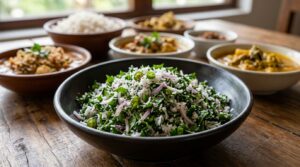
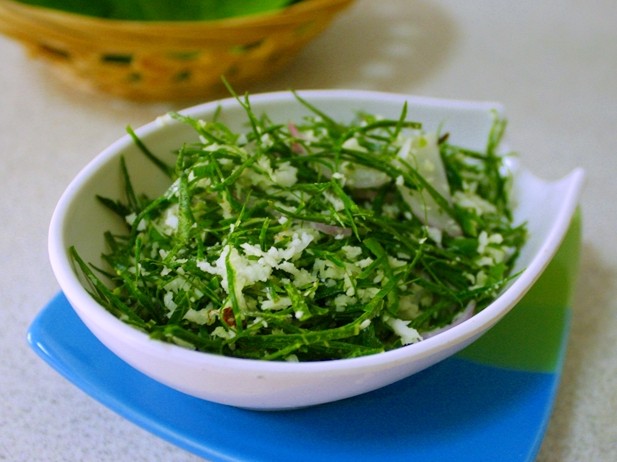
Aguna kola sambol is a traditional Sri Lankan preparation made using fresh aguna kola leaves, finely chopped or ground with ingredients such as coconut, chilli, onion, and lime. Known for its distinctive herbal flavour and fresh green colour, this sambol is enjoyed as an accompaniment to rice and curry meals.
Sri Lankan cuisine makes wonderful use of locally available leaves, herbs, vegetables, and spices. Aguna kola is one of the leafy ingredients used in traditional cooking, bringing a unique taste and freshness to the plate. When combined with grated coconut and familiar sambol ingredients, it becomes a simple yet flavourful dish that complements many everyday meals.
Whether served with steamed rice, dhal curry, fish curry, or other traditional dishes, aguna kola sambol offers a delicious way to enjoy the variety of ingredients found in Sri Lankan food culture.
What Is Aguna Kola Sambol?
Aguna kola sambol is a Sri Lankan-style leafy sambol prepared using fresh aguna kola leaves. The leaves are cleaned, finely sliced or crushed, and mixed with ingredients that create a balance of freshness, spice, and tanginess.
Like many Sri Lankan sambols, the preparation can vary from household to household. Some recipes use grated coconut as the main supporting ingredient, while others include additional onion, green chilli, dried chilli, salt, and lime juice.
The result is a fresh, savoury accompaniment that adds colour and flavour to a traditional Sri Lankan meal. Its leafy texture and distinctive taste make it different from more familiar sambols such as pol sambol and katta sambol.
What Makes Aguna Kola Sambol Special?
One of the most appealing qualities of aguna kola sambol is its use of fresh local leaves. Instead of relying on complicated preparation methods, the dish brings together a handful of familiar ingredients to create a flavourful accompaniment.
Several qualities make it special:
- Fresh herbal flavour: Aguna kola gives the sambol its distinctive leafy taste.
- Simple ingredients: It can be prepared using fresh leaves, coconut, chilli, onion, and lime.
- Traditional preparation: It reflects the Sri Lankan practice of using locally available greens in everyday cooking.
- Versatile accompaniment: It pairs well with rice, curries, and other traditional dishes.
- Fresh texture: Finely chopped leaves and grated coconut create an interesting combination.
The balance of ingredients is important. Lime adds acidity, chilli provides heat, and coconut can soften the stronger flavours of the leaves.
Ingredients Commonly Used in Aguna Kola Sambol
The exact ingredients depend on the household recipe, but a traditional preparation may include the following.
Aguna Kola
Fresh aguna kola leaves are the main ingredient. They should be carefully cleaned to remove dirt and unwanted material before preparation. The leaves are then finely sliced or chopped to create a suitable texture for the sambol.
Fresh Coconut
Grated coconut is commonly used in Sri Lankan sambols. It adds a mild sweetness and a soft texture that balances the herbal taste of the leaves.
Red Onion
Finely chopped red onion contributes a mild sharpness and natural sweetness. It also adds texture and flavour to the mixture.
Green or Dried Chilli
Chilli provides the heat that is familiar in many Sri Lankan sambols. The amount can be adjusted according to personal preference.
Lime Juice
Fresh lime juice adds a tangy flavour and helps balance the richness of the coconut and the taste of the leaves.
Salt
A little salt brings the ingredients together and enhances their natural flavours.
How Is Aguna Kola Sambol Prepared?
Aguna kola sambol is generally prepared by combining finely chopped fresh leaves with the other ingredients. The method is simple, but careful preparation helps maintain its freshness and flavour.
Cleaning the Leaves
The aguna kola leaves are washed thoroughly under clean running water. Any damaged leaves or unwanted material are removed. The leaves are then drained properly before chopping.
Chopping the Ingredients
The cleaned leaves are finely sliced or chopped. Coconut, onion, and chilli are prepared separately so that they can be mixed evenly.
The leaves should be chopped into small pieces to make the sambol easier to combine and serve.
Mixing the Sambol
The chopped leaves are combined with grated coconut, onion, chilli, and salt. Fresh lime juice is added gradually while mixing.
The ingredients are mixed until the flavours are evenly distributed. The quantity of coconut, chilli, and lime can be adjusted to suit the preferred taste.
Serving Fresh
Aguna kola sambol is best served fresh as an accompaniment to a meal. Preparing it shortly before serving helps retain its natural freshness and texture.
What Is Aguna Kola Sambol Served With in Sri Lanka?
Aguna kola sambol can complement several traditional Sri Lankan dishes. Its fresh leafy flavour provides a pleasant contrast to warm rice and richly seasoned curries.
Steamed Rice
A serving of aguna kola sambol alongside steamed rice creates a simple and satisfying combination. The fresh sambol adds flavour and texture to an otherwise straightforward rice meal.
Dhal Curry
Dhal curry is a familiar part of many Sri Lankan meals. Its creamy texture and mild seasoning work well with the fresh, tangy flavours of aguna kola sambol.
Fish Curry
Sri Lankan fish curry, particularly varieties prepared with chilli and other aromatic spices, can be paired with leafy sambols. The freshness of aguna kola provides a contrast to the rich curry flavours.
Chicken Curry
Chicken curry is another suitable accompaniment. A plate of rice, chicken curry, and aguna kola sambol brings together different textures and flavours for a hearty meal.
Other Vegetable Curries
Aguna kola sambol can also be served with potato curry, green bean curry, brinjal preparations, and other vegetable dishes. It adds variety to meals that include several cooked accompaniments.
Tips for Making Delicious Aguna Kola Sambol
A few simple preparation tips can help create a fresh and flavourful sambol.
- Choose fresh leaves: Use fresh, good-quality aguna kola leaves.
- Wash thoroughly: Clean the leaves carefully before chopping.
- Drain properly: Excess water can affect the texture of the sambol.
- Chop finely: Smaller pieces help distribute the leaves throughout the mixture.
- Use fresh coconut: Freshly grated coconut provides a pleasant texture and flavour.
- Balance the lime: Add lime juice gradually to avoid making the sambol too sour.
- Adjust the chilli: Use an amount that suits the preferred level of spice.
- Serve fresh: Prepare the sambol close to mealtime for the best texture.
Small adjustments can make a difference, and each household may have its own preferred combination of ingredients.
Aguna Kola Sambol and Sri Lankan Food Culture
Sri Lankan food culture includes a wide variety of leafy preparations, sambols, mallums, and vegetable dishes. Fresh greens are often used to add colour, texture, and flavour to everyday rice and curry meals.
Aguna kola sambol reflects this tradition of making use of local ingredients in simple and practical ways. It brings together fresh leaves and familiar sambol ingredients without requiring an elaborate cooking process.
Like other traditional Sri Lankan accompaniments, its preparation can differ between households and regions. These variations are part of what makes local food traditions interesting, as families adapt familiar recipes to their own tastes.
From everyday family lunches to traditional home-cooked meals, leafy sambols remain an important part of the variety found on Sri Lankan dining tables.
Final Thoughts
Aguna kola sambol is a fresh and flavourful Sri Lankan accompaniment that combines leafy greens with coconut, chilli, onion, and lime. Its distinctive herbal taste and simple preparation make it a lovely addition to rice and curry meals.
Whether served with dhal curry, fish curry, chicken curry, or vegetables, this traditional sambol brings another taste of Sri Lankan food culture to the table.
Looking for delicious Sri Lankan food and more culinary discoveries? Explore Lankaura, Sri Lanka’s food discovery platform…!