

Banana Hoppers
Categories
Categories
- Afghan Cuisine(1)
- American Cuisine(141)
- Australian Cuisine(6)
- Austrian Cuisine(2)
- Belgian Cuisine(1)
- Brazilian Cuisine(3)
- British Cuisine(35)
- Cakes in Sri Lanka(47)
- Canadian Cuisine(1)
- Chinese Cuisine(85)
- Cocktails in Sri Lanka(18)
- Cuban Cuisine(17)
- Dutch Cuisine(1)
- Egyptian Cuisine(3)
- Filipino Cuisine(3)
- French Cuisine(23)
- German Cuisine(9)
- Greek Cuisine(16)
- Hong Kong Cuisine(1)
- Indian Cuisine(79)
- Indonesian Cuisine(15)
- Innovative Sri Lankan Flavours(5)
- Iranian Cuisine(5)
- Irish Cuisine(2)
- Italian Cuisine(112)
- Japanese Cuisine(13)
- Kazakastani Cuisine(1)
- Korean Cuisine(0)
- Malaysian Cuisine(12)
- Mexican Cuisine(13)
- Modern Culinary Trends(40)
- Moroccan Cuisine(2)
- Omani Cuisine(1)
- Russian Cuisine(2)
- Saudi Arabian Cuisine(1)
- Senegalese Cuisine(1)
- Singapore Cuisine(1)
- Spanish Cuisine(7)
- Sri Lankan Authentic Beverages(37)
- Sri Lankan Authentic Curries(66)
- Sri Lankan Authentic Desserts(6)
- Sri Lankan Authentic Food(78)
- Sri Lankan Authentic Seafood(18)
- Sri Lankan Authentic Snacks(20)
- Sri Lankan Authentic Sweets(20)
- Swiss Cuisine(3)
- Taiwanese Cuisine(9)
- Thai Cuisine(21)
- Turkish Cuisine(11)
- Yemeni Cuisine(2)
Banana Hoppers – A Sweet Twist on a Sri Lankan Favourite
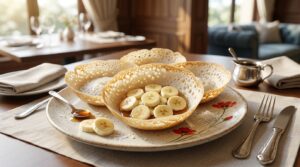
Sri Lankan hoppers are loved for their distinctive bowl shape, crispy edges and soft centres. While traditional hoppers are often enjoyed with curries, sambol or other savoury accompaniments, sweet variations offer a different way to enjoy this familiar dish. Banana hoppers bring together the traditional hopper texture and the natural sweetness of ripe bananas.
With their golden edges, soft middle and gentle fruity aroma, banana hoppers are an interesting choice for breakfast, tea time or a sweet snack. They also show how a familiar Sri Lankan food can be adapted with simple ingredients to create something different.
What Are Banana Hoppers?
Banana hoppers are a sweet variation of traditional Sri Lankan hoppers, also known as appa. Traditional hoppers are bowl-shaped pancakes made from a rice-flour-based batter, usually prepared with coconut milk and fermented before cooking.
In banana hoppers, ripe bananas are incorporated into the batter or used as part of a recipe to add sweetness and flavour. The exact preparation can vary depending on the cook and the ingredients used.
The familiar shape remains an important part of the dish. The batter spreads thinly along the sides of a specially designed hopper pan, creating delicate, crispy edges while the centre stays thicker and softer.
The banana gives this variation a fruity character that distinguishes it from the traditional version. It can be enjoyed as a simple sweet dish without losing the familiar appearance and texture that make Sri Lankan hoppers recognisable.
What Ingredients Are Used to Make Banana Hoppers?
The ingredients used for banana hoppers depend on the recipe, but several basic ingredients can help create their characteristic flavour and texture.
Ripe bananas: Bananas provide natural sweetness, a fruity aroma and a soft texture. Fully ripe bananas are often suitable because they are easier to mash and have a more developed flavour.
Rice flour: Rice flour is a common ingredient in traditional Sri Lankan hopper batter. It helps form the base of the hopper and contributes to its familiar texture.
Coconut milk: Coconut milk adds richness and a gentle coconut flavour. It is widely used in Sri Lankan cooking and complements the sweetness of ripe bananas.
Yeast or a fermentation agent: Some recipes use yeast to help the batter ferment and develop its texture. Preparation methods can differ, so not every version follows exactly the same process.
Sugar: Additional sugar may be included depending on the sweetness of the bananas and the preferred taste. Some recipes rely mainly on the natural sweetness of ripe fruit.
The balance of these ingredients influences the final result. The aim is to create a batter that cooks into a hopper with lightly crisp edges and a soft centre, while allowing the banana flavour to come through.
How Are Banana Hoppers Prepared?
Preparing banana hoppers begins with making a suitable batter. In a typical variation, ripe bananas are mashed until smooth and combined with the other ingredients. The batter is mixed until it reaches a consistency suitable for spreading around the sides of a hopper pan.
If the recipe uses fermentation, the batter is left to rest for the required time. This step helps develop the texture and flavour associated with fermented hopper batter.
A hopper pan is then heated and lightly greased. A portion of batter is poured into the centre of the pan, which is carefully tilted or rotated so the batter coats the sides while leaving a thicker layer in the middle.
The hopper cooks until its edges become golden and crisp and the centre is set. The cooking time depends on the batter, pan temperature and thickness of the mixture.
Banana hoppers need a little attention during cooking because the natural sugars in ripe bananas can affect browning. Careful heat control helps prevent the outside from becoming too dark before the middle is properly cooked.
Once ready, the hopper can be removed from the pan and served warm. Its combination of crisp edges and soft centre makes it enjoyable straight from the stove.
What Makes Banana Hoppers Different from Traditional Hoppers?
Traditional Sri Lankan hoppers are often appreciated for their mild flavour, coconut aroma and contrasting textures. They can be served with both savoury and sweet accompaniments, depending on personal preference.
Banana hoppers offer a different experience because the banana adds sweetness directly to the dish. Rather than depending entirely on a topping or accompaniment, this variation brings fruity flavour into the hopper itself.
The texture may also differ slightly according to the recipe. Mashed banana adds moisture to the batter, which can influence how the centre cooks and how crisp the edges become.
Their flavour makes banana hoppers particularly suitable for people who enjoy sweeter breakfast foods or snacks. However, the final taste depends on the ripeness of the bananas, the amount used and whether additional sweeteners are included.
Both traditional and banana hoppers share the distinctive bowl-shaped appearance that makes this Sri Lankan food instantly recognisable.
How Do Banana Hoppers Taste?
Banana hoppers combine the gentle flavour of the hopper batter with the sweetness and aroma of ripe bananas. The result can be mildly sweet, fruity and comforting without necessarily tasting like a conventional banana dessert.
The edges provide a light crispness, while the centre is generally softer. Coconut milk, when included, contributes richness and complements the banana flavour.
The level of sweetness depends on the ingredients. Ripe bananas can provide enough sweetness for some recipes, while others include a little sugar for a more pronounced sweet taste.
Because the ingredients and preparation methods vary, banana hoppers can differ from one kitchen to another. Some may have a stronger banana aroma, while others retain more of the familiar flavour of traditional hoppers.
Serving them warm helps preserve the contrast between their crisp edges and soft centres.
How Can Banana Hoppers Be Served?
Banana hoppers can be enjoyed in several ways, making them suitable for different occasions.
On their own – Freshly cooked banana hoppers can be served warm without additional toppings, allowing their natural flavour to stand out.
With honey – A small drizzle of honey can provide extra sweetness and complement the banana flavour.
With fresh fruit – Sliced bananas or other fresh fruits can be served alongside the hoppers for a colourful breakfast or snack.
With tea or coffee – Banana hoppers can make a pleasant accompaniment to a cup of tea or coffee during a relaxed afternoon break.
As a sweet breakfast – They can be served as part of a breakfast spread for people who prefer something sweet in the morning.
The best accompaniment depends on the sweetness of the hopper itself. Keeping the additions simple can help the banana flavour remain the main focus.
Banana Hoppers in Sri Lanka
Hoppers are an established part of Sri Lankan food culture, and their versatility makes them suitable for a range of meals. Although traditional versions are widely associated with savoury accompaniments, sweet variations offer another way to enjoy the familiar dish.
Banana hoppers provide an opportunity to combine a recognisable local food with the flavour of a widely enjoyed fruit. They can be prepared at home using ingredients commonly found in Sri Lankan kitchens, although the precise recipe may differ between households.
For visitors exploring Sri Lankan cuisine, sweet hopper variations can also introduce a different side of a familiar local dish. Restaurants, cafés and home cooks may offer their own interpretations, depending on their menus and preferences.
Availability can vary by location, so anyone hoping to try banana hoppers outside the home may need to check individual restaurant menus.
Final Thoughts
Banana hoppers offer a sweet and fruity variation of traditional Sri Lankan hoppers. Their combination of golden, crispy edges, a soft centre and the natural sweetness of ripe bananas makes them an appealing option for breakfast, tea time or a simple snack.
Whether enjoyed on their own, served with honey or paired with a warm drink, they provide another way to appreciate the versatility of Sri Lankan food.
Looking for delicious Sri Lankan dishes and more culinary discoveries? Explore More Lankaura.
Follow Lankaura on Facebook, Instagram and TikTok.
