

Boiled Manioc (Cassava)
Categories
Categories
- Afghan Cuisine(1)
- American Cuisine(141)
- Australian Cuisine(6)
- Austrian Cuisine(2)
- Belgian Cuisine(1)
- Brazilian Cuisine(3)
- British Cuisine(35)
- Cakes in Sri Lanka(47)
- Canadian Cuisine(1)
- Chinese Cuisine(85)
- Cocktails in Sri Lanka(18)
- Cuban Cuisine(17)
- Dutch Cuisine(1)
- Egyptian Cuisine(3)
- Filipino Cuisine(3)
- French Cuisine(23)
- German Cuisine(9)
- Greek Cuisine(16)
- Hong Kong Cuisine(1)
- Indian Cuisine(79)
- Indonesian Cuisine(15)
- Innovative Sri Lankan Flavours(5)
- Iranian Cuisine(5)
- Irish Cuisine(2)
- Italian Cuisine(112)
- Japanese Cuisine(13)
- Kazakastani Cuisine(1)
- Korean Cuisine(0)
- Malaysian Cuisine(12)
- Mexican Cuisine(13)
- Modern Culinary Trends(40)
- Moroccan Cuisine(2)
- Omani Cuisine(1)
- Russian Cuisine(2)
- Saudi Arabian Cuisine(1)
- Senegalese Cuisine(1)
- Singapore Cuisine(1)
- Spanish Cuisine(7)
- Sri Lankan Authentic Beverages(37)
- Sri Lankan Authentic Curries(66)
- Sri Lankan Authentic Desserts(6)
- Sri Lankan Authentic Food(78)
- Sri Lankan Authentic Seafood(18)
- Sri Lankan Authentic Snacks(20)
- Sri Lankan Authentic Sweets(20)
- Swiss Cuisine(3)
- Taiwanese Cuisine(9)
- Thai Cuisine(21)
- Turkish Cuisine(11)
- Yemeni Cuisine(2)
Boiled Manioc (Cassava)- A Traditional Sri Lankan Favourite
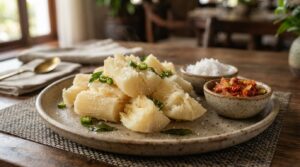
Boiled manioc, also known as cassava, is a traditional food enjoyed in many Sri Lankan homes. With its soft texture, mild flavour, and filling nature, boiled manioc is a simple dish that brings together familiar ingredients and traditional cooking methods. It is often served hot with grated coconut, spicy lunu miris, katta sambol, or a cup of plain tea.
Manioc has long been valued as a practical staple in Sri Lanka, where it can be prepared without complicated ingredients or elaborate cooking techniques. Whether enjoyed for breakfast, as an evening snack, or as part of a simple family meal, boiled manioc remains a comforting choice for people who appreciate traditional Sri Lankan food.
What Is Boiled Manioc?
Boiled manioc is prepared from the root of the cassava plant, a starchy root vegetable cultivated in many tropical regions. In Sri Lanka, it is commonly known as manioc or manyokka and is used in a variety of traditional dishes.
The preparation is straightforward: the cassava root is peeled, washed thoroughly, cut into manageable pieces, and boiled in water until tender. Once cooked, it develops a soft, starchy texture and a mild taste that pairs well with spicy or savoury accompaniments.
The final texture depends on the variety of cassava and how long it is cooked. Properly prepared manioc should be tender enough to eat comfortably while retaining its shape.
Unlike dishes that rely on rich sauces or complicated seasoning, boiled manioc allows the natural character of the root to take centre stage. Its simplicity is one of the reasons it continues to be enjoyed across generations.
Why Is Boiled Manioc Popular in Sri Lanka?
Boiled manioc has a familiar place in Sri Lankan food culture because it is straightforward to prepare and can be served in different ways. It is often associated with traditional home cooking, village food traditions, and simple meals made with locally available ingredients.
Several qualities contribute to its popularity:
-
Simple preparation: The root can be boiled with a few basic ingredients.
-
Versatile serving options: It can be enjoyed with coconut, sambol, or other savoury accompaniments.
-
Filling texture: Its naturally starchy flesh makes it a substantial food.
-
Traditional appeal: It remains part of familiar Sri Lankan eating habits.
-
Suitable for sharing: A prepared batch can be served to family members or guests.
For many people, boiled manioc brings back memories of home-cooked breakfasts and relaxed evenings when simple food was enough to make a meal feel complete.
How Is Boiled Manioc Prepared?
Preparing boiled manioc requires only a few basic steps, but careful handling is essential.
Selecting and Cleaning the Manioc
Fresh cassava roots should be selected and inspected before cooking. The outer brown skin and the inner layer beneath it must be removed completely. The edible flesh is then washed and cut into evenly sized pieces so that they cook more consistently.
Cassava should never be eaten raw or undercooked. Some varieties contain naturally occurring cyanogenic compounds, which can release cyanide. Peeling and thorough cooking are important safety steps, and preparation should follow reliable guidance for the particular cassava variety.
Boiling Until Tender
The prepared pieces are placed in a pot of water and boiled until thoroughly cooked and tender. Cooking time varies according to the thickness of the pieces and the variety of cassava.
Some households add a little salt to the cooking water, while others prefer to season the manioc after cooking. The pieces should be checked carefully to ensure they are cooked throughout rather than relying on time alone.
Serving While Warm
Once fully cooked, the manioc is drained and served warm. It can be placed on a serving plate alongside grated coconut, lunu miris, or another preferred accompaniment.
The result is a simple dish with a soft texture and mild flavour, ready to be enjoyed as part of a traditional Sri Lankan meal.
Popular Accompaniments for Boiled Manioc
Boiled manioc is mild in flavour, making its accompaniments an important part of the overall experience. Sri Lankan favourites often add spice, freshness, or a little richness to the plate.
Grated Coconut
Freshly grated coconut is a classic accompaniment to boiled manioc. Its natural flavour and texture complement the soft, starchy root without overpowering it.
Some people prefer to mix the coconut with a little salt, while others serve it separately. This combination is simple, familiar, and closely associated with traditional home cooking.
Lunu Miris
Lunu miris is a spicy Sri Lankan condiment typically made with chilli, onion, salt, and lime or another souring ingredient. Its bold heat and sharp flavour contrast beautifully with the mild taste of boiled manioc.
For those who enjoy spicy food, a small portion of lunu miris can make this simple dish much more flavourful.
Katta Sambol
Katta sambol is another popular choice for people who enjoy strong chilli flavours. Its heat adds intensity to each bite, while the mild manioc helps balance the overall taste.
The exact ingredients and preparation can vary between households, but the combination offers a familiar taste of Sri Lankan food culture.
Coconut Sambol
Coconut sambol combines grated coconut with chilli, onion, and lime or another souring ingredient. Compared with a chilli-focused condiment, it offers a mix of freshness, texture, and spice.
Served beside boiled manioc, coconut sambol creates a satisfying combination that is easy to prepare at home.
A Cup of Plain Tea
Boiled manioc is also enjoyed with plain tea, particularly as a simple breakfast or evening meal. The warm drink complements the dish without requiring additional preparation.
Depending on personal preference, the manioc may be served with coconut or sambol, or enjoyed alongside tea as part of a relaxed break.
When Do Sri Lankans Enjoy Boiled Manioc?
Boiled manioc can be eaten at different times of the day, depending on household habits and personal preference.
For breakfast, it may be served warm with grated coconut or lunu miris. As an evening snack, it can be paired with a cup of tea. It can also form part of a simple meal when accompanied by sambol or another savoury dish.
Its preparation is uncomplicated, making it a useful option for people who enjoy traditional foods made with a small number of ingredients. The dish can be shared among family members and adapted to suit different preferences for spice and seasoning.
Although eating habits vary throughout the island, boiled manioc continues to be recognised as a familiar part of Sri Lanka’s traditional food landscape.
Tips for Preparing Delicious Boiled Manioc
A few practical details can help produce a better result when cooking manioc at home.
-
Peel it thoroughly: Remove the outer skin and the layer beneath it before cooking.
-
Cut evenly: Similar-sized pieces help the root cook more consistently.
-
Cook it completely: Boil the pieces until tender throughout, following safe preparation guidance.
-
Choose suitable accompaniments: Lunu miris, grated coconut, and coconut sambol are familiar Sri Lankan options.
-
Serve it warm: Freshly cooked manioc is especially enjoyable with spicy accompaniments.
-
Handle leftovers carefully: Refrigerate cooked manioc promptly in a suitable covered container and reheat thoroughly before eating.
These small steps help maintain the dish’s texture and make it easier to serve safely.
Boiled Manioc and Sri Lankan Food Culture
Sri Lankan cuisine includes a wide range of staple foods, from rice and string hoppers to bread, yams, and other root vegetables. Boiled manioc belongs to this broader tradition of making satisfying meals from simple ingredients.
Its appeal is closely connected to the way it is served. A few pieces of boiled manioc alongside grated coconut or a spicy sambol can create a meal that feels both familiar and comforting. It also demonstrates how traditional cooking often relies on the combination of a mild staple and a more strongly flavoured accompaniment.
Today, boiled manioc remains an option for people who enjoy exploring traditional Sri Lankan dishes. Its uncomplicated preparation and distinctive texture continue to make it a recognisable favourite in homes across the country.
Final Thoughts
Boiled manioc is a simple yet memorable part of Sri Lankan food culture. Its soft, starchy texture and mild flavour make it a natural match for grated coconut, lunu miris, katta sambol, and other familiar accompaniments.
Whether enjoyed for breakfast or as an evening snack with plain tea, this traditional dish shows how basic ingredients can become a satisfying meal through familiar cooking methods and flavourful pairings.
Looking for delicious Sri Lankan food and more culinary discoveries? Explore Lankaura, Sri Lanka’s food discovery platform…!
Follow Lankaura on Facebook, Instagram and TikTok.