

Honey Hoppers
Categories
Categories
- Afghan Cuisine(1)
- American Cuisine(141)
- Australian Cuisine(6)
- Austrian Cuisine(2)
- Belgian Cuisine(1)
- Brazilian Cuisine(3)
- British Cuisine(35)
- Cakes in Sri Lanka(47)
- Canadian Cuisine(1)
- Chinese Cuisine(85)
- Cocktails in Sri Lanka(18)
- Cuban Cuisine(17)
- Dutch Cuisine(1)
- Egyptian Cuisine(3)
- Filipino Cuisine(3)
- French Cuisine(23)
- German Cuisine(9)
- Greek Cuisine(16)
- Hong Kong Cuisine(1)
- Indian Cuisine(79)
- Indonesian Cuisine(15)
- Innovative Sri Lankan Flavours(5)
- Iranian Cuisine(5)
- Irish Cuisine(2)
- Italian Cuisine(112)
- Japanese Cuisine(13)
- Kazakastani Cuisine(1)
- Korean Cuisine(0)
- Malaysian Cuisine(12)
- Mexican Cuisine(13)
- Modern Culinary Trends(40)
- Moroccan Cuisine(2)
- Omani Cuisine(1)
- Russian Cuisine(2)
- Saudi Arabian Cuisine(1)
- Senegalese Cuisine(1)
- Singapore Cuisine(1)
- Spanish Cuisine(7)
- Sri Lankan Authentic Beverages(37)
- Sri Lankan Authentic Curries(66)
- Sri Lankan Authentic Desserts(6)
- Sri Lankan Authentic Food(78)
- Sri Lankan Authentic Seafood(18)
- Sri Lankan Authentic Snacks(20)
- Sri Lankan Authentic Sweets(20)
- Swiss Cuisine(3)
- Taiwanese Cuisine(9)
- Thai Cuisine(21)
- Turkish Cuisine(11)
- Yemeni Cuisine(2)
Honey Hoppers – A Sweet Sri Lankan Favourite with a Golden Touch
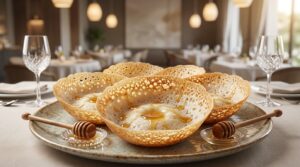
Sri Lankan hoppers are known for their delicate, crispy edges and soft centres, making them a much-loved part of the island’s food culture. While traditional hoppers are often enjoyed with savoury curries and sambol, sweet accompaniments offer another way to enjoy this familiar dish. Honey hoppers bring together the simple flavour of traditional hoppers and the natural sweetness of honey.
With their golden appearance, light texture and sweet finish, honey hoppers are an appealing choice for breakfast, tea time or a simple dessert. This combination shows how a familiar Sri Lankan food can be enjoyed with a little extra sweetness while keeping its traditional character.
What Are Honey Hoppers?
Honey hoppers are a sweet way of enjoying traditional Sri Lankan hoppers, also known as appa. Hoppers are bowl-shaped pancakes usually made from a rice-flour-based batter with coconut milk. Depending on the recipe, the batter is fermented before cooking to help develop its flavour and texture.
Honey can be added to the finished hopper or served alongside it. Some preparations may incorporate sweetness into the batter, while others keep the hopper itself simple and use honey as a topping.
The result is a dish that combines the familiar contrast of crispy edges and a soft centre with a sweet, honey-flavoured finish. The exact taste depends on how much honey is used and when it is added.
What Makes Honey Special in This Dish?
Honey is appreciated for its natural sweetness, distinctive aroma and smooth consistency. Its flavour can range from mild and floral to deeper and more pronounced, depending on the variety.
When paired with hoppers, honey adds sweetness without requiring a complicated preparation. A small drizzle can complement the mild flavour of the hopper and create a pleasant contrast with its crisp edges.
Honey also gives the dish an attractive appearance. When poured over a freshly prepared hopper, it can create a glossy finish that makes the food look especially inviting.
The amount used matters. A light drizzle allows the hopper’s own flavour to remain noticeable, while a more generous serving creates a sweeter result. Personal preference plays an important role in how this simple combination is enjoyed.
How Are Honey Hoppers Prepared?
Honey hoppers begin with the preparation of traditional hopper batter. Rice flour, coconut milk and other ingredients suitable for the chosen recipe are mixed together to create a smooth batter. If fermentation is part of the method, the batter is left to rest for the required period.
A hopper pan is heated and lightly greased before a portion of batter is poured into the centre. The pan is then tilted or rotated so the batter spreads around the sides, leaving a thicker layer in the middle.
As the hopper cooks, its edges become thin and crisp while the centre remains soft. Once the hopper is cooked through and has developed a light golden colour, it can be removed from the pan.
Honey is then drizzled over the hopper or served separately. Adding honey after cooking allows its flavour and texture to remain distinct, creating a sweet finish without complicating the cooking process.
The final result depends on the quality of the batter, the heat of the pan and the amount of honey used. Freshly cooked hoppers are particularly enjoyable because their crisp edges contrast with the smooth sweetness of the honey.
What Do Honey Hoppers Taste Like?
Honey hoppers offer a simple combination of mild, slightly coconut-flavoured batter and the sweetness of honey. Unlike savoury hopper meals, which often feature spicy curries or sambol, this version focuses on a sweeter flavour profile.
The thin edges provide a light crispness, while the centre offers a softer texture. Honey adds a smooth sweetness that complements both parts of the hopper.
The flavour can vary depending on the type of honey and how it is served. A mild honey may provide a delicate sweetness, while a stronger variety can contribute a more noticeable aroma.
The balance between the hopper and honey is what makes the dish appealing. When served in the right amount, honey enhances the traditional hopper without completely overpowering its familiar flavour.
Honey Hoppers vs Traditional Hoppers
Traditional Sri Lankan hoppers are versatile and can be enjoyed with a wide range of accompaniments. They are often served with lunu miris, pol sambol, curries or an egg cooked in the centre.
Honey hoppers offer a different experience by focusing on sweetness rather than spice. Instead of using savoury accompaniments, honey provides a simple addition that changes the flavour of the dish.
The basic hopper shape and cooking technique remain the same. The main difference is how the finished hopper is served and flavoured.
This makes honey hoppers a useful option for people who enjoy traditional Sri Lankan food but prefer something sweet for breakfast or a snack. They also provide an easy way to change the presentation of a familiar dish without requiring a completely different cooking method.
What Can You Serve with Honey Hoppers?
Honey hoppers can be enjoyed on their own, but a few simple accompaniments can make them more suitable for different occasions.
Fresh fruit – Sliced bananas or other seasonal fruits can complement the sweetness of honey and add colour to the plate.
Tea or coffee – A warm drink makes honey hoppers a pleasant choice for a relaxed breakfast or afternoon tea break.
Extra honey on the side – Serving honey separately allows everyone to choose their preferred level of sweetness.
Coconut-based accompaniments – Mild coconut flavours can complement the ingredients traditionally used in hopper batter.
A mixed breakfast spread – Honey hoppers can be served alongside other breakfast favourites for a varied meal.
The best pairing depends on personal taste. Keeping the accompaniments simple helps the flavour of the honey remain the main feature.
Honey Hoppers in Sri Lanka
Hoppers are an important part of Sri Lankan food culture and are enjoyed in homes, restaurants and local eateries. Their familiar shape and adaptable flavour make them suitable for both savoury and sweet combinations.
Honey offers a straightforward way to enjoy hoppers with a sweet finish. While traditional hopper meals are commonly associated with savoury accompaniments, individual households and food businesses may serve them with different toppings according to preference.
For visitors exploring Sri Lankan cuisine, trying hoppers with a sweet accompaniment can offer another perspective on this familiar local food. The dish can also be prepared at home using a suitable hopper recipe and honey.
Availability may vary between restaurants, so it is worth checking menus if you want to try honey hoppers while dining out.
Final Thoughts
Honey hoppers bring a sweet touch to a familiar Sri Lankan favourite. Their crisp edges, soft centres and smooth honey finish create a simple combination that can be enjoyed for breakfast, tea time or as a light dessert.
Whether you prefer a delicate drizzle of honey or a sweeter serving, this variation offers another way to appreciate the versatility of traditional hoppers.
Looking for delicious culinary discoveries? Explore more Lankaura.


