

Imbul Kiribath (Sri Lankan Sweet Milk Rice with Treacle and Coconut Filling)
Categories
Categories
- Afghan Cuisine(1)
- American Cuisine(141)
- Australian Cuisine(6)
- Austrian Cuisine(2)
- Belgian Cuisine(1)
- Brazilian Cuisine(3)
- British Cuisine(35)
- Cakes in Sri Lanka(47)
- Canadian Cuisine(1)
- Chinese Cuisine(85)
- Cocktails in Sri Lanka(18)
- Cuban Cuisine(17)
- Dutch Cuisine(1)
- Egyptian Cuisine(3)
- Filipino Cuisine(3)
- French Cuisine(23)
- German Cuisine(9)
- Greek Cuisine(16)
- Hong Kong Cuisine(1)
- Indian Cuisine(79)
- Indonesian Cuisine(15)
- Innovative Sri Lankan Flavours(5)
- Iranian Cuisine(5)
- Irish Cuisine(2)
- Italian Cuisine(112)
- Japanese Cuisine(13)
- Kazakastani Cuisine(1)
- Korean Cuisine(0)
- Malaysian Cuisine(12)
- Mexican Cuisine(13)
- Modern Culinary Trends(40)
- Moroccan Cuisine(2)
- Omani Cuisine(1)
- Russian Cuisine(2)
- Saudi Arabian Cuisine(1)
- Senegalese Cuisine(1)
- Singapore Cuisine(1)
- Spanish Cuisine(7)
- Sri Lankan Authentic Beverages(37)
- Sri Lankan Authentic Curries(66)
- Sri Lankan Authentic Desserts(6)
- Sri Lankan Authentic Food(78)
- Sri Lankan Authentic Seafood(18)
- Sri Lankan Authentic Snacks(20)
- Sri Lankan Authentic Sweets(20)
- Swiss Cuisine(3)
- Taiwanese Cuisine(9)
- Thai Cuisine(21)
- Turkish Cuisine(11)
- Yemeni Cuisine(2)
Imbul Kiribath- Sri Lankan Sweet Milk Rice with Treacle and Coconut Filling
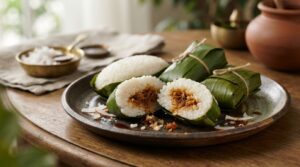
Imbul kiribath is a traditional Sri Lankan sweet made with soft milk rice and a delicious coconut filling sweetened with treacle or sugar. Shaped into small rolls or parcels, this special treat combines the creamy texture of kiribath with the rich sweetness of coconut, creating a comforting dish enjoyed during breakfast, tea time, and special family occasions.
The name imbul kiribath is associated with its distinctive shape, which resembles a small fruit. Unlike plain kiribath, which is usually served as a savoury or mildly flavoured rice dish with accompaniments, imbul kiribath has a sweet filling tucked inside the soft rice. The contrast between the delicate milk rice and the fragrant coconut mixture makes every bite enjoyable.
Made with familiar ingredients such as rice, coconut milk, grated coconut, and treacle, imbul kiribath reflects the creativity of Sri Lankan home cooking. It is a wonderful example of how simple ingredients can be transformed into a traditional sweet with a memorable taste and appearance.
What Is Imbul Kiribath?
Imbul kiribath is a Sri Lankan variation of kiribath, the country’s well-known milk rice. Traditional kiribath is prepared by cooking rice with coconut milk until it becomes soft and cohesive. It is often pressed into a flat shape, allowed to set, and cut into pieces.
Imbul kiribath takes this familiar preparation a step further by adding a sweet coconut filling. The cooked milk rice is shaped around the filling to create a small roll or parcel. The filling commonly includes grated coconut and kithul treacle or sugar, with some recipes incorporating spices such as cardamom.
The result is a sweet that combines two different textures: soft, creamy milk rice on the outside and a moist, sweet coconut mixture in the centre.
Although recipes vary between households, the essential idea remains the same. Imbul kiribath brings together the familiar comfort of kiribath and the sweetness of a coconut-based filling.
What Makes Imbul Kiribath Special?
Imbul kiribath stands out because of its shape, flavour, and traditional preparation. It is not simply sweetened rice; the coconut filling creates a distinct centre that makes the dish different from ordinary milk rice.
Several features contribute to its appeal:
-
Soft milk rice: Rice cooked with coconut milk creates a rich, tender outer layer.
-
Sweet coconut filling: Grated coconut and treacle provide sweetness and texture.
-
Traditional appearance: The filled rice is shaped into small, distinctive parcels.
-
Simple ingredients: The dish uses familiar ingredients found in many Sri Lankan kitchens.
-
Versatile serving: It can be enjoyed at breakfast, during tea time, or as a sweet treat for guests.
The balance of flavours is especially important. The milk rice is generally mild, allowing the coconut filling to provide most of the sweetness. When prepared with kithul treacle, the filling can have a deep, caramel-like flavour that complements the coconut.
How Is Imbul Kiribath Prepared?
Although the exact method differs between recipes, making imbul kiribath involves preparing the coconut filling, cooking the milk rice, and shaping the two components together.
Preparing the Sweet Coconut Filling
The filling is usually made by combining grated coconut with treacle or sugar. The mixture is heated gently until the ingredients come together and develop a moist, slightly sticky consistency.
Kithul treacle is a traditional choice because it contributes a distinctive sweetness and rich colour. However, some household recipes use sugar or another suitable sweetener.
A small amount of cardamom may be added for fragrance. The filling should be sweet and flavourful without becoming so wet that it makes the rice difficult to shape.
Once prepared, the coconut mixture is set aside to cool enough for handling.
Cooking the Milk Rice
Rice is cooked with water until it becomes tender. Coconut milk and salt are then incorporated according to the chosen recipe, allowing the rice to absorb the coconut flavour and develop a soft, cohesive texture.
The rice should be sufficiently sticky to hold its shape when moulded around the filling. Different varieties of rice can produce slightly different results, so the cooking method may need to be adjusted.
Once the milk rice is ready, it is allowed to cool slightly while remaining workable.
Shaping the Imbul Kiribath
A portion of warm milk rice is placed on a clean surface or suitable food-safe leaf. The rice is gently flattened, and a portion of the sweet coconut filling is placed in the centre.
The rice is then folded or rolled around the filling, enclosing it completely. The finished piece is shaped into a small oval or parcel, giving imbul kiribath its characteristic appearance.
The amount of filling and the size of each piece can vary according to personal preference. Careful shaping helps keep the coconut mixture inside while creating a neat presentation.
The Importance of Coconut and Treacle
Coconut plays an important role in both the texture and flavour of imbul kiribath. Coconut milk enriches the rice, while grated coconut provides the main structure of the sweet filling.
The use of treacle gives the filling its distinctive sweetness. Kithul treacle, made from the sap of the kithul palm, is a familiar ingredient in Sri Lankan traditional sweets. Its flavour can be deeper and more complex than ordinary white sugar.
When combined with grated coconut, treacle creates a moist filling that contrasts beautifully with the mild milk rice.
Some families prefer a stronger treacle flavour, while others make a lighter filling. These variations are part of the diversity of home cooking, allowing each household to adapt the recipe to its own taste.
When Do Sri Lankans Enjoy Imbul Kiribath?
Imbul kiribath can be enjoyed on ordinary days as well as during special occasions. Its sweet flavour and convenient individual portions make it suitable for sharing with family members or serving to visitors.
Breakfast and Morning Treats
While plain kiribath is commonly associated with traditional Sri Lankan breakfasts and special mornings, imbul kiribath offers a sweeter variation. It can be served as a special breakfast item or alongside other foods during a family gathering.
Tea Time
Imbul kiribath is also a lovely choice for afternoon tea. Its sweetness makes it suitable for serving with plain tea or another preferred hot drink.
Unlike cakes that require baking, imbul kiribath is prepared using cooked rice and a coconut filling, making it a different kind of traditional sweet to enjoy during a relaxed tea break.
Family Gatherings and Special Occasions
Traditional Sri Lankan sweets often appear when families come together to celebrate, welcome guests, or prepare special meals. Imbul kiribath can be included in a spread of homemade treats alongside other local favourites.
Its distinctive shape also makes it attractive when arranged neatly on a serving plate.
Tips for Making Delicious Imbul Kiribath
A few details can help achieve the right balance of texture, sweetness, and appearance.
-
Cook the rice thoroughly: The milk rice needs to be soft enough to hold together when shaped.
-
Use suitable coconut milk: Coconut milk contributes richness and helps give the rice its characteristic flavour.
-
Avoid an overly wet filling: A filling that is too loose can make the parcels difficult to shape.
-
Let the filling cool slightly: This makes it easier to handle during assembly.
-
Shape while the rice is workable: Milk rice becomes firmer as it cools, so shaping is easier while it remains warm.
-
Keep the filling enclosed: Spread the rice evenly around the coconut mixture to help prevent it from escaping.
-
Adjust sweetness to taste: The amount of treacle or sugar can be adapted to personal preference.
The key is to create milk rice that holds together without becoming excessively firm and a coconut filling that remains moist without being runny.
Imbul Kiribath and Sri Lankan Food Culture
Sri Lankan cuisine is known for making creative use of rice, coconut, treacle, and other locally familiar ingredients. These ingredients appear in many traditional dishes, from everyday meals to sweets prepared for celebrations.
Kiribath itself has an important place in Sri Lankan food traditions and is often associated with auspicious occasions and family gatherings. Imbul kiribath builds on that familiar foundation by combining milk rice with a sweet coconut filling.
The dish also reflects the importance of home recipes passed between generations. Families may have their own preferred proportions, shaping methods, or filling ingredients, creating small differences in flavour and appearance.
For anyone exploring Sri Lankan sweets, imbul kiribath offers a taste of the country’s culinary creativity: a simple combination of rice and coconut transformed into something distinctive and delicious.
Final Thoughts
Imbul kiribath is a traditional Sri Lankan sweet that combines soft coconut milk rice with a delicious filling of grated coconut and treacle. Its distinctive shape, gentle rice flavour, and sweet centre make it a memorable treat for breakfast, tea time, and family occasions.
Whether prepared at home or discovered while exploring Sri Lankan cuisine, imbul kiribath is a lovely example of how traditional ingredients can create something truly special.
Looking for delicious Sri Lankan food and more culinary discoveries? Explore Lankaura, Sri Lanka’s food discovery platform…!
Follow Lankaura on Facebook, Instagram and TikTok.
