

Jaggery Hoppers
Categories
Categories
- Afghan Cuisine(1)
- American Cuisine(141)
- Australian Cuisine(6)
- Austrian Cuisine(2)
- Belgian Cuisine(1)
- Brazilian Cuisine(3)
- British Cuisine(35)
- Cakes in Sri Lanka(47)
- Canadian Cuisine(1)
- Chinese Cuisine(85)
- Cocktails in Sri Lanka(18)
- Cuban Cuisine(17)
- Dutch Cuisine(1)
- Egyptian Cuisine(3)
- Filipino Cuisine(3)
- French Cuisine(23)
- German Cuisine(9)
- Greek Cuisine(16)
- Hong Kong Cuisine(1)
- Indian Cuisine(79)
- Indonesian Cuisine(15)
- Innovative Sri Lankan Flavours(5)
- Iranian Cuisine(5)
- Irish Cuisine(2)
- Italian Cuisine(112)
- Japanese Cuisine(13)
- Kazakastani Cuisine(1)
- Korean Cuisine(0)
- Malaysian Cuisine(12)
- Mexican Cuisine(13)
- Modern Culinary Trends(40)
- Moroccan Cuisine(2)
- Omani Cuisine(1)
- Russian Cuisine(2)
- Saudi Arabian Cuisine(1)
- Senegalese Cuisine(1)
- Singapore Cuisine(1)
- Spanish Cuisine(7)
- Sri Lankan Authentic Beverages(37)
- Sri Lankan Authentic Curries(66)
- Sri Lankan Authentic Desserts(6)
- Sri Lankan Authentic Food(78)
- Sri Lankan Authentic Seafood(18)
- Sri Lankan Authentic Snacks(20)
- Sri Lankan Authentic Sweets(20)
- Swiss Cuisine(3)
- Taiwanese Cuisine(9)
- Thai Cuisine(21)
- Turkish Cuisine(11)
- Yemeni Cuisine(2)
Jaggery Hoppers – A Sweet Twist on Sri Lankan Hoppers
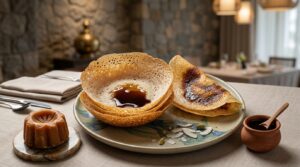
Sri Lankan cuisine is known for its wonderful variety of flavours, from spicy curries and savoury snacks to traditional sweets made with coconut, treacle and jaggery. Among the dishes that can bring a sweet touch to the table are jaggery hoppers, a variation inspired by the familiar Sri Lankan hopper.
Hoppers are widely enjoyed for their distinctive bowl-like shape, soft centre and delicate, crispy edges. When paired with the rich sweetness of jaggery or prepared with a sweetened batter, they offer a different way to enjoy this much-loved food.
Whether served as a breakfast treat, an afternoon snack or part of a spread of traditional Sri Lankan food, jaggery hoppers bring together familiar textures and the deep sweetness associated with local ingredients.
What Are Jaggery Hoppers?
Jaggery hoppers are sweet-style hoppers associated with the flavours of Sri Lankan cuisine. Depending on the preparation, jaggery may be incorporated into the batter or served as a sweet accompaniment.
To understand this variation, it helps to know what makes an ordinary hopper special. Traditional Sri Lankan hoppers, also known as appa, are bowl-shaped pancakes generally made with a fermented rice-flour batter and coconut milk. They are cooked in a small, curved pan that helps create their characteristic shape.
The centre is usually thicker and softer, while the thin edges become crisp during cooking. This contrast is one of the features that makes hoppers so appealing.
Adding jaggery introduces a deeper sweetness that differs from the mild flavour of plain hoppers. However, recipes are not uniform, so the exact taste, texture and method depend on how the dish is prepared.
What Is Jaggery?
Jaggery is an unrefined or minimally refined sugar traditionally made from concentrated plant juice, commonly sugarcane juice or the sap of certain palm trees.
In Sri Lanka, hakuru is a familiar name for jaggery. Coconut jaggery is particularly associated with local sweet-making traditions, although other varieties are also available.
Unlike ordinary white sugar, jaggery often has a deeper colour and a distinctive caramel-like flavour. Depending on its source and preparation, it may have notes reminiscent of caramel, toasted sugar or molasses.
Jaggery is used in many traditional sweets and desserts. Its rich flavour makes it a natural ingredient to explore alongside coconut-based foods.
In a sweet hopper preparation, jaggery can provide sweetness while adding its own characteristic aroma. When used as an accompaniment, it can also create a pleasant contrast with the mild flavour of the hopper itself.
How Are Jaggery Hoppers Prepared?
There is no single universal recipe for jaggery hoppers, so the preparation depends on the version being made.
The starting point is often a hopper batter based on rice flour or another suitable rice-based preparation, with coconut milk contributing richness. Traditional hopper-making also involves fermentation, although the precise method and ingredients can vary between households and recipes.
For a sweetened version, jaggery may be dissolved and incorporated into the batter in a controlled amount. The batter is then cooked in a curved hopper pan, allowing the mixture to form a bowl-like shape.
The cook needs to balance the sweetness with the texture of the batter. Too much added sugar can affect browning and cooking, so the proportions matter.
Another approach is to serve plain hoppers with a jaggery-based sweet accompaniment. In this case, the hopper retains its familiar flavour, while the topping or dip supplies the sweetness.
These approaches are related but not identical. When ordering jaggery hoppers, it is worth checking how a particular restaurant prepares and serves them.
The Role of Coconut in the Flavour
Coconut is an important ingredient in many Sri Lankan foods, and it plays a valuable role in hopper preparations.
Coconut milk can give hopper batter a fuller flavour and a soft texture. When combined with the mild taste of rice-based batter, it creates a suitable base for sweet or savoury variations.
Coconut also complements jaggery naturally. The combination of coconut and jaggery appears in numerous Sri Lankan sweets, where the coconut contributes a gentle richness and the jaggery provides a deep sweetness.
Depending on the recipe, coconut may be included in the batter or used in a separate accompaniment. The balance between these ingredients determines whether the final dish tastes lightly sweet or more dessert-like.
What Do Jaggery Hoppers Taste Like?
The flavour of jaggery hoppers depends on the preparation, but sweetness is the main difference from plain hoppers.
The hopper itself can have a mild, slightly fermented flavour, with a soft centre and thin, crisp edges. Coconut milk adds richness, while jaggery contributes caramel-like sweetness.
When jaggery is mixed into the batter, its flavour can be spread throughout the hopper. When served separately, it may provide a more concentrated sweetness in each bite.
Texture is equally important. A well-cooked hopper offers a contrast between its tender middle and delicate edges. The sweetness adds another dimension without needing complicated ingredients.
For people who enjoy traditional Sri Lankan flavours, this combination can be an appealing alternative to more familiar sweet snacks.
Jaggery Hoppers as a Breakfast or Snack
Hoppers are eaten at different times of the day in Sri Lanka, although they are particularly familiar as a breakfast or dinner food. Sweet-style versions can also be enjoyed as a snack or as part of a wider selection of dishes.
Jaggery hoppers may suit people who prefer sweet flavours over the spicy accompaniments commonly served with savoury hoppers.
They can be served on their own or alongside other foods, depending on the recipe and the occasion. A freshly prepared hopper is especially enjoyable when its centre remains soft and its edges retain their delicate crispness.
As with any food, portion size and the amount of added jaggery affect its overall sugar and energy content. Jaggery is still a form of sugar, even though it may contain small amounts of minerals.
Jaggery Hoppers and Sri Lankan Food Culture
Sri Lankan food culture includes many dishes built around rice, coconut and traditional sweeteners. Jaggery is a familiar ingredient in sweets prepared for everyday enjoyment as well as special occasions.
Hoppers, meanwhile, are recognised for their distinctive cooking method and shape. They can be served plain, with an egg, or alongside various accompaniments.
Sweet hopper variations show how familiar foods can be adapted to different preferences. The use of jaggery connects the dish with the broader tradition of coconut-based and palm-sugar-based sweets.
However, recipes and naming practices can differ from one household or food business to another. Some places may use the name jaggery hoppers for a sweetened hopper, while others may serve ordinary hoppers with a sweet jaggery accompaniment.
Understanding this distinction helps diners know what to expect when they encounter the dish on a menu.
Enjoying Jaggery Hoppers in Sri Lanka
For anyone exploring Sri Lankan food, jaggery hoppers offer a chance to experience a sweet interpretation of a familiar local dish.
The exact preparation may vary, so asking whether the jaggery is mixed into the batter or served separately can help you choose the version you prefer.
They can be an interesting option for people who enjoy coconut-based sweets, traditional ingredients and foods with contrasting textures.
Whether enjoyed at home or discovered at a local food business, jaggery hoppers reflect the creativity that makes Sri Lankan cuisine so enjoyable to explore.
Final Thoughts
Jaggery hoppers bring together the familiar shape and texture of Sri Lankan hoppers with the rich sweetness of a traditional sweetener. Depending on the preparation, jaggery can be incorporated into the batter or served alongside the cooked hopper.
With their soft centres, delicate edges and distinctive sweet flavour, they offer another way to appreciate the versatility of Sri Lankan food.
Looking for delicious jaggery hoppers and more culinary discoveries? Explore more Lankaura.
