
Kalu Dodol
Categories
Categories
- Afghan Cuisine(1)
- American Cuisine(150)
- Australian Cuisine(7)
- Austrian Cuisine(2)
- Belgian Cuisine(6)
- Brazilian Cuisine(3)
- British Cuisine(38)
- Cakes in Sri Lanka(47)
- Canadian Cuisine(1)
- Chinese Cuisine(85)
- Christmas Flavors(7)
- Cocktails in Sri Lanka(18)
- Cuban Cuisine(17)
- Dutch Cuisine(1)
- Egyptian Cuisine(3)
- Filipino Cuisine(3)
- French Cuisine(23)
- German Cuisine(9)
- Greek Cuisine(16)
- Hong Kong Cuisine(1)
- Indian Cuisine(80)
- Indonesian Cuisine(15)
- Innovative Sri Lankan Flavours(8)
- International Cuisine(1)
- Iranian Cuisine(5)
- Irish Cuisine(2)
- Italian Cuisine(113)
- Japanese Cuisine(13)
- Kazakastani Cuisine(1)
- Korean Cuisine(0)
- Malaysian Cuisine(12)
- Mexican Cuisine(14)
- Modern Culinary Trends(47)
- Moroccan Cuisine(4)
- Omani Cuisine(1)
- Russian Cuisine(2)
- Saudi Arabian Cuisine(1)
- Senegalese Cuisine(1)
- Singapore Cuisine(1)
- Spanish Cuisine(7)
- Sri Lankan Authentic Beverages(39)
- Sri Lankan Authentic Curries(66)
- Sri Lankan Authentic Desserts(6)
- Sri Lankan Authentic Food(78)
- Sri Lankan Authentic Seafood(20)
- Sri Lankan Authentic Snacks(20)
- Sri Lankan Authentic Sweets(20)
- Swiss Cuisine(3)
- Taiwanese Cuisine(9)
- Thai Cuisine(21)
- Turkish Cuisine(11)
- Yemeni Cuisine(2)

Kalu Dodol- A Traditional Sri Lankan Sweet with a Rich Heritage
Sri Lankan cuisine is known not only for its aromatic curries and savoury dishes but also for its wonderful collection of traditional sweets. Among these delicacies, Kalu Dodol holds a special place. This rich, dark-coloured sweet is prepared using coconut milk, jaggery and rice flour, creating a thick, chewy texture and a distinctive caramel-like flavour.
Popular during festive celebrations, family gatherings and special occasions, Kalu Dodol is particularly associated with traditional Sri Lankan sweet-making. Its preparation requires patience and continuous stirring, as the ingredients gradually transform into a thick, glossy mixture.
Unlike many modern desserts, Kalu Dodol is traditionally prepared using simple ingredients and time-honoured cooking techniques. Its deep brown colour, rich sweetness and slightly chewy consistency make it one of the most recognisable traditional sweets in Sri Lanka.
Whether enjoyed during Sinhala and Tamil New Year, shared among family members or purchased from traditional sweet shops, Kalu Dodol represents an important part of the island’s culinary heritage.
What Is Kalu Dodol?
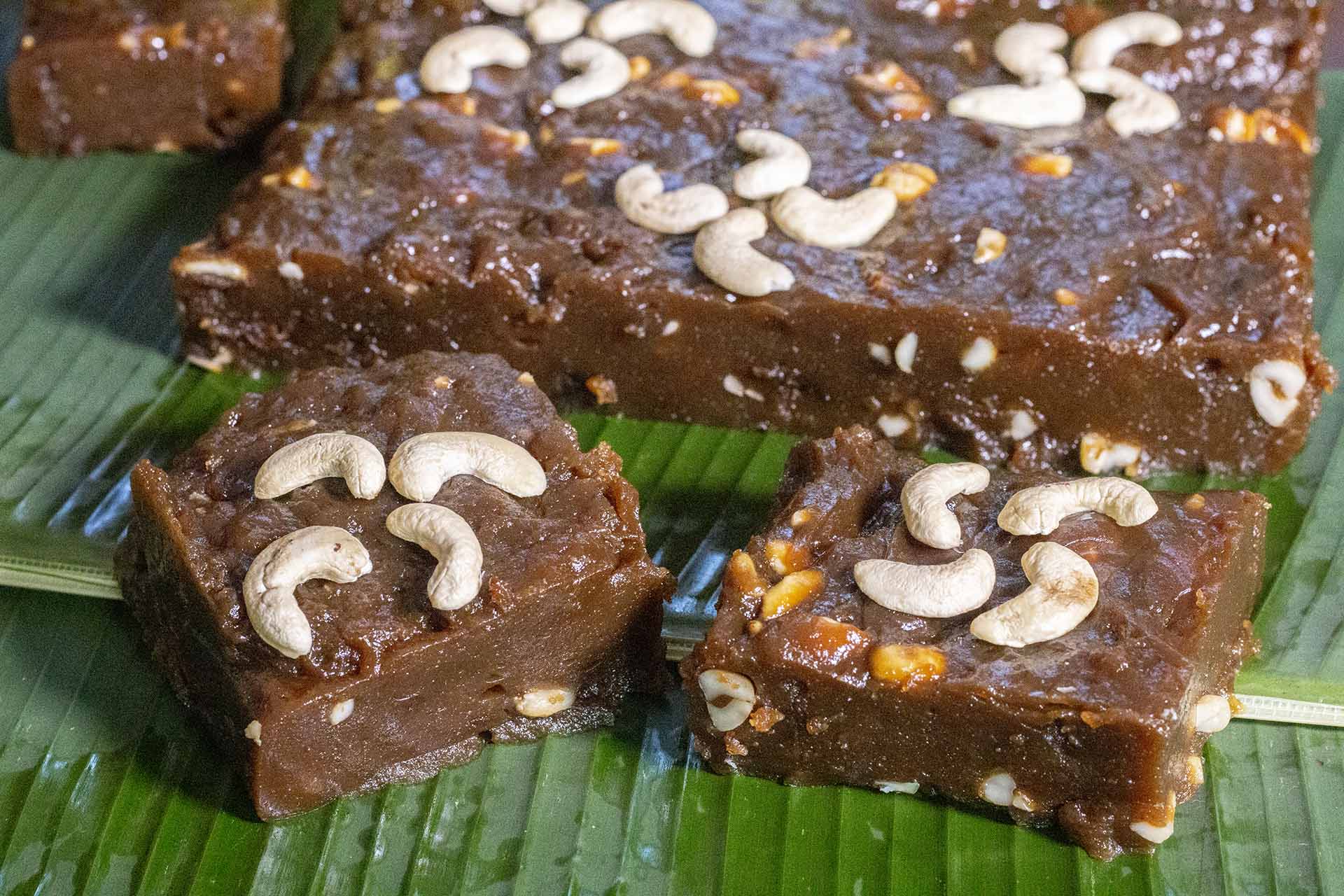
Kalu Dodol is a traditional Sri Lankan sweet made primarily from coconut milk, jaggery and rice flour. It is known for its dark brown to almost black colour, dense consistency and rich sweetness.
The word kalu means black in Sinhala, while dodol refers to a type of sticky, dense sweet found in several South and Southeast Asian food traditions. The name reflects the distinctive dark appearance of this Sri Lankan delicacy.
Unlike soft cakes or milk-based puddings, Kalu Dodol has a firm yet chewy texture. Its characteristic consistency develops through a lengthy cooking process in which the ingredients are continuously stirred over heat until the mixture thickens and darkens.
Traditional recipes commonly use kithul jaggery, although other varieties of jaggery may also be used. Coconut milk contributes richness, while rice flour helps create the dense structure.
The finished sweet is usually allowed to cool and set before being cut into small pieces. Its concentrated sweetness means that even a small portion can provide a satisfying treat.
Kalu Dodol is especially popular during festive periods and remains a familiar part of Sri Lankan traditional sweet culture.
What Ingredients Are Used to Make Kalu Dodol?
Kalu Dodol is prepared using a relatively small collection of ingredients. However, the quality and proportions of these ingredients influence the final colour, flavour and texture.
Coconut milk: Coconut milk is one of the main ingredients. It provides richness and contributes to the smooth consistency of the mixture. Freshly extracted coconut milk is traditionally preferred in many homemade preparations.
Jaggery: Jaggery provides the main sweetness and contributes to the characteristic dark colour. Kithul jaggery is commonly associated with traditional Sri Lankan Kalu Dodol because of its distinctive flavour.
Rice flour: Rice flour helps thicken the mixture and gives the finished sweet its dense, chewy texture.
Sugar: Some recipes include additional sugar to adjust the sweetness and consistency. The quantity depends on the type of jaggery used and individual preferences.
Cashew nuts: Cashews are commonly added to provide a pleasant crunch and complement the soft, chewy texture.
Cardamom: Cardamom introduces a warm, aromatic flavour that balances the richness of the other ingredients.
Salt: A small amount of salt helps balance the sweetness and enhance the overall flavour.
Some household recipes may also include additional spices or flavouring ingredients depending on regional and family traditions.
The balance between coconut milk, jaggery and rice flour is particularly important. It determines how smoothly the mixture thickens and whether the finished dodol develops its expected texture.
How Is Kalu Dodol Prepared?
Preparing traditional Kalu Dodol is a time-consuming process that requires patience, attention and continuous stirring.
First, the jaggery is prepared by breaking it into smaller pieces or grating it so that it dissolves more easily. Coconut milk is extracted from freshly grated coconut or prepared using another suitable method.
The rice flour is mixed with coconut milk to create a smooth mixture without lumps.
In a large, heavy-bottomed cooking pot, the jaggery is heated with some coconut milk until it dissolves. The mixture is stirred to help combine the ingredients evenly.
The prepared rice flour mixture is then added gradually, followed by the remaining coconut milk and other selected ingredients.
The mixture is cooked over a controlled heat while being stirred continuously. This is one of the most important stages of making Kalu Dodol.
As the mixture cooks, excess moisture gradually evaporates. It becomes thicker, darker and increasingly sticky. The coconut milk and jaggery develop a rich caramel-like flavour as the mixture continues to cook.
Cashew nuts and cardamom may be incorporated during the cooking process, depending on the recipe.
Continuous stirring is essential because the thickening mixture can easily stick to the bottom of the pot and burn. Traditional preparation often requires considerable physical effort, particularly when making large quantities.
Once the mixture becomes very thick and begins to separate from the sides of the pot, it is transferred into a suitable tray or mould.
The dodol is allowed to cool completely and set before being cut into small pieces.
The finished Kalu Dodol should have a dark appearance, a firm but chewy texture and a rich, sweet flavour.
What Makes Kalu Dodol Different from Other Sri Lankan Sweets?
Sri Lanka has a diverse collection of traditional sweets, including Kavum, Kokis, Aluwa, Bibikkan and various coconut-based delicacies. Kalu Dodol stands out because of its distinctive preparation method, dark colour and dense texture.
One of its main differences is the lengthy cooking process. While many traditional sweets can be prepared through frying or baking, Kalu Dodol requires the ingredients to be cooked together for an extended period while being continuously stirred.
Another distinguishing feature is its consistency. Unlike crispy sweets or soft milk-based desserts, Kalu Dodol develops a thick, chewy texture that makes it instantly recognisable.
Its flavour is also distinctive. The combination of jaggery and coconut milk creates a deep sweetness with caramel-like notes, while cardamom and cashews can introduce additional flavour and texture.
The colour is another defining characteristic. As the mixture cooks, it gradually develops its familiar dark brown appearance.
Although similar types of dodol are found in other countries, Sri Lankan Kalu Dodol has its own identity through its traditional ingredients, preparation techniques and place in local celebrations.
How Does Kalu Dodol Taste?
Kalu Dodol has a rich, concentrated sweetness with a distinctive caramel-like flavour.
Jaggery provides the main sweetness, while coconut milk contributes a creamy richness that develops further during the cooking process.
Its texture is one of its most appealing qualities. Unlike ordinary sweets that break easily or melt in the mouth, Kalu Dodol is slightly firm, sticky and chewy.
When cashews are included, they provide a gentle crunch that contrasts with the dense texture of the dodol.
Cardamom introduces a subtle fragrance that complements the sweetness without overpowering the natural flavours.
The overall taste can vary depending on the type of jaggery, the amount of coconut milk and the cooking time. Traditionally prepared Kalu Dodol has a deep flavour that distinguishes it from lighter coconut-based sweets.
Because of its richness and sweetness, it is generally enjoyed in small portions.
How Can Kalu Dodol Be Served?
Kalu Dodol is a versatile traditional sweet that can be enjoyed on different occasions and alongside various beverages.
On its own: Kalu Dodol is commonly cut into small squares or rectangular pieces and served as a sweet treat after meals.
With tea: A small piece of Kalu Dodol pairs beautifully with a cup of plain Sri Lankan tea. The slight bitterness of the tea balances the sweetness of the dodol.
With coffee: Coffee provides another suitable accompaniment, particularly for people who enjoy contrasting rich and bitter flavours.
As part of a traditional sweet platter: Kalu Dodol can be served alongside other Sri Lankan sweets such as Kavum, Kokis and Aluwa during festive gatherings.
During celebrations: It is commonly included in sweet selections prepared for Sinhala and Tamil New Year, family gatherings and other special occasions.
As a homemade gift: Traditionally prepared Kalu Dodol can also be packaged in small portions and shared with relatives, friends and visitors.
Its rich flavour means that elaborate toppings or additional accompaniments are generally unnecessary.
Kalu Dodol in Sri Lankan Festive and Food Culture
Traditional sweets play an important role in Sri Lankan celebrations, particularly during Sinhala and Tamil New Year.
Kalu Dodol is among the familiar delicacies associated with festive sweet selections. During the New Year season, families prepare or purchase different traditional sweets to share with relatives, neighbours and visitors.
Its preparation also reflects the importance of patience and traditional cooking knowledge. Making Kalu Dodol in larger quantities can require several hours of continuous stirring, often involving family members working together.
In some communities, traditional sweet-making is also connected with small-scale businesses and local food producers who prepare Kalu Dodol for festive markets and special orders.
The sweet is enjoyed throughout the year, although demand often increases during festive periods.
Recipes and preparation techniques can differ between households. Some prefer a darker, firmer dodol, while others enjoy a softer and slightly lighter version. The type of jaggery and the length of cooking influence the final result.
For international visitors exploring Sri Lankan cuisine, Kalu Dodol offers an opportunity to discover the island’s traditional dessert culture beyond its better-known savoury dishes.
It also demonstrates how simple ingredients such as coconut milk, jaggery and rice flour can be transformed into a distinctive sweet through traditional cooking techniques.
Final Thoughts
Kalu Dodol is more than just a traditional Sri Lankan sweet. Its rich jaggery flavour, creamy coconut milk base and distinctive chewy texture make it a memorable part of the island’s culinary heritage.
From its lengthy preparation process to its familiar place on festive sweet platters, Kalu Dodol represents the traditions, patience and creativity behind Sri Lankan sweet-making.
Whether enjoyed with a cup of tea, shared during Sinhala and Tamil New Year or purchased from a traditional sweet shop, this dark and delicious delicacy continues to bring people closer to the flavours of Sri Lankan food culture.
Looking for delicious Sri Lankan dishes and more culinary discoveries? Explore Lankaura, Sri Lanka’s food discovery platform…!