

Mixed Pasta
Categories
Categories
- Afghan Cuisine(1)
- American Cuisine(141)
- Australian Cuisine(6)
- Austrian Cuisine(2)
- Belgian Cuisine(1)
- Brazilian Cuisine(3)
- British Cuisine(35)
- Cakes in Sri Lanka(47)
- Canadian Cuisine(1)
- Chinese Cuisine(85)
- Cocktails in Sri Lanka(18)
- Cuban Cuisine(17)
- Dutch Cuisine(1)
- Egyptian Cuisine(3)
- Filipino Cuisine(3)
- French Cuisine(23)
- German Cuisine(9)
- Greek Cuisine(16)
- Hong Kong Cuisine(1)
- Indian Cuisine(79)
- Indonesian Cuisine(15)
- Innovative Sri Lankan Flavours(5)
- Iranian Cuisine(5)
- Irish Cuisine(2)
- Italian Cuisine(112)
- Japanese Cuisine(13)
- Kazakastani Cuisine(1)
- Korean Cuisine(0)
- Malaysian Cuisine(12)
- Mexican Cuisine(13)
- Modern Culinary Trends(40)
- Moroccan Cuisine(2)
- Omani Cuisine(1)
- Russian Cuisine(2)
- Saudi Arabian Cuisine(1)
- Senegalese Cuisine(1)
- Singapore Cuisine(1)
- Spanish Cuisine(7)
- Sri Lankan Authentic Beverages(37)
- Sri Lankan Authentic Curries(66)
- Sri Lankan Authentic Desserts(6)
- Sri Lankan Authentic Food(78)
- Sri Lankan Authentic Seafood(18)
- Sri Lankan Authentic Snacks(20)
- Sri Lankan Authentic Sweets(20)
- Swiss Cuisine(3)
- Taiwanese Cuisine(9)
- Thai Cuisine(21)
- Turkish Cuisine(11)
- Yemeni Cuisine(2)
Mixed Pasta – A Little Bit of Everything on One Plate
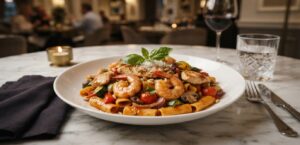
Some pasta dishes are built around one ingredient. Others are all about bringing several flavours together.
Mixed Pasta belongs to the second category.
It can combine meat, seafood, vegetables, herbs, sauces, and other ingredients in a single plate, creating a meal where every forkful can feel slightly different. One bite might be rich and savoury, another fresh and colourful, while another brings a completely different texture.
That variety is part of the charm.
Rather than following one strict formula, mixed pasta can change depending on the ingredients available, the chef’s approach, and the style of restaurant serving it.
What Does Mixed Pasta Really Mean?
Unlike dishes with a specific traditional recipe, “mixed pasta” can describe a broad range of combinations.
A restaurant might use chicken with vegetables, seafood with herbs, or several different ingredients together. Some versions are creamy, while others use tomato-based sauces, olive oil, or lighter preparations.
The important idea is variety.
There is no requirement for every ingredient to play exactly the same role. Some provide richness, some add colour, while others bring freshness or texture.
When these elements are balanced properly, the dish feels thoughtfully assembled rather than simply crowded with ingredients.
The Fun Is in the Variety
One of the most enjoyable things about mixed pasta is that it does not have to taste the same from beginning to end.
A piece of roasted vegetable can add sweetness and softness. A well-seasoned piece of meat can bring a deeper savoury flavour. Seafood can contribute a delicate sweetness, while fresh herbs can brighten the overall dish.
Different ingredients also create different textures.
Soft pasta, tender proteins, crisp vegetables, creamy sauce, and crunchy toppings can create a much more interesting eating experience than a plate built around one texture alone.
The trick is knowing when enough is enough.
Balance Matters More Than Quantity
It can be tempting to think that adding more ingredients automatically makes a pasta dish better.
It usually does not.
When too many strong flavours are combined, they can compete rather than complement one another. A successful mixed pasta needs some ingredients to lead while others support them.
For example, a rich sauce may need fresh vegetables or herbs to bring contrast. Heavier ingredients can be balanced with something bright or acidic.
The goal is not to make every ingredient equally noticeable.
It is to make the entire plate work as one dish.
Even simple ingredients can become more enjoyable when they are used in the right proportions. A thoughtful combination allows each flavour to have its own place without overwhelming the others. This balance is what turns a collection of ingredients into a well-composed pasta dish.
Choosing a Sauce for the Combination
The sauce can act as the connection between all the different ingredients.
A creamy sauce can bring separate components together and create a rich, comforting result. Tomato-based sauces can provide acidity and depth, while olive-oil-based preparations allow individual ingredients to remain more noticeable.
Some mixed pasta dishes use only a small amount of sauce, relying instead on cooking juices, herbs, seasoning, and quality ingredients for flavour.
The best choice depends on what is already on the plate.
A delicate combination can easily be overwhelmed by a heavy sauce, while a richer mixture may benefit from something with enough body to bring everything together.
Texture Makes Every Bite Different
Mixed pasta becomes particularly interesting when the textures are carefully considered.
Imagine soft pasta alongside tender pieces of meat, juicy seafood, lightly cooked vegetables, and a small crunchy element. Each component contributes something different.
Even the pasta shape can influence this.
Short pasta can hold small pieces of ingredients within its curves, while longer strands can create a more elegant combination with sauces and larger toppings.
A good dish gives the diner enough variety to stay interested without making the plate feel confusing.
The contrast can make each bite feel slightly different from the one before it. Small details, such as the firmness of the vegetables or the tenderness of the seafood, can add to that experience. When these textures are thoughtfully combined, the dish feels satisfying without becoming overwhelming.
A Restaurant Dish with Room for Creativity
Mixed pasta gives chefs considerable freedom.
It can be an opportunity to use seasonal ingredients, combine leftovers thoughtfully, or create a signature dish that does not fit neatly into a single category.
In hotels and restaurants, chefs can also use the dish to reflect their own style. One kitchen might create a rich and indulgent version, while another may focus on seafood, vegetables, or lighter flavours.
This makes mixed pasta especially interesting when dining somewhere new.
The name may sound simple, but the actual plate can tell you quite a lot about how a chef approaches food.
Mixed Pasta in Sri Lanka
Sri Lanka’s diverse food culture provides plenty of possibilities for creative mixed pasta dishes.
Restaurants can combine familiar international pasta styles with ingredients that are widely enjoyed locally. Seafood, vegetables, herbs, spices, and different proteins can all be incorporated depending on the restaurant’s menu and culinary direction.
For travellers, this can make mixed pasta an interesting choice when they want something familiar but still want to experience a little local influence.
A well-designed dish can bridge different food traditions without losing the comforting identity of pasta.
What to Look for When Ordering
Because mixed pasta can mean many different things, the menu description is worth reading carefully.
Look at the ingredients first. If the dish contains several rich components, consider whether you want something hearty or prefer a lighter combination.
The sauce is another useful clue.
And if the restaurant allows customisation, small changes can sometimes make the plate more suited to your preferences.
Most importantly, look for balance rather than simply the longest ingredient list.
A Plate Full of Possibilities
Mixed pasta is appealing because it leaves plenty of room for imagination.
It can be colourful, hearty, creamy, fresh, seafood-focused, meat-filled, or completely vegetarian. There is no single combination that defines it, which means every restaurant can approach the idea differently.
That unpredictability can be part of the experience.
Sometimes, ordering a dish with a little bit of everything is exactly what you need when you cannot decide on just one flavour.
🍝 Looking for delicious pasta dishes and unique food experiences across Sri Lanka? Explore Lankaura and discover your next place to eat….!


