

Noodles Kottu
Categories
Categories
- Afghan Cuisine(1)
- American Cuisine(141)
- Australian Cuisine(6)
- Austrian Cuisine(2)
- Belgian Cuisine(1)
- Brazilian Cuisine(3)
- British Cuisine(35)
- Cakes in Sri Lanka(47)
- Canadian Cuisine(1)
- Chinese Cuisine(85)
- Cocktails in Sri Lanka(18)
- Cuban Cuisine(17)
- Dutch Cuisine(1)
- Egyptian Cuisine(3)
- Filipino Cuisine(3)
- French Cuisine(23)
- German Cuisine(9)
- Greek Cuisine(16)
- Hong Kong Cuisine(1)
- Indian Cuisine(79)
- Indonesian Cuisine(15)
- Innovative Sri Lankan Flavours(5)
- Iranian Cuisine(5)
- Irish Cuisine(2)
- Italian Cuisine(112)
- Japanese Cuisine(13)
- Kazakastani Cuisine(1)
- Korean Cuisine(0)
- Malaysian Cuisine(12)
- Mexican Cuisine(13)
- Modern Culinary Trends(40)
- Moroccan Cuisine(2)
- Omani Cuisine(1)
- Russian Cuisine(2)
- Saudi Arabian Cuisine(1)
- Senegalese Cuisine(1)
- Singapore Cuisine(1)
- Spanish Cuisine(7)
- Sri Lankan Authentic Beverages(37)
- Sri Lankan Authentic Curries(66)
- Sri Lankan Authentic Desserts(6)
- Sri Lankan Authentic Food(78)
- Sri Lankan Authentic Seafood(18)
- Sri Lankan Authentic Snacks(20)
- Sri Lankan Authentic Sweets(20)
- Swiss Cuisine(3)
- Taiwanese Cuisine(9)
- Thai Cuisine(21)
- Turkish Cuisine(11)
- Yemeni Cuisine(2)
Noodles Kottu – A Delicious Twist on Sri Lankan Street Food
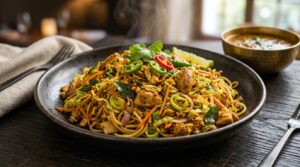
Noodles kottu is a creative variation of Sri Lanka’s popular kottu dishes, combining noodles with vegetables, spices, eggs, and a choice of meat or other ingredients. It brings together the familiar savoury flavours of Sri Lankan street food and the texture of noodles to create a satisfying meal.
Traditional kottu is made with chopped godamba roti, but noodles kottu uses noodles as its base. This simple change creates a different texture while allowing cooks to experiment with seasonings, sauces, and ingredients.
What Is Noodles Kottu?
Noodles kottu is a stir-fried dish made by combining cooked noodles with vegetables, onions, chillies, seasonings, and optional ingredients such as chicken, sausages, or eggs.
The ingredients are cooked together on a hot cooking surface so that the flavours blend throughout the dish. Depending on the recipe, noodles kottu can be mildly seasoned, spicy, or enriched with sauces and cheese.
What Goes Into This Dish?
The ingredients vary between restaurants and home recipes, but common components include:
-
Noodles – The main ingredient, providing the base and texture.
-
Vegetables – Carrots, cabbage, leeks, and onions add colour and crunch.
-
Eggs – Contribute richness and flavour.
-
Chicken or sausages – Optional additions for a more filling meal.
-
Chillies and spices – Provide the familiar spicy character of Sri Lankan kottu.
-
Sauces and seasonings – Bring the ingredients together and add depth of flavour.
Some versions may also include cheese or other toppings to create a richer variation.
How Is Noodles Kottu Prepared?
The noodles are first cooked according to their type, then drained so that excess water does not make the dish soggy.
Vegetables, onions, chillies, and any selected meat are stir-fried with seasonings on a hot cooking surface. The noodles are added and tossed with the other ingredients until everything is evenly combined. Eggs and sauces may be added during cooking to achieve the desired flavour.
The noodles should remain tender without becoming overly soft, allowing them to hold their shape when mixed with the vegetables and other ingredients.
What Makes Noodles Kottu Different from Traditional Kottu?
The main difference is the base ingredient. Traditional kottu uses chopped flatbread, which gives the dish a distinctive chewy texture. Noodles kottu uses noodles, which have a different shape and consistency.
Noodles also absorb sauces and seasonings differently from roti, creating another flavour experience. Both dishes can feature vegetables, eggs, spices, and meat, but the texture and overall eating experience are different.
Popular Noodles Kottu Variations
Noodles kottu can be adapted to suit different preferences.
-
Noodles chicken kottu – Includes chicken pieces stir-fried with noodles and vegetables.
-
Noodles sausage kottu – Adds sliced sausages for a savoury flavour.
-
Noodles egg kottu – Highlights eggs alongside noodles and vegetables.
-
Noodles cheese kottu – Adds cheese for a richer finish.
-
Noodles vegetable kottu – Uses a variety of vegetables for a meat-free option.
-
Noodles spicy kottu – Features additional chillies and stronger seasoning.
Each version offers a different combination of flavours while keeping noodles at the centre of the dish.
What Can You Serve with Noodles Kottu?
Noodles kottu can be enjoyed on its own as a complete meal. Depending on the recipe, it may also pair well with:
-
Chilli sauce – For extra heat.
-
Curry gravy – Adds a savoury, rich accompaniment.
-
Fresh salad – Provides a refreshing contrast.
-
A chilled drink – Complements a spicy or heavily seasoned meal.
The best combination depends on the ingredients and seasoning used.
Final Thoughts
Noodles kottu offers a different way to enjoy the flavours associated with Sri Lankan kottu. By replacing chopped roti with noodles and combining them with vegetables, spices, eggs, and optional additions, this dish creates a familiar yet distinctive street-food experience.
Looking for noodles kottu and more culinary discoveries? Explore more Lankaura.
