

Prawn Pasta
Categories
Categories
- Afghan Cuisine(1)
- American Cuisine(141)
- Australian Cuisine(6)
- Austrian Cuisine(2)
- Belgian Cuisine(1)
- Brazilian Cuisine(3)
- British Cuisine(35)
- Cakes in Sri Lanka(47)
- Canadian Cuisine(1)
- Chinese Cuisine(85)
- Cocktails in Sri Lanka(18)
- Cuban Cuisine(17)
- Dutch Cuisine(1)
- Egyptian Cuisine(3)
- Filipino Cuisine(3)
- French Cuisine(23)
- German Cuisine(9)
- Greek Cuisine(16)
- Hong Kong Cuisine(1)
- Indian Cuisine(79)
- Indonesian Cuisine(15)
- Innovative Sri Lankan Flavours(5)
- Iranian Cuisine(5)
- Irish Cuisine(2)
- Italian Cuisine(112)
- Japanese Cuisine(13)
- Kazakastani Cuisine(1)
- Korean Cuisine(0)
- Malaysian Cuisine(12)
- Mexican Cuisine(13)
- Modern Culinary Trends(40)
- Moroccan Cuisine(2)
- Omani Cuisine(1)
- Russian Cuisine(2)
- Saudi Arabian Cuisine(1)
- Senegalese Cuisine(1)
- Singapore Cuisine(1)
- Spanish Cuisine(7)
- Sri Lankan Authentic Beverages(37)
- Sri Lankan Authentic Curries(66)
- Sri Lankan Authentic Desserts(6)
- Sri Lankan Authentic Food(78)
- Sri Lankan Authentic Seafood(18)
- Sri Lankan Authentic Snacks(20)
- Sri Lankan Authentic Sweets(20)
- Swiss Cuisine(3)
- Taiwanese Cuisine(9)
- Thai Cuisine(21)
- Turkish Cuisine(11)
- Yemeni Cuisine(2)
Prawn Pasta – A Delicious Meeting of Seafood and Pasta
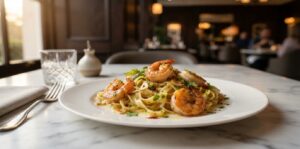
There is something particularly satisfying about a plate of prawn pasta. The prawns bring a delicate sweetness and a firm, juicy texture, while the pasta creates a comforting foundation that allows the seafood to shine.
It is also one of those dishes that can change personality very easily. A light preparation can feel fresh and elegant, while a richer sauce can turn it into a deeply comforting meal.
The secret is often in the details — especially how the prawns are cooked and what is used to support their natural flavour.
The Prawns Take Centre Stage
Prawns have a distinctive flavour that does not need much help to become noticeable.
Their natural sweetness can work beautifully with savoury ingredients, fresh herbs, aromatic seasonings, and gentle sauces. Size can also influence the presentation. Larger prawns can become an obvious centrepiece, while smaller ones can be distributed throughout the pasta.
Freshness is important because prawns are delicate seafood. When they are cooked properly, they should remain tender and juicy rather than becoming tough or rubbery.
That texture is one of the main things diners notice when a prawn pasta arrives at the table.
Timing Is Everything
Prawns generally cook quickly, which makes timing particularly important.
Leaving them on the heat for too long can cause them to lose their tenderness. A carefully cooked prawn should have a firm but pleasant bite without feeling dry.
This is especially important when preparing pasta dishes, where several components need to come together at roughly the same time.
When the timing is right, the prawns remain distinct while becoming coated with just enough sauce or seasoning to connect them with the pasta.
The Magic of Aromatic Ingredients
Prawns pair naturally with aromatic ingredients.
Garlic is a familiar choice, bringing a savoury depth without completely covering the seafood. Fresh herbs can add fragrance, while chilli can introduce a gentle warmth.
Lemon is another popular companion because its brightness can lift the natural sweetness of the prawns.
These ingredients do not have to dominate the dish. Their role is often to frame the seafood and make its flavour feel more noticeable.
Choosing the Sauce
Prawn pasta can work with surprisingly different sauce styles.
A light olive-oil-based preparation allows the prawns to remain the focus. Tomato-based sauces can bring acidity and colour, while creamy sauces create a richer and more indulgent plate.
There are also preparations where the sauce is barely noticeable, with the flavour coming mainly from seafood juices, aromatics, herbs, and a little seasoning.
The right choice depends on the experience the chef wants to create.
A delicate sauce can make the dish feel elegant, while a richer one can make it feel more substantial.
Pasta That Carries the Prawns
The pasta itself should complement the seafood rather than compete with it.
Long pasta can create an elegant presentation, with sauce and small pieces of seafood coating the strands. Shorter shapes can make the dish feel more casual and hearty.
The amount of pasta matters too. If there is too much pasta compared with the prawns, the seafood can disappear into the dish.
A thoughtful balance allows every forkful to contain enough pasta and enough flavour from the prawns and accompanying ingredients.
A Dish That Can Feel Light or Indulgent
One of the biggest appeals of prawn pasta is its flexibility.
With a light sauce, fresh herbs, citrus, and carefully cooked prawns, it can make an excellent meal for someone looking for something fresh and not overly heavy.
Add a richer sauce, more generous portions, or luxurious finishing touches, and the same basic combination can become a restaurant-style indulgence.
This adaptability makes prawn pasta comfortable in both casual cafés and sophisticated hotel restaurants.
Prawn Pasta in Sri Lanka
Sri Lanka’s strong seafood culture gives prawns a natural place on local restaurant menus.
Restaurants and hotels can use locally available prawns in pasta dishes while combining them with international cooking styles. The result can feel familiar to travellers who enjoy Italian-inspired food while still reflecting the island’s connection to fresh seafood.
Some preparations may stay close to a classic Western style, while others can introduce stronger seasoning, chilli, herbs, or locally inspired touches.
For visitors exploring Sri Lanka, a well-prepared prawn pasta can therefore offer a small meeting point between international comfort food and the country’s seafood traditions.
What Makes a Memorable Plate?
A good prawn pasta does not need an overwhelming number of ingredients.
The prawns should be cooked with care, the pasta should have a satisfying texture, and the sauce should bring everything together without hiding the seafood.
Presentation can add another layer to the experience. A few beautifully arranged prawns, fresh herbs, a subtle citrus garnish, and a clean plate can make the dish look just as appealing as it tastes.
Ultimately, the best versions feel balanced. Nothing should overpower the prawns, but nothing should feel missing either.
A Seafood Favourite Worth Trying
Prawn pasta combines two ingredients that offer plenty of possibilities.
The prawns bring sweetness and texture, while the pasta provides a versatile base for different sauces, seasonings, and culinary styles. Whether served simply with aromatics or presented as an elaborate hotel dish, it can be both comforting and refined.
For seafood lovers, it is a combination that deserves more than just a passing glance on the menu.
🍝 Looking for delicious seafood dishes and unique food experiences across Sri Lanka? Explore Lankaura and discover your next place to eat….!🦐
