
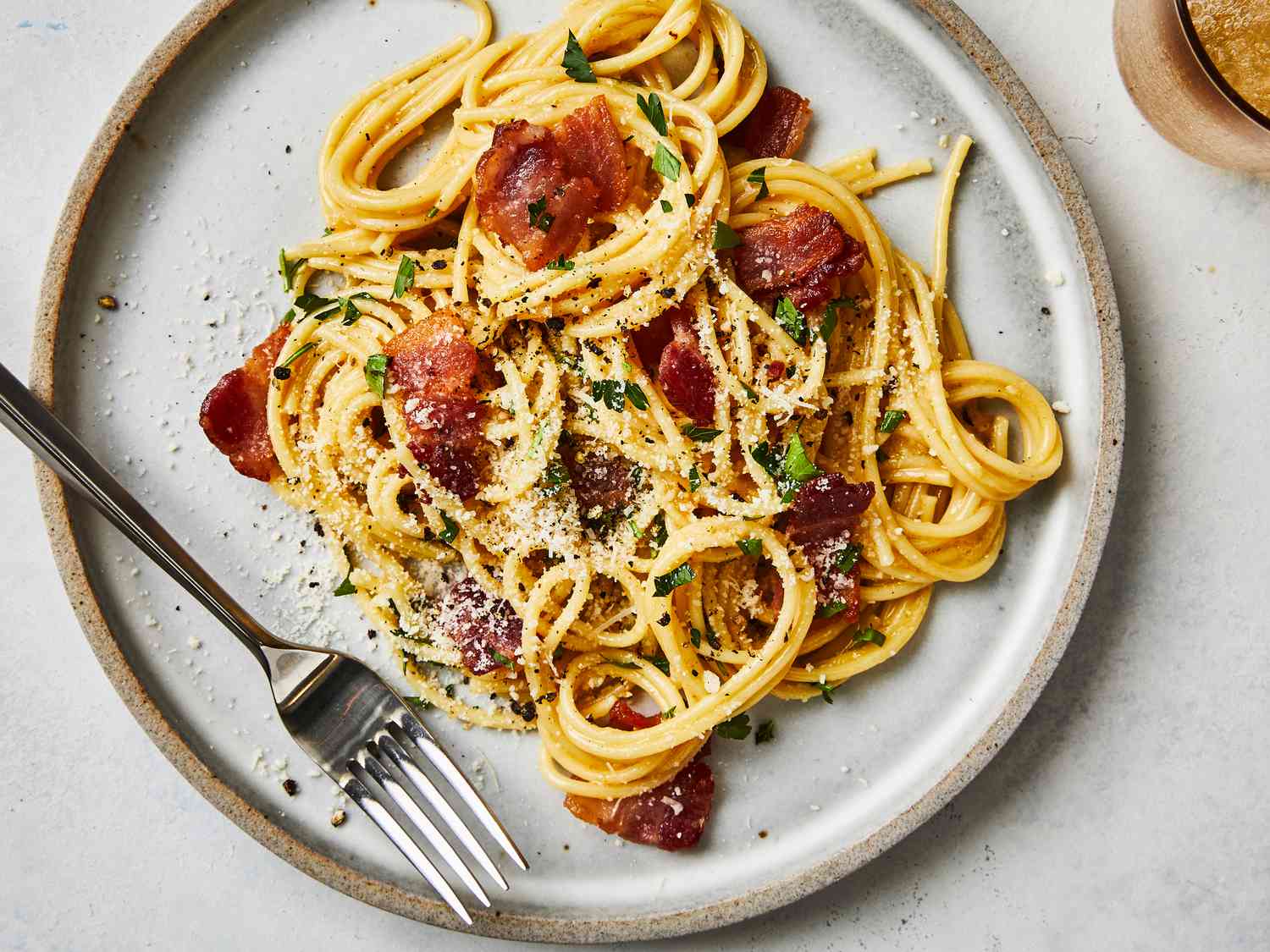
Spaghetti Carbonara
Categories
Categories
- Afghan Cuisine(1)
- American Cuisine(141)
- Australian Cuisine(6)
- Austrian Cuisine(2)
- Belgian Cuisine(1)
- Brazilian Cuisine(3)
- British Cuisine(35)
- Cakes in Sri Lanka(47)
- Canadian Cuisine(1)
- Chinese Cuisine(85)
- Cocktails in Sri Lanka(18)
- Cuban Cuisine(17)
- Dutch Cuisine(1)
- Egyptian Cuisine(3)
- Filipino Cuisine(3)
- French Cuisine(23)
- German Cuisine(9)
- Greek Cuisine(16)
- Hong Kong Cuisine(1)
- Indian Cuisine(79)
- Indonesian Cuisine(15)
- Innovative Sri Lankan Flavours(5)
- Iranian Cuisine(5)
- Irish Cuisine(2)
- Italian Cuisine(112)
- Japanese Cuisine(13)
- Kazakastani Cuisine(1)
- Korean Cuisine(0)
- Malaysian Cuisine(12)
- Mexican Cuisine(13)
- Modern Culinary Trends(40)
- Moroccan Cuisine(2)
- Omani Cuisine(1)
- Russian Cuisine(2)
- Saudi Arabian Cuisine(1)
- Senegalese Cuisine(1)
- Singapore Cuisine(1)
- Spanish Cuisine(7)
- Sri Lankan Authentic Beverages(37)
- Sri Lankan Authentic Curries(66)
- Sri Lankan Authentic Desserts(6)
- Sri Lankan Authentic Food(78)
- Sri Lankan Authentic Seafood(18)
- Sri Lankan Authentic Snacks(20)
- Sri Lankan Authentic Sweets(20)
- Swiss Cuisine(3)
- Taiwanese Cuisine(9)
- Thai Cuisine(21)
- Turkish Cuisine(11)
- Yemeni Cuisine(2)
Spaghetti Carbonara – A Roman Classic Built on Simplicity
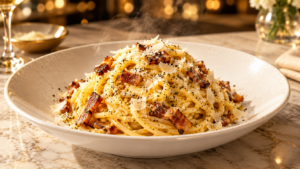
Spaghetti Carbonara is one of those dishes that can look deceptively simple. A plate of spaghetti, a handful of ingredients and a creamy-looking coating might not seem complicated, yet achieving the right texture requires attention to timing and technique.
Its appeal comes from how a few ingredients can create a rich and satisfying result without relying on a heavy cream-based sauce.
What Is Spaghetti Carbonara?
Carbonara is traditionally associated with Rome and is built around pasta, eggs, cured pork, hard cheese and black pepper.
The combination creates a sauce that coats the spaghetti rather than sitting separately on the plate. The heat from the freshly cooked pasta helps bring the ingredients together into a smooth, glossy coating.
There are many modern interpretations today, but the traditional approach remains closely connected with the simplicity of its ingredients.
Why Spaghetti?
Spaghetti is particularly well suited to Carbonara because its long strands provide plenty of surface area for the sauce to cling to.
When the pasta is properly coated, the sauce reaches across the strands rather than collecting at the bottom of the plate. This creates a consistent texture throughout the dish.
The long shape also contributes to the familiar experience of twirling Carbonara around a fork before taking a bite.
The Egg Is More Important Than It Looks
Egg plays a central role in creating Carbonara’s characteristic texture.
Rather than simply being added as a visible ingredient, it becomes part of the sauce. When combined carefully with the hot pasta and cheese, the egg creates a smooth and rich coating.
Temperature is important here. Excessive heat can cause the egg to scramble instead of forming the silky sauce associated with Carbonara.
This is one reason the dish requires more technique than its short ingredient list might suggest.
Cheese Brings Depth
Hard Italian cheese contributes both flavour and texture.
Traditionally, Pecorino Romano is closely associated with Roman Carbonara. Its salty, savoury character gives the dish much of its depth.
Some modern versions may use other hard cheeses or combinations, but the cheese needs to complement the egg and cured pork rather than overpower them.
The Role of Cured Pork
Cured pork provides the savoury richness that balances the creamy texture created by the egg and cheese.
Guanciale is traditionally associated with Carbonara, although pancetta and other variations are commonly seen in restaurants outside Italy.
When cooked properly, the pork can provide both flavour and small crisp elements throughout the pasta.
Black Pepper Is Part of the Character
Freshly ground black pepper is not simply a decorative finishing touch.
Its warmth and slight sharpness help cut through the richness of the egg, cheese and cured pork. It also gives Carbonara part of its recognisable flavour.
The amount can vary according to preference, but freshly ground pepper generally gives the dish more character than pre-ground seasoning.
Creamy Does Not Always Mean Cream
One of the most common misunderstandings about Carbonara is that its creamy appearance automatically means cream has been added.
Traditional Carbonara achieves its smooth texture through the combination of egg, cheese, pasta water and rendered fat, brought together carefully with the hot pasta.
Cream is used in some modern restaurant interpretations, but it is not necessary for creating the characteristic richness of the traditional preparation.
Pasta Water Has a Purpose
The water used to cook the spaghetti contains starch released from the pasta.
A small amount can help bring the egg, cheese and fat together while creating a smoother coating. It can also help loosen the sauce when needed.
This is a small detail, but it demonstrates how Carbonara relies on technique as much as ingredients.
Getting the Texture Right
A successful Carbonara should coat the spaghetti without becoming watery or excessively thick.
The pasta should remain pleasantly firm, while the sauce should feel smooth and glossy rather than scrambled.
Timing everything correctly is therefore essential. The pasta, egg mixture, cheese and other ingredients need to come together while the temperature is suitable for creating the desired consistency.
Spaghetti Carbonara in Sri Lanka
Carbonara has become familiar on menus across Sri Lanka, particularly in restaurants and hotels serving international cuisine.
Local interpretations can vary considerably. Some may stay close to the traditional combination, while others may introduce cream, chicken, mushrooms or additional seasonings to suit local preferences.
These versions may differ from the classic Roman preparation, but they demonstrate how internationally recognised dishes continue to evolve when they enter new dining cultures.
What to Look for When Ordering
If you are ordering Spaghetti Carbonara, the description can tell you what style to expect.
Traditional ingredients such as guanciale, Pecorino Romano, egg and black pepper suggest a more classic approach. Cream, chicken or mushrooms indicate a modern variation.
Regardless of style, the pasta should be properly cooked and the sauce should cling smoothly to the strands without becoming excessively heavy.
A Dish Where Technique Matters
Spaghetti Carbonara shows how a short ingredient list does not necessarily mean an easy dish.
Egg, cheese, cured pork, pepper and spaghetti each have a specific role, and bringing them together at the right temperature is what creates the finished texture.
That combination of simplicity and technique is a major part of what makes Carbonara such a lasting pasta favourite.


