
Sri Lankan Cashew Curry (Kaju Maluwa)
Categories
Categories
- Afghan Cuisine(1)
- American Cuisine(150)
- Australian Cuisine(7)
- Austrian Cuisine(2)
- Belgian Cuisine(6)
- Brazilian Cuisine(3)
- British Cuisine(38)
- Cakes in Sri Lanka(47)
- Canadian Cuisine(1)
- Chinese Cuisine(85)
- Christmas Flavors(7)
- Cocktails in Sri Lanka(18)
- Cuban Cuisine(17)
- Dutch Cuisine(1)
- Egyptian Cuisine(3)
- Filipino Cuisine(3)
- French Cuisine(23)
- German Cuisine(9)
- Greek Cuisine(16)
- Hong Kong Cuisine(1)
- Indian Cuisine(80)
- Indonesian Cuisine(15)
- Innovative Sri Lankan Flavours(8)
- International Cuisine(1)
- Iranian Cuisine(5)
- Irish Cuisine(2)
- Italian Cuisine(113)
- Japanese Cuisine(13)
- Kazakastani Cuisine(1)
- Korean Cuisine(0)
- Malaysian Cuisine(12)
- Mexican Cuisine(14)
- Modern Culinary Trends(47)
- Moroccan Cuisine(4)
- Omani Cuisine(1)
- Russian Cuisine(2)
- Saudi Arabian Cuisine(1)
- Senegalese Cuisine(1)
- Singapore Cuisine(1)
- Spanish Cuisine(7)
- Sri Lankan Authentic Beverages(39)
- Sri Lankan Authentic Curries(66)
- Sri Lankan Authentic Desserts(6)
- Sri Lankan Authentic Food(78)
- Sri Lankan Authentic Seafood(20)
- Sri Lankan Authentic Snacks(20)
- Sri Lankan Authentic Sweets(20)
- Swiss Cuisine(3)
- Taiwanese Cuisine(9)
- Thai Cuisine(21)
- Turkish Cuisine(11)
- Yemeni Cuisine(2)


Sri Lankan Cashew Curry (Kaju Maluwa)- A Rich and Creamy Taste of Sri Lankan Cuisine
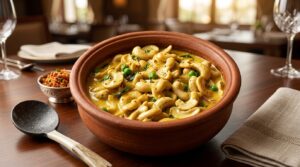
Sri Lankan cuisine is celebrated for its aromatic spices, coconut-based curries and the creative use of locally available ingredients. Among its many traditional dishes, Sri Lankan Cashew Curry, commonly known as Kaju Maluwa, stands out for its rich texture, creamy coconut milk gravy and delicate combination of spices.
Often associated with special occasions, festive meals and traditional Sri Lankan celebrations, Kaju Maluwa is a dish that brings both flavour and elegance to the dining table. Its main ingredient, cashew nuts, becomes soft and tender when prepared with coconut milk and carefully selected spices.
Unlike many everyday vegetable curries, cashew curry has a naturally rich character that makes it particularly popular as part of a traditional rice and curry spread. Whether served during family gatherings, celebrations or ordinary meals, it offers a wonderful way to experience the diversity of Sri Lankan cooking.
What Is Sri Lankan Cashew Curry (Kaju Maluwa)?
Sri Lankan Cashew Curry, known locally as Kaju Maluwa, is a traditional coconut milk-based curry prepared using cashew nuts and a selection of aromatic spices.
The Sinhala word kaju refers to cashew nuts, while maluwa refers to a curry. Together, the name describes a delicious curry in which cashew nuts are the main ingredient.
One of the most distinctive features of Kaju Maluwa is its texture. The cashew nuts are usually soaked before cooking, allowing them to soften and absorb the flavours of the curry. They are then simmered with coconut milk, onions, green chillies, curry leaves and spices.
The result is a creamy curry with tender cashew nuts and a gently spiced gravy. Depending on the recipe, it can have a mild sweetness from the cashews, balanced by the richness of coconut milk and the warmth of traditional Sri Lankan seasonings.
Kaju Maluwa is especially appreciated as part of festive meals and special occasions, although it can also be prepared at home whenever a rich and satisfying curry is desired.
What Ingredients Are Used to Make Sri Lankan Cashew Curry?
Kaju Maluwa is prepared using a combination of cashew nuts, coconut milk and aromatic ingredients. Although recipes vary between households, several ingredients are commonly used.
- Cashew nuts: Cashews are the main ingredient and give the curry its distinctive flavour and texture. Raw, unsalted cashews are generally preferred for traditional preparations.
- Coconut milk: Coconut milk creates the creamy gravy and provides the richness associated with Sri Lankan cashew curry. Both thin and thick coconut milk may be used during different stages of cooking.
- Onions: Sliced onions add natural sweetness and depth to the curry.
- Green chillies: Green chillies provide a gentle heat that balances the creamy flavour of the coconut milk.
- Turmeric powder: Turmeric contributes a warm yellow colour and a mild earthy flavour.
- Chilli powder: Chilli powder can be added to introduce additional warmth and colour. The quantity depends on the desired spice level.
- Curry leaves: Curry leaves provide an aromatic flavour that is essential to many Sri Lankan curries.
- Pandan leaves: Pandan leaves are sometimes included to introduce a distinctive fragrance.
- Cinnamon: A small piece of cinnamon adds warmth and complements the natural flavour of cashews.
- Mustard seeds: Mustard seeds may be tempered in oil to create an aromatic seasoning.
- Salt: Salt enhances the overall flavour and balances the richness of the other ingredients.
Some recipes also include garlic, cardamom or other spices to create additional layers of flavour.
How Is Sri Lankan Cashew Curry Prepared?
Preparing Kaju Maluwa requires a little patience, particularly when preparing the cashew nuts before cooking.
First, the cashew nuts are cleaned and soaked in water until they become softer. Soaking time depends on their freshness and texture. Some recipes use longer soaking periods to help achieve a tender result.
Once softened, the cashews are drained and kept aside.
In a suitable cooking pot, a little oil is heated and mustard seeds may be added. Once they begin to splutter, sliced onions, green chillies, curry leaves, pandan leaves and other selected aromatics are added.
The ingredients are gently cooked until the onions soften and release their fragrance.
Turmeric powder, chilli powder, cinnamon and salt are then added according to the chosen recipe. The prepared cashew nuts are mixed into the seasoning so that they become coated with the spices.
Thin coconut milk is added to the pot, and the mixture is allowed to simmer until the cashews become tender and absorb the flavours.
Towards the end of cooking, thick coconut milk is added to create the creamy consistency associated with Kaju Maluwa. The curry is gently simmered until the gravy reaches the desired thickness.
Care should be taken not to boil the curry too vigorously after adding thick coconut milk.
The finished dish should have tender cashew nuts surrounded by a smooth, aromatic coconut milk gravy. It is best served warm alongside rice or other traditional Sri Lankan dishes.
What Makes Sri Lankan Cashew Curry Different from Other Curries?
Cashew curry is prepared in different ways around the world, but Sri Lankan Kaju Maluwa has a distinctive identity because of its use of coconut milk and traditional local seasonings.
One of its most recognisable characteristics is the combination of soft cashew nuts and creamy coconut gravy. Unlike curries that use potatoes, lentils or meat as their main ingredients, Kaju Maluwa offers a naturally rich texture from the cashews themselves.
Coconut milk plays an important role in developing its flavour. It balances the spices while allowing the natural taste of the cashew nuts to remain noticeable.
Another difference is its preparation. Soaking the cashews before cooking helps them achieve a softer texture, allowing them to absorb the aromatic gravy.
The curry is also associated with special meals and celebrations. Its rich appearance and satisfying flavour make it a popular addition to elaborate Sri Lankan rice and curry spreads.
Although individual recipes differ, the combination of cashews, coconut milk and aromatic spices gives this dish its distinctive character.
How Does Sri Lankan Cashew Curry Taste?
Sri Lankan Cashew Curry offers a combination of creamy, mildly sweet and gently spiced flavours.
The cashew nuts become soft and tender during cooking while retaining enough structure to provide a satisfying bite. Their natural richness complements the coconut milk, creating a smooth and flavourful gravy.
Curry leaves and pandan leaves contribute fragrance, while onions introduce a subtle sweetness. Turmeric provides an earthy note, and green chillies and chilli powder add varying levels of heat.
The overall flavour depends on the proportions of ingredients used. Some versions are relatively mild and creamy, while others have a stronger spice profile.
One of the appealing qualities of Kaju Maluwa is the balance between its rich ingredients and aromatic seasoning. The result is a curry that feels satisfying without requiring an overwhelming number of spices.
How Can Sri Lankan Cashew Curry Be Served?
Kaju Maluwa is a versatile dish that can be enjoyed with several Sri Lankan favourites.
- With steamed rice: Cashew curry is an excellent accompaniment to both white and red rice. Its creamy gravy combines beautifully with rice and other curries.
- With yellow rice: It is particularly suitable for festive rice spreads, where its rich appearance and flavour complement the other dishes.
- With string hoppers: The soft texture of string hoppers pairs well with the creamy coconut milk gravy.
- With pol roti: Sri Lankan coconut roti provides a satisfying accompaniment to the tender cashews and rich curry.
- With bread: Fresh bread can be served alongside Kaju Maluwa, making it a comforting meal or special breakfast option.
- As part of a traditional rice and curry spread: Cashew curry can be served with dhal, vegetable curries, sambols, papadam and other Sri Lankan favourites.
For a balanced meal, it can be paired with lighter vegetable dishes and sambols that complement its natural richness.
Sri Lankan Cashew Curry in Food and Celebration Culture
Sri Lankan food culture is closely connected to celebrations, family gatherings and the preparation of special meals. Certain dishes become particularly meaningful because they are associated with occasions when families come together around the dining table.
Kaju Maluwa is one such dish that is frequently associated with festive and celebratory meals. It is a familiar choice for occasions such as weddings, religious celebrations, family gatherings and special holiday meals.
Its rich ingredients and attractive presentation make it a popular addition to elaborate rice and curry spreads.
Cashews are also valued ingredients in Sri Lankan cooking, appearing in both savoury and sweet preparations. Their versatility allows them to be incorporated into different dishes, from curries to desserts.
Recipes for Kaju Maluwa may vary between households and regions. Some families prefer a mild coconut-based preparation, while others use additional spices to create a stronger flavour.
For international visitors, cashew curry offers an opportunity to discover another side of Sri Lankan cuisine beyond its more widely recognised dishes.
It also demonstrates how local cooking traditions transform simple ingredients into memorable meals through careful preparation and flavour combinations.
Final Thoughts
Sri Lankan Cashew Curry, or Kaju Maluwa, is a wonderful example of the richness and creativity of traditional Sri Lankan cooking. Its combination of tender cashew nuts, creamy coconut milk and aromatic spices creates a satisfying dish that is enjoyed during special occasions and everyday meals alike.
Whether served with yellow rice, string hoppers, pol roti or a traditional rice and curry spread, Kaju Maluwa brings a distinctive flavour and texture to the dining table. More than just another curry, it represents the importance of shared meals, family traditions and the diverse ingredients that make Sri Lankan cuisine special.
Looking for delicious Sri Lankan dishes and more culinary discoveries? Explore Lankaura, Sri Lanka’s food discovery platform…!