
Sri Lankan Drumstick Curry (Murunga Maluwa)
Categories
Categories
- Afghan Cuisine(1)
- American Cuisine(150)
- Australian Cuisine(7)
- Austrian Cuisine(2)
- Belgian Cuisine(6)
- Brazilian Cuisine(3)
- British Cuisine(38)
- Cakes in Sri Lanka(47)
- Canadian Cuisine(1)
- Chinese Cuisine(85)
- Christmas Flavors(7)
- Cocktails in Sri Lanka(18)
- Cuban Cuisine(17)
- Dutch Cuisine(1)
- Egyptian Cuisine(3)
- Filipino Cuisine(3)
- French Cuisine(23)
- German Cuisine(9)
- Greek Cuisine(16)
- Hong Kong Cuisine(1)
- Indian Cuisine(80)
- Indonesian Cuisine(15)
- Innovative Sri Lankan Flavours(8)
- International Cuisine(1)
- Iranian Cuisine(5)
- Irish Cuisine(2)
- Italian Cuisine(113)
- Japanese Cuisine(13)
- Kazakastani Cuisine(1)
- Korean Cuisine(0)
- Malaysian Cuisine(12)
- Mexican Cuisine(14)
- Modern Culinary Trends(47)
- Moroccan Cuisine(4)
- Omani Cuisine(1)
- Russian Cuisine(2)
- Saudi Arabian Cuisine(1)
- Senegalese Cuisine(1)
- Singapore Cuisine(1)
- Spanish Cuisine(7)
- Sri Lankan Authentic Beverages(39)
- Sri Lankan Authentic Curries(66)
- Sri Lankan Authentic Desserts(6)
- Sri Lankan Authentic Food(78)
- Sri Lankan Authentic Seafood(20)
- Sri Lankan Authentic Snacks(20)
- Sri Lankan Authentic Sweets(20)
- Swiss Cuisine(3)
- Taiwanese Cuisine(9)
- Thai Cuisine(21)
- Turkish Cuisine(11)
- Yemeni Cuisine(2)
Sri Lankan Drumstick Curry (Murunga Maluwa)- A Traditional Village-Style Sri Lankan Curry
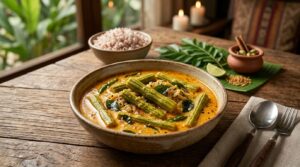
Sri Lankan drumstick curry, commonly known as Murunga Maluwa, is a traditional dish prepared using fresh drumstick pods cooked in a fragrant coconut milk gravy with a blend of local spices. Popular in Sri Lankan homes, this curry is appreciated for its distinctive flavour, tender texture, and the way it brings together simple ingredients commonly found in local kitchens.
Drumstick pods, known as murunga in Sinhala, are widely used in Sri Lankan cooking. Their slightly earthy flavour and unique texture make them a delicious ingredient for curries. When cooked with coconut milk, turmeric, curry leaves, onions, green chillies, and other spices, they absorb the surrounding flavours while retaining their characteristic shape.
Murunga maluwa is commonly enjoyed with steamed rice and other traditional Sri Lankan dishes. Whether prepared as part of a family lunch or served alongside several curries at the dinner table, it represents the simplicity and richness of everyday Sri Lankan food.
What Is Sri Lankan Drumstick Curry?
Sri Lankan drumstick curry is a coconut-based curry made using the long, green pods of the drumstick tree, scientifically known as Moringa oleifera. In Sri Lanka, the pods are commonly called murunga and are used in a variety of traditional dishes.
The pods are usually cut into manageable pieces and cooked with a mixture of spices and coconut milk. As they soften, they develop a tender texture while maintaining their slightly fibrous structure.
Unlike thick vegetable curries made with ingredients such as potatoes or pumpkin, murunga maluwa has its own distinctive eating experience. The cooked pods are often eaten by gently squeezing or pulling the soft flesh from the fibrous outer section.
Recipes differ between households. Some families prepare a lighter coconut milk gravy, while others prefer a thicker curry with a stronger combination of spices.
What Makes Murunga Maluwa Special?
Murunga maluwa is a familiar example of how Sri Lankan cooking transforms simple local ingredients into flavourful meals. Drumstick pods have a mild, distinctive taste that works particularly well with coconut milk and traditional spices.
Several qualities make this curry special:
- Distinctive flavour: Drumstick pods have a characteristic taste that makes the curry different from other vegetable curries.
- Coconut milk gravy: Coconut milk creates a creamy base that carries the flavours of the spices.
- Traditional ingredients: Curry leaves, turmeric, onions, green chillies, and other seasonings give the dish its familiar Sri Lankan character.
- Versatile serving options: It pairs well with rice, string hoppers, and other traditional foods.
- Homemade comfort: It is a simple curry that can be prepared as part of an everyday family meal.
The combination of tender drumstick pods and aromatic coconut gravy makes murunga maluwa a memorable part of traditional Sri Lankan cooking.
Ingredients Used in Sri Lankan Drumstick Curry
The ingredients used in murunga maluwa are generally easy to find in Sri Lankan markets and grocery shops. Although recipes vary, the following ingredients are commonly used.
Main ingredients:
- Fresh drumstick pods (murunga)
- Thin coconut milk
- Thick coconut milk
- Onion or shallots
- Green chillies
- Curry leaves
- Turmeric powder
- Chilli powder
- Salt
- Water as required
Some household recipes may also include garlic, pandan leaves, fenugreek seeds, or other spices to create additional flavour.
The freshness of the drumstick pods plays an important role in the final dish. Fresh pods are generally firm, green, and suitable for cutting into pieces before cooking.
How Is Sri Lankan Drumstick Curry Prepared?
Preparing murunga maluwa involves cleaning and cutting the drumstick pods, combining them with spices, and cooking everything in coconut milk until the pods become tender.
Preparing the Drumstick Pods
First, wash the fresh drumstick pods thoroughly to remove dirt and other impurities. Trim the ends and cut them into smaller pieces, usually around two to three inches long.
The pieces should be manageable enough to cook evenly and serve easily. Depending on the maturity of the pods, the outer skin may be more or less fibrous.
Preparing the Curry Base
Place the prepared drumstick pieces in a cooking pot. Add sliced onions, green chillies, curry leaves, turmeric powder, chilli powder, and salt.
Pour in enough thin coconut milk to help cook the drumstick pieces. Mix the ingredients gently so the seasonings are distributed throughout the curry.
Cooking the Drumstick
Place the pot over medium heat and allow the curry to simmer. The drumstick pieces gradually soften as they cook in the seasoned coconut milk.
Stir occasionally and check the texture to prevent the ingredients from sticking to the bottom of the pot. Cooking time can vary depending on the freshness and maturity of the pods.
Adding Thick Coconut Milk
Once the drumstick pieces are tender, add thick coconut milk to create a richer gravy. Stir gently and allow the curry to simmer for a short time.
Avoid boiling the coconut milk too vigorously, as gentle heating helps maintain a smooth consistency.
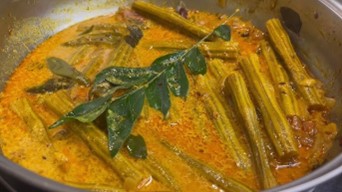
The finished murunga maluwa should have tender drumstick pieces surrounded by a fragrant coconut milk gravy.
What Does Murunga Maluwa Taste Like?
Sri Lankan drumstick curry has a distinctive flavour that comes from the combination of the drumstick pods, coconut milk, and spices.
The pods develop a tender texture while retaining some firmness and their characteristic fibrous structure. Their mild, earthy flavour blends with the richness of coconut milk, while curry leaves, onions, and chillies provide aroma and seasoning.
The gravy can be adjusted according to personal preference. A lighter version has a thinner consistency, while a richer preparation uses more thick coconut milk.
For people who enjoy traditional Sri Lankan vegetable curries, murunga maluwa offers something different from familiar dishes such as dhal curry, potato curry, or pumpkin curry.
What Can You Eat with Sri Lankan Drumstick Curry?
Murunga maluwa is especially delicious when served with traditional Sri Lankan staples. Its coconut-based gravy complements a variety of meals.
Steamed Rice
Steamed white rice is one of the most common accompaniments for drumstick curry. The coconut milk gravy can be mixed with the rice, while the tender drumstick pieces add texture to the meal.
It can also be served alongside other curries, sambols, and fried dishes for a traditional Sri Lankan rice and curry spread.
Red Rice
Sri Lankan red rice is another excellent option. Its slightly different texture and flavour complement the creamy gravy of murunga maluwa.
Served with a few vegetable curries and a spicy sambol, it creates a satisfying traditional meal.
String Hoppers
String hoppers are also a suitable accompaniment. Their delicate texture allows them to absorb the coconut milk gravy, making each serving flavourful.
Murunga maluwa can be served alongside string hoppers for breakfast, lunch, or dinner.
Coconut Sambol
For those who enjoy spicy food, coconut sambol adds a fresh and fiery contrast to the mild coconut-based curry.
The combination of creamy murunga maluwa and spicy pol sambol brings together two familiar elements of Sri Lankan cooking.
Tips for Preparing Better Murunga Maluwa
A few simple techniques can help improve the flavour and texture of homemade drumstick curry.
- Choose fresh pods: Look for firm, green drumstick pods without signs of spoilage.
- Cut evenly: Similar-sized pieces help the pods cook more consistently.
- Use fresh coconut milk: Freshly prepared coconut milk can provide a pleasant flavour and creamy texture.
- Adjust the spices: Change the chilli quantity according to your preferred level of heat.
- Cook gently: Allow the drumstick pieces to soften without excessive stirring.
- Add thick coconut milk towards the end: This helps create a rich gravy without prolonged boiling.
- Check the texture: The pods should be tender but should not completely fall apart.
These small details help maintain the natural character of the drumstick while allowing the coconut milk and spices to develop a balanced flavour.
Murunga Maluwa and Sri Lankan Food Culture
Drumstick curry is an example of the close connection between Sri Lankan cooking and locally available ingredients. Drumstick trees are familiar in many parts of the island, and their pods are used in traditional home cooking.
Murunga maluwa is often prepared as one of several curries served with rice. It sits comfortably alongside dhal, green vegetable curries, fish curry, sambol, and other homemade dishes.
The recipe may differ from one household to another. Some families prefer a mild coconut milk version, while others prepare it with more spices and a stronger flavour.
This flexibility is part of what makes traditional Sri Lankan food special. Familiar ingredients can be prepared in different ways while preserving the flavours and cooking traditions passed between generations.
Final Thoughts
Sri Lankan drumstick curry, or murunga maluwa, is a traditional coconut-based dish that highlights the distinctive flavour of fresh drumstick pods. With its tender texture, aromatic spices, and creamy gravy, it makes a delicious addition to a traditional Sri Lankan meal.
Whether enjoyed with steamed rice, red rice, or string hoppers, murunga maluwa is a wonderful example of how simple local ingredients create comforting homemade food.
Looking for delicious Sri Lankan food and more culinary discoveries? Explore Lankaura, Sri Lanka’s food discovery platform…!