
Sri Lankan Soya Meat Curry
Categories
Categories
- Afghan Cuisine(1)
- American Cuisine(150)
- Australian Cuisine(7)
- Austrian Cuisine(2)
- Belgian Cuisine(6)
- Brazilian Cuisine(3)
- British Cuisine(38)
- Cakes in Sri Lanka(47)
- Canadian Cuisine(1)
- Chinese Cuisine(85)
- Christmas Flavors(7)
- Cocktails in Sri Lanka(18)
- Cuban Cuisine(17)
- Dutch Cuisine(1)
- Egyptian Cuisine(3)
- Filipino Cuisine(3)
- French Cuisine(23)
- German Cuisine(9)
- Greek Cuisine(16)
- Hong Kong Cuisine(1)
- Indian Cuisine(80)
- Indonesian Cuisine(15)
- Innovative Sri Lankan Flavours(8)
- International Cuisine(1)
- Iranian Cuisine(5)
- Irish Cuisine(2)
- Italian Cuisine(113)
- Japanese Cuisine(13)
- Kazakastani Cuisine(1)
- Korean Cuisine(0)
- Malaysian Cuisine(12)
- Mexican Cuisine(14)
- Modern Culinary Trends(47)
- Moroccan Cuisine(4)
- Omani Cuisine(1)
- Russian Cuisine(2)
- Saudi Arabian Cuisine(1)
- Senegalese Cuisine(1)
- Singapore Cuisine(1)
- Spanish Cuisine(7)
- Sri Lankan Authentic Beverages(39)
- Sri Lankan Authentic Curries(66)
- Sri Lankan Authentic Desserts(6)
- Sri Lankan Authentic Food(78)
- Sri Lankan Authentic Seafood(20)
- Sri Lankan Authentic Snacks(20)
- Sri Lankan Authentic Sweets(20)
- Swiss Cuisine(3)
- Taiwanese Cuisine(9)
- Thai Cuisine(21)
- Turkish Cuisine(11)
- Yemeni Cuisine(2)



Sri Lankan Soya Meat Curry- A Flavourful and Budget-Friendly Sri Lankan Favourite
Sri Lankan soya meat curry is a popular dish enjoyed by people looking for a delicious, affordable, and satisfying alternative to meat-based curries. Prepared using textured vegetable protein (TVP), commonly known as soya meat, this dish absorbs the flavours of Sri Lankan spices, coconut milk, curry leaves, and other aromatic ingredients.
With its rich gravy, tender texture, and spicy flavour, soya meat curry is a familiar choice in many Sri Lankan households. It is especially popular because it is easy to prepare, budget-friendly, and pairs beautifully with rice, bread, string hoppers, roti, and other everyday favourites.
Whether prepared as a quick family meal or served alongside several dishes for lunch, Sri Lankan soya meat curry brings together simple ingredients and traditional cooking flavours.
What Is Sri Lankan Soya Meat Curry?
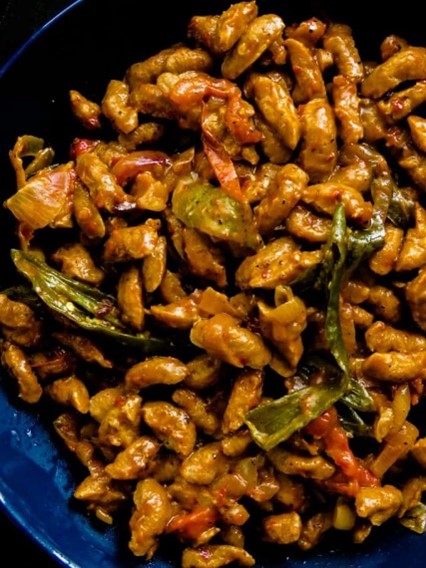
Sri Lankan soya meat curry is a spicy curry made using dried textured vegetable protein. Soya meat is produced from soy flour or soy protein and is available in different shapes and sizes, including small chunks, large pieces, and strips.
Before cooking, dried soya meat is usually rehydrated using hot water. Once softened, it is squeezed or drained before being added to the curry.
The soya pieces absorb the seasoning and gravy, making them flavourful and satisfying. Depending on the recipe, the curry may be prepared with coconut milk for a creamy consistency or cooked with a thicker, spicier mixture of onions, tomatoes, and roasted spices.
In Sri Lanka, households prepare soya meat curry in different ways. Some prefer a dark, spicy curry with roasted curry powder, while others enjoy a lighter coconut milk-based version.
Why Is Soya Meat Curry Popular in Sri Lanka?
Soya meat curry has become a familiar part of everyday Sri Lankan cooking because it offers a practical way to prepare a flavourful meal without using expensive meat or seafood.
Several qualities contribute to its popularity:
- Budget-friendly: Dried soya meat is generally affordable and can provide several portions.
- Easy to prepare: Once rehydrated, it can be cooked using familiar curry ingredients.
- Versatile: It pairs with rice, bread, roti, string hoppers, and other staples.
- Absorbs flavours: Its texture allows it to take on the spices and gravy used during cooking.
- Suitable for different meals: It can be served for lunch or dinner as part of a family meal.
Another reason for its popularity is its flexibility. The same basic ingredient can be transformed into different dishes by changing the spices, gravy, and cooking method.
Ingredients Commonly Used in Sri Lankan Soya Meat Curry
The ingredients vary between households, but a traditional Sri Lankan-style preparation often includes a combination of the following.
Soya Meat
Soya meat is the main ingredient. It is usually purchased in dried form and needs to be rehydrated before cooking.
Different varieties are available, so the size and shape of the pieces can influence the final appearance and texture of the curry.
Onions and Garlic
Onions provide sweetness and depth, while garlic contributes a strong savoury aroma. They are commonly sautéed at the beginning of the cooking process to develop the curry’s flavour.
Ginger and Green Chillies
Ginger adds warmth and freshness, while green chillies provide additional heat. The quantity can be adjusted according to personal preference.
Curry Leaves and Pandan Leaves
Curry leaves and pandan leaves, locally known as karapincha and rampe, are widely used in Sri Lankan cooking.
They add a distinctive fragrance that complements the spices and creates a familiar local curry aroma.
Sri Lankan Curry Powder
Curry powder is essential for developing the characteristic flavour of the dish. Depending on the recipe, unroasted or roasted curry powder may be used.
Roasted curry powder can give the curry a deeper colour and stronger aroma, while unroasted curry powder produces a different flavour profile.
Turmeric and Chilli Powder
Turmeric adds colour, while chilli powder provides heat and richness. The amount used depends on how mild or spicy the curry should be.
Coconut Milk
Coconut milk is commonly added to create a rich, creamy gravy. Some recipes use thick coconut milk towards the end of cooking, while others prepare the curry with less liquid for a thicker consistency.
How Is Sri Lankan Soya Meat Curry Prepared?
Although cooking methods differ between households, the basic preparation involves rehydrating the soya meat, preparing the spice mixture, and simmering everything together.
Preparing the Soya Meat
The dried soya pieces are placed in a bowl and covered with hot water. They are left to soften according to the packet instructions or until they reach a suitable texture.
Once softened, the water is drained, and the pieces are gently squeezed to remove excess moisture. Some cooks rinse the soya meat before adding it to the curry.
Proper preparation helps the pieces absorb the seasoning more effectively.
Preparing the Curry Base
Oil is heated in a cooking pot, followed by onions, garlic, ginger, green chillies, curry leaves, and pandan leaves.
These ingredients are sautéed until fragrant. Curry powder, turmeric, and chilli powder are then added and mixed carefully to develop the flavour.
Tomatoes may also be included in some recipes to provide additional richness and a slight tanginess.
Cooking the Soya Meat
The prepared soya pieces are added to the spice mixture and stirred until they are coated evenly.
Water or coconut milk is then added, depending on the preferred curry style. The mixture is allowed to simmer so the soya meat can absorb the flavours.
Finishing the Curry
The curry is cooked until the soya pieces are tender and the gravy reaches the desired consistency.
Some cooks prefer a thick, spicy gravy, while others enjoy a creamier coconut milk-based curry. The seasoning can be adjusted before serving.
The finished dish is best served warm with rice, bread, or another preferred accompaniment.
What Is Soya Meat Curry Served With in Sri Lanka?
One of the best things about Sri Lankan soya meat curry is how easily it pairs with different everyday foods.
Rice
Steamed rice is one of the most familiar accompaniments. The spicy gravy mixes well with rice, creating a satisfying meal.
It can be served with white rice, red rice, or alongside other vegetable curries and sambols.
Sri Lankan Bread
Soya meat curry pairs beautifully with fresh bread. The soft bread can be dipped into the thick gravy, making it a convenient option for breakfast, lunch, or dinner.
Roti
Pol roti and other types of roti are also excellent choices. Their texture complements the rich curry, while coconut-based roti adds another layer of flavour.
String Hoppers
String hoppers are another popular accompaniment. Their delicate texture works well with coconut milk-based soya curry or a thicker spicy gravy.
Hoppers
Plain hoppers can also be enjoyed with soya meat curry. The combination of the lightly crisp edges and soft centre of the hopper with the flavourful curry creates an enjoyable meal.
Different Ways to Prepare Soya Meat Curry
Sri Lankan soya meat curry can be prepared in several styles depending on personal preference and the ingredients available.
Spicy Soya Meat Curry
This version uses a stronger combination of chilli powder, roasted curry powder, onions, and other spices. The gravy is often thick, with a deep colour and bold flavour.
It is a suitable choice for people who enjoy traditional spicy Sri Lankan curries.
Coconut Milk Soya Meat Curry
Coconut milk creates a creamier gravy and balances the heat of the spices. This version is often milder and has a smooth consistency.
It pairs particularly well with rice, string hoppers, and bread.
Dry Soya Meat Curry
A dry-style preparation uses less liquid and allows the seasoning to coat the soya pieces more closely.
The result is a dish with a concentrated flavour that can be served alongside rice or roti.
Tips for Making Delicious Soya Meat Curry
A few simple techniques can help improve the taste and texture of homemade soya meat curry.
- Rehydrate properly: Allow the dried pieces to soften before cooking.
- Remove excess water: Drain and gently squeeze the soya meat so it can absorb the curry flavours.
- Prepare the spices carefully: Cook the onions, garlic, ginger, and curry leaves until fragrant.
- Balance the seasoning: Adjust the chilli powder and curry powder according to preference.
- Allow enough cooking time: Simmering helps the soya pieces absorb the gravy.
- Choose the right consistency: Use coconut milk or water according to the curry style you prefer.
- Serve fresh and warm: The curry pairs especially well with freshly prepared rice, bread, or roti.
Soya Meat Curry and Sri Lankan Food Culture
Sri Lankan cuisine is known for its variety of curries, spices, vegetables, and coconut-based dishes. Soya meat curry has become a familiar addition to this food culture because it uses a convenient ingredient while retaining the flavours associated with traditional local cooking.
It is enjoyed in different households, from simple everyday lunches to meals prepared when several dishes are served together. Its affordability and versatility make it a practical option for people who want a satisfying curry without relying on meat or seafood.
The dish also demonstrates how Sri Lankan cooking methods can be adapted to different ingredients. With curry leaves, pandan leaves, chilli, and traditional spices, soya meat becomes a flavourful dish that fits naturally into the local rice-and-curry tradition.
Final Thoughts
Sri Lankan soya meat curry is a delicious, affordable, and versatile dish that brings together the familiar flavours of local cooking. Whether prepared with creamy coconut milk, a thick spicy gravy, or a dry-style seasoning, it offers plenty of ways to enjoy soya meat.
Served with rice, bread, roti, string hoppers, or hoppers, this curry remains a convenient favourite for everyday Sri Lankan meals.
Looking for delicious Sri Lankan food and more culinary discoveries? Explore Lankaura, Sri Lanka’s food discovery platform…!