Yellow Rice (Sri Lankan Turmeric Rice)
Categories
Categories
- Afghan Cuisine(1)
- American Cuisine(141)
- Australian Cuisine(6)
- Austrian Cuisine(2)
- Belgian Cuisine(1)
- Brazilian Cuisine(3)
- British Cuisine(35)
- Cakes in Sri Lanka(47)
- Canadian Cuisine(1)
- Chinese Cuisine(85)
- Christmas Flavors(7)
- Cocktails in Sri Lanka(18)
- Cuban Cuisine(17)
- Dutch Cuisine(1)
- Egyptian Cuisine(3)
- Filipino Cuisine(3)
- French Cuisine(23)
- German Cuisine(9)
- Greek Cuisine(16)
- Hong Kong Cuisine(1)
- Indian Cuisine(79)
- Indonesian Cuisine(15)
- Innovative Sri Lankan Flavours(5)
- Iranian Cuisine(5)
- Irish Cuisine(2)
- Italian Cuisine(112)
- Japanese Cuisine(13)
- Kazakastani Cuisine(1)
- Korean Cuisine(0)
- Malaysian Cuisine(12)
- Mexican Cuisine(13)
- Modern Culinary Trends(40)
- Moroccan Cuisine(2)
- Omani Cuisine(1)
- Russian Cuisine(2)
- Saudi Arabian Cuisine(1)
- Senegalese Cuisine(1)
- Singapore Cuisine(1)
- Spanish Cuisine(7)
- Sri Lankan Authentic Beverages(38)
- Sri Lankan Authentic Curries(66)
- Sri Lankan Authentic Desserts(6)
- Sri Lankan Authentic Food(78)
- Sri Lankan Authentic Seafood(19)
- Sri Lankan Authentic Snacks(20)
- Sri Lankan Authentic Sweets(20)
- Swiss Cuisine(3)
- Taiwanese Cuisine(9)
- Thai Cuisine(21)
- Turkish Cuisine(11)
- Yemeni Cuisine(2)
Yellow Rice- Sri Lankan Turmeric Rice and a Festive Food Favourite
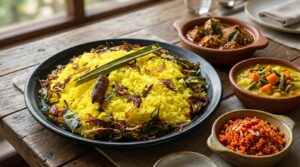
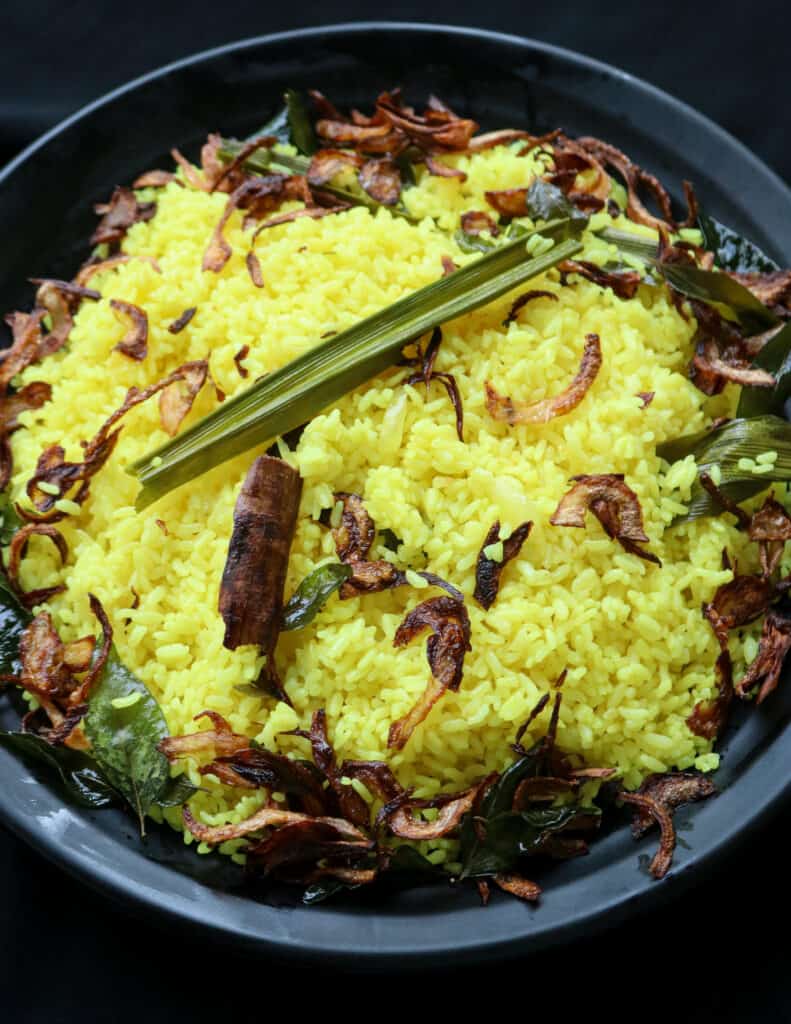
Yellow rice is a colourful and flavourful rice dish enjoyed across Sri Lanka, often prepared for family gatherings, celebrations, special occasions, and festive meals. Known for its beautiful golden colour, fragrant aroma, and rich flavour, Sri Lankan yellow rice is more than an everyday staple. It is a dish that can transform a simple meal into something special.
Unlike plain steamed rice, Sri Lankan yellow rice is typically prepared with ingredients such as turmeric, onions, curry leaves, pandan leaves, and spices. Depending on the household or recipe, it may also include butter or ghee, cinnamon, cardamom, cloves, and other aromatic ingredients. These additions give the rice its distinctive colour and fragrance.
Yellow rice is commonly served with chicken curry, fried chicken, cutlets, dhal curry, vegetable curries, and sambols. It is also a popular choice for celebration menus, where it is accompanied by several dishes arranged together to create a satisfying Sri Lankan meal.
What Is Sri Lankan Yellow Rice?
Sri Lankan yellow rice is a seasoned rice dish that gets its golden appearance mainly from turmeric. It is prepared by cooking rice with selected spices and aromatic ingredients, allowing the flavours to develop throughout the dish.
Although turmeric is an important ingredient, yellow rice is not simply plain rice coloured with a spice. Its flavour often comes from the combination of fragrant leaves, onions, spices, and fat used during preparation. These ingredients create a more aromatic and flavourful result than ordinary steamed rice.
Different households prepare yellow rice in different ways. Some prefer a mild, buttery flavour, while others use a stronger combination of whole spices and aromatics. The choice of rice, cooking method, and seasoning can also influence the final texture and taste.
Yellow rice is versatile enough to accompany everyday curries, but its attractive appearance makes it especially suitable for festive meals and special occasions.
What Makes Sri Lankan Yellow Rice Special?
One of the most noticeable features of yellow rice is its golden colour. Turmeric gives the rice its familiar yellow appearance, while other ingredients contribute depth and aroma.
Several qualities make the dish popular:
-
Golden appearance: Its bright colour adds visual appeal to a meal.
-
Fragrant aroma: Ingredients such as pandan leaves, curry leaves, and spices create a pleasant smell during cooking.
-
Rich flavour: Butter or ghee, onions, and aromatic spices can give the rice a fuller taste.
-
Versatile pairings: It works well with meat, seafood, vegetable curries, and sambols.
-
Suitable for celebrations: Its presentation makes it a popular choice for gatherings and special meals.
The balance between the ingredients is important. Too much turmeric can produce an overpowering earthy flavour, while carefully measured seasoning allows the rice’s aroma and other flavours to shine.
Ingredients Commonly Used in Yellow Rice
The exact ingredients depend on the recipe, but traditional Sri Lankan yellow rice often includes a combination of the following.
Rice
Rice forms the foundation of the dish. The type selected influences the final texture, so it is useful to choose a variety that cooks into separate, tender grains rather than becoming overly sticky.
Turmeric
Turmeric gives yellow rice its characteristic golden colour. It also contributes a mild earthy flavour. The quantity should be balanced with the other ingredients to avoid making the dish taste too strongly of turmeric.
Onions
Onions add savoury flavour and sweetness. They may be sautéed before the rice is cooked, allowing their flavour to develop and spread throughout the dish.
Pandan Leaves and Curry Leaves
Pandan leaves, known locally as rampe, are often used to add a distinctive fragrance. Curry leaves provide another layer of aroma that complements the spices.
These ingredients are particularly associated with the flavour profile of many Sri Lankan rice and curry dishes.
Spices
Depending on the recipe, whole spices such as cinnamon, cardamom, and cloves may be included. These ingredients add warmth and fragrance without necessarily making the rice hot or spicy.
Butter or Ghee
Butter or ghee can give yellow rice a richer flavour and help carry the aromas of the spices. Some recipes use other cooking fats according to household preference.
How Is Sri Lankan Yellow Rice Prepared?
Although recipes differ, the basic preparation involves seasoning the rice, incorporating the aromatic ingredients, and cooking everything until the grains are tender.
Preparing the Rice
The rice is measured and rinsed according to the chosen recipe. Rinsing can remove excess surface starch, which may help produce a better texture, depending on the rice variety and cooking method.
The amount of water or stock used depends on the type of rice and the preparation technique.
Building the Aroma
Butter or ghee is heated in a suitable cooking pot, and ingredients such as onions, pandan leaves, curry leaves, and spices are added. They are gently cooked to release their aromas without allowing them to burn.
Turmeric is then incorporated, helping distribute the colour through the dish.
Cooking the Rice
The rice is added and mixed with the seasoned ingredients. Water or stock is added in the appropriate quantity, and the rice is cooked until tender.
The cooking temperature and liquid ratio depend on the rice variety and the method used. Keeping the pot covered when appropriate helps the rice cook evenly.
Resting and Serving
Once the rice is cooked, allowing it to rest briefly can help the grains settle and improve the final texture. The rice can then be gently fluffed before serving.
The finished dish should have an even golden colour, a pleasant aroma, and tender grains that hold their shape.
What Is Yellow Rice Served With in Sri Lanka?
Yellow rice is often the centrepiece of a meal, surrounded by several side dishes that provide different flavours and textures.
Chicken Curry or Fried Chicken
Chicken curry is a popular accompaniment because its spices and gravy complement the aromatic rice. Fried chicken offers a different texture, adding a crisp exterior alongside the soft rice.
Either option can form part of a generous lunch or dinner spread.
Dhal Curry
Dhal curry provides a creamy, savoury element that works well with yellow rice. Its mild texture and seasoning balance the fragrant rice, particularly when served alongside vegetables or sambol.
Vegetable Curries
Vegetable curries add colour and variety to the plate. Depending on the meal, options may include potato curry, green bean curry, brinjal preparations, or other seasonal vegetables.
These accompaniments allow yellow rice to be enjoyed as part of a meal with a range of flavours and textures.
Cutlets and Other Short Eats
Fish cutlets, vegetable cutlets, and other savoury snacks may accompany yellow rice on celebration menus. Their crisp texture contrasts with the softness of the rice and makes the meal feel more substantial.
Sambols and Pickles
Pol sambol, chilli sambol, and pickled vegetables can add heat, freshness, and acidity. These sharper flavours help balance the richness of the rice and its accompanying curries.
The combination of rice, curries, vegetables, and sambols creates the variety that makes a Sri Lankan meal so satisfying.
Yellow Rice for Sri Lankan Celebrations
Yellow rice is often chosen for special meals because it looks attractive and can be served alongside a variety of dishes. Its golden colour makes it a natural centrepiece for family gatherings, birthdays, festive occasions, and other celebrations.
For larger gatherings, yellow rice is convenient because it can be prepared in substantial quantities and served with several accompaniments. Hosts can adjust the menu according to the occasion, budget, and preferences of their guests.
A celebration spread might include yellow rice, chicken curry, fried chicken, cutlets, vegetable dishes, and sambols. The combination of different colours, aromas, and textures creates an inviting presentation.
Although yellow rice can be enjoyed at any time, its association with special meals helps give it a place in Sri Lankan food culture beyond the everyday rice plate.
Tips for Making Delicious Yellow Rice
A few practical details can help improve the flavour and texture of homemade yellow rice.
-
Measure the turmeric carefully: Use enough to create a golden colour without overpowering the dish.
-
Cook the aromatics gently: Avoid burning the onions, leaves, and spices.
-
Choose suitable rice: A variety that holds its shape can help create an attractive final result.
-
Adjust the liquid correctly: Follow the requirements of the rice variety and cooking method.
-
Balance the spices: Aromatic ingredients should complement the rice rather than dominate it.
-
Allow the rice to rest: A short resting period after cooking can help the texture settle.
-
Serve with complementary dishes: Curries, vegetables, and sambols create a more balanced meal.
Small adjustments can make a noticeable difference, and each household may develop its own preferred combination of ingredients.
Yellow Rice and Sri Lankan Food Culture
Rice plays a central role in Sri Lankan food culture, appearing in everyday meals as well as elaborate celebration spreads. Yellow rice offers a more aromatic and colourful variation that can be adapted to different occasions.
Its preparation reflects the use of familiar local ingredients such as curry leaves and pandan leaves, combined with spices that contribute warmth and fragrance. The accompanying curries and sambols bring together different flavours in a way that is characteristic of Sri Lankan meals.
From family lunches to festive gatherings, yellow rice demonstrates how a familiar staple can become a special dish through thoughtful seasoning and presentation.
Final Thoughts
Sri Lankan yellow rice is a fragrant, golden rice dish that brings colour and flavour to everyday meals and special occasions alike. Prepared with turmeric and aromatic ingredients, it pairs beautifully with chicken curry, dhal, vegetables, cutlets, and sambols.
Whether enjoyed at a family gathering or served as part of a festive spread, yellow rice remains a delicious way to experience the variety of Sri Lankan cuisine.
Looking for delicious Sri Lankan food and more culinary discoveries? Explore Lankaura, Sri Lanka’s food discovery platform…!
Follow Lankaura on Facebook, Instagram and TikTok.